
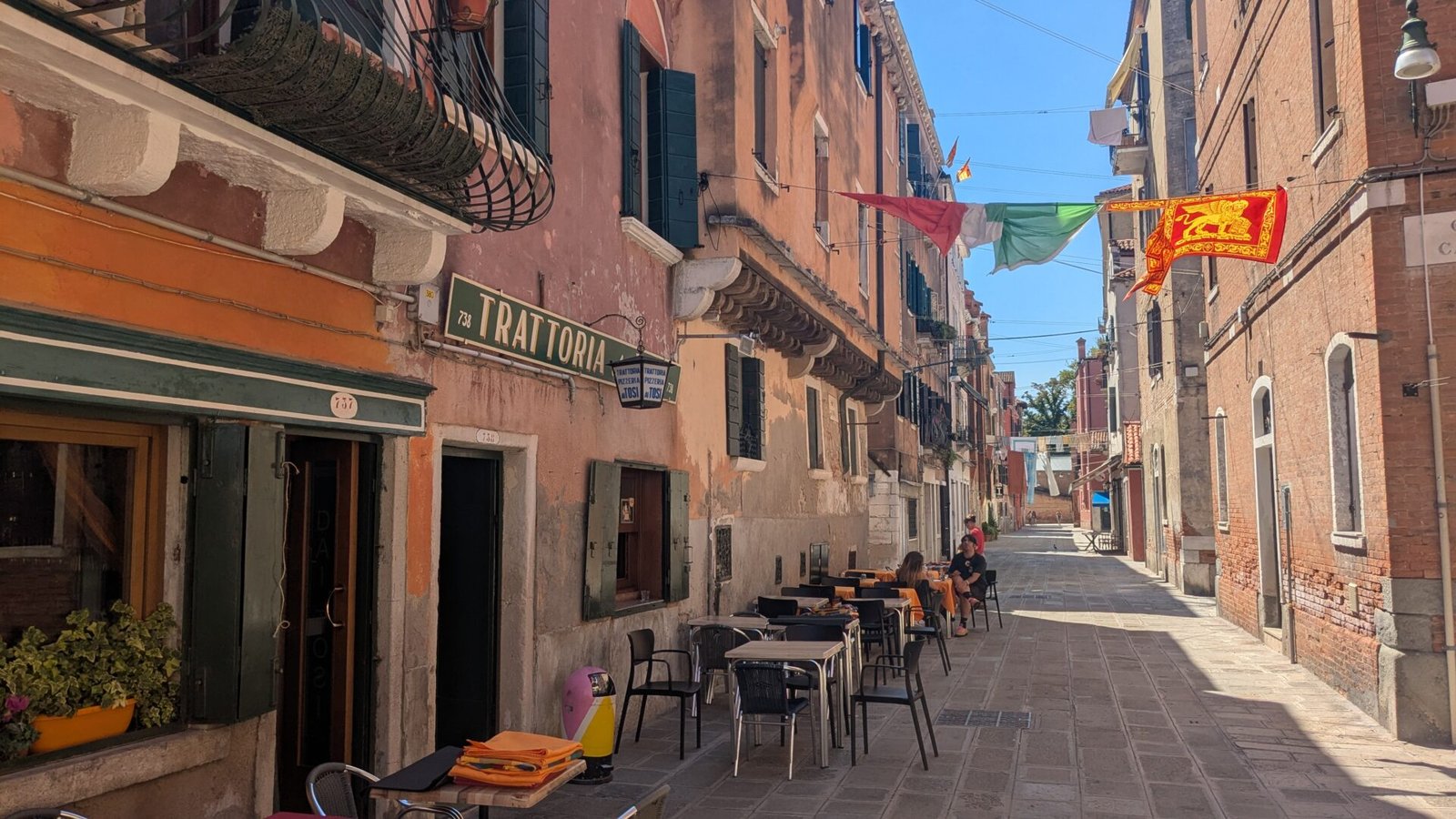
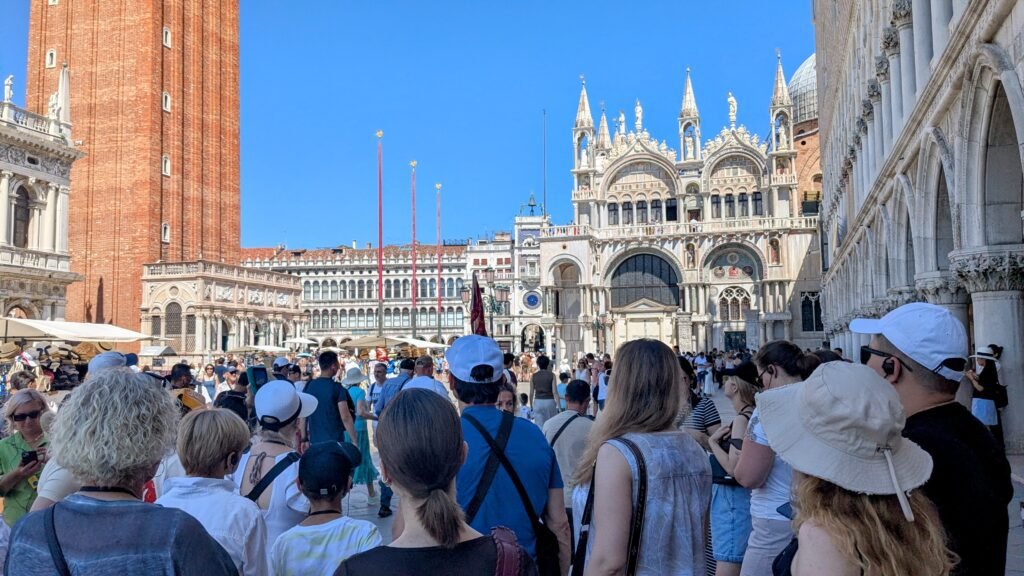
I both love and hate Venice. I love it because there’s nowhere else even remotely like it. It truly is a stunningly beautiful open-air museum of a city. But, as a victim of its own beauty, it’s often ruined by over-tourism, with the hordes clogging up its narrow streets, threatening to poke you in the eye with their selfie-sticks around each corner.
What frustrates me most (and maybe you too), is that pretty much every Venice travel blog I’ve read blindly points you to the same ‘must-do’ activities, hotels and restaurants in the city’s most well-trodden areas.
So, as a fan of the city, but not of my fellow species, I’m here to tell you the secret the day-trippers never learn – you can absolutely experience a quiet, authentic, crowd-free Venice if you know exactly where and when to look.
This guide is your ultimate escape plan, designed for people who don’t really like other people, to help bypass the tourist traps, find the hidden residential districts, and fall in love with the real city away from the chaos.
The Golden Rules of Crowd-Free Venice
If you remember nothing else from this guide, remember these three rules for escaping the masses:
- Sleep in the city: The day-trippers ruin the vibe between 10am to 5pm. Venice is magical, empty, and quiet both late at night and early in the morning.
- Go East and North: Head straight to the residential neighborhoods of Castello and Cannaregio. This is where real Venetians actually live, work, and eat.
- Get lost on purpose: The moment you see a tour group flag or umbrella coming towards you, swerve down the nearest side alley. Keep doing that ’til you’re totally lost and see what you discover!
Venice Off the Beaten Path: How to Avoid the Crowds
Venice is located at the northern edge of the Adriatic sea, in Italy’s northeast. Lying on an archipelago of 118 islands, it is criss-crossed by an intricate network of 177 canals, which are connected by no less than 409 bridges. You’d think among all those narrow alleys and pathways that it’d be easy to find some peace and quiet, right?
Well, that task is made harder by the frankly astonishing numbers of international tourists who visit the city each year. In 2024 (the latest count) this came to almost 6 million overnight visitors, but add to that the huge number of cruise-ship day trippers, and it’s easy to see why this city with only 48,000 locals, is so easily swallowed up.
Why is Venice so Popular?
Rising from a mud lagoon on a hundred small islands, Venice began life in the 5th century as a refuge for mainlanders escaping from rampaging invaders. Settlers drove wooden piles into the shallows, building a community which went on to become a maritime trading superpower whose immense wealth funded the grand palaces and brilliant art we see today.
By the 17th century, Venice became the ultimate highlight of the “Grand Tour” – a mandatory European journey for young aristocrats. Wealthy nobles, poets, and painters flocked here for the grand palaces, masked balls, and gondola rides, writing accounts that spread far and wide, establishing Venice as the world’s first great travel destination.
Today, it survives as a fragile, living museum for the Instagram generation. It’s hard to imagine a more photographed city, and if there is one, it must be epileptic by now.
Venice’s fragility, though, isn’t just because of how swamped it gets with tourists. The city is at genuine risk of literally returning to the swamp once more, as it sinks and subsides excruciatingly slowly back into the lagoon, a process hurried by nearby industrial shipping lanes and a rise in sea levels.
Nobody knows how long Venice will be around to adore, but while we wait for clever people to find ways to preserve it, we can do our part by changing how we visit. Here’s how I believe we can do that a little better…
The Best Time to Visit Venice to Avoid the Crowds
This is by far the most important decision you’ll make in terms of helping you to avoid the crowds in Venice. Essentially, it’ll be much easier to achieve our common goal, if you avoid the months of May – September altogether.
You can of course enjoy the city even if you do travel in peak season, but I think the best months to visit are March, April, and October. If you don’t mind the cold weather, Venice in winter is also considerably less crowded, although it’s a bit of trade off, as many of the best things to do in Venice (more on those below) don’t operate at this time of year.
When choosing when to visit, it’s not just about avoiding the crowds either, as visiting in the off-season conveys several other benefits, including cheaper accommodation, easier restaurant bookings, quicker access to the big-hitting museums and sites (Doge’s Palace, St Mark’s Square etc.), and much less competition for spots on the tours and activities that are still running.
Here’s a link to Venice’s average monthly temperatures to help you decide.
Because shoulder-season months like March and October offer the absolute best balance of quiet alleys and open attractions, the best boutique hotels in quiet neighborhoods like Castello fill up fast with independent travelers.
Once you’ve picked your dates, go straight to my neighbourhood hotel guide below, or look directly at all the available properties in both Castello and Cannaregio on our interactive map, to secure a quiet room before prices spike.
Quiet Neighbourhoods: Where to Stay in Venice Away from the Crowds
My recommendation here is to try to avoid the most popular districts (or Sestieri in Italian). While central, these neighbourhoods are home to the biggest tourist attractions and thus also some of the highest-priced hotels. As such you may want to avoid San Marco, San Polo, and parts of Santa Croce in favour of Cannaregio, Castello and Dorsoduro.
Tranquil Boutique Hotels in Castello
Personally, I absolutely loved the vibe of eastern Castello, which even in peak summer season had a bit of an end-of-the-world feel to it. Perhaps that sense was influenced by just how busy the rest of the city was, but nonetheless, I felt like I was wondering through a local’s only ‘hood, and that was cool.
If that sounds like music to your ears, then check out the Biennale Gallery Loft or Hotel Indigo Venice in Castello. (And make sure to check out my review of Osteria San Isepo, an incredible restaurant right around the corner!)
Boutique Hotels in Cannaregio
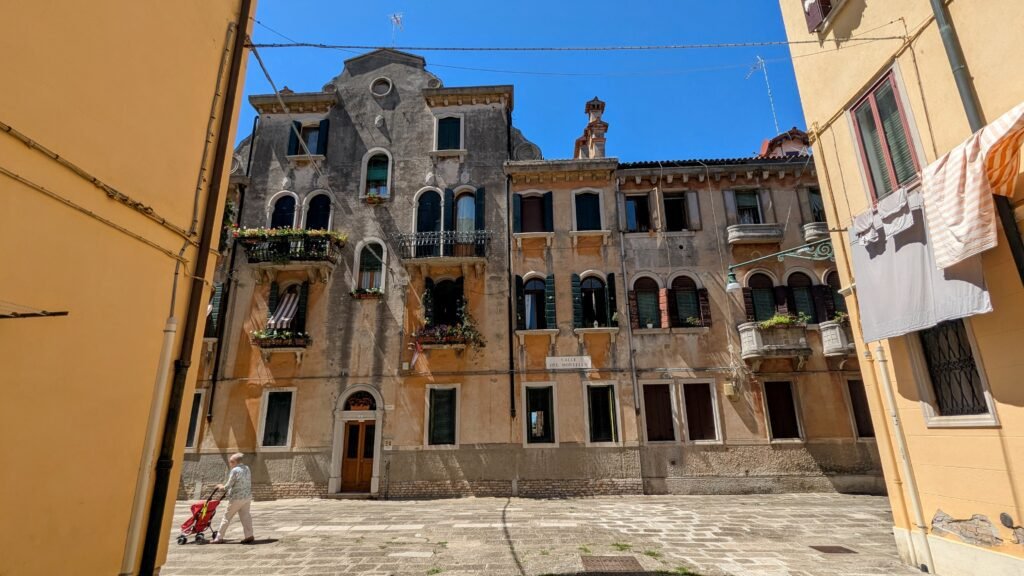
Cannaregio is another of Venice’s less-touristy Sestieri, and well worth a look too, especially if you prefer to be a little closer to the action compared with the eastern portion of Castello. Check out a place called 3749 Pontechiodo (mid-range) or Ca’ Bonfadini Historic Experience Hotel (splurge).
Both put you steps away from the quiet back-canals where my recommended Secret Food Tour and Venice Kayak Tour start…
Elsewhere (Amidst the Chaos)
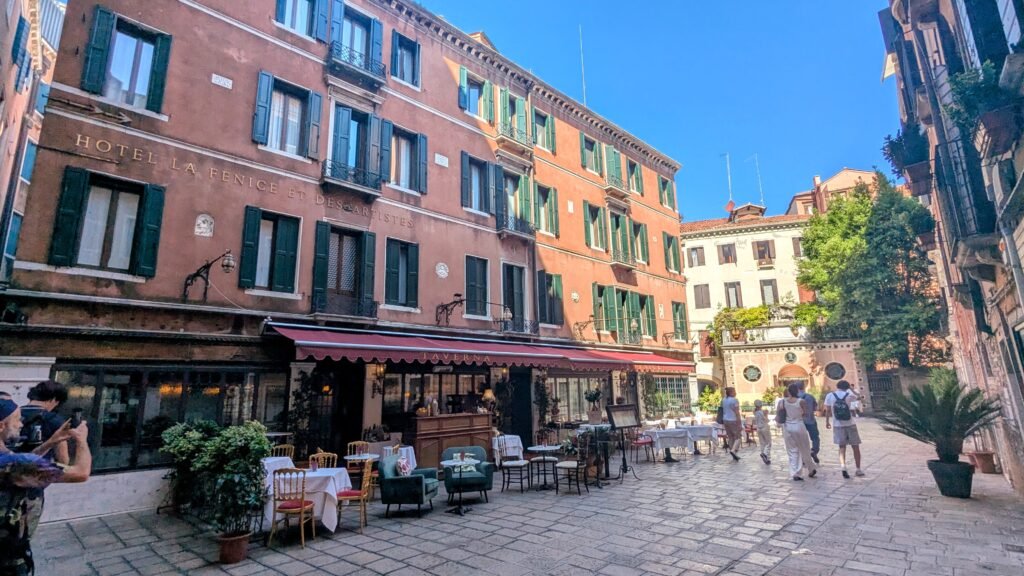
And if you really can’t resist the urge to be in center of everything, then check out Hotel La Fenice et Des Artistes, as it is at least somewhat tucked away in a (relatively) quiet courtyard, with a considerably calmer ambiance than everywhere else around it.
During my last visit, I made the mistake of staying in Santa Croce. Because this district is closer to the bus and train stations (15 min walk), my road served as a thoroughfare for suitcase wielding tourists making their own way to their hotels. As such, as soon as I left my hotel I was surrounded by the chaos, although I did find a gem of a budget hotel…
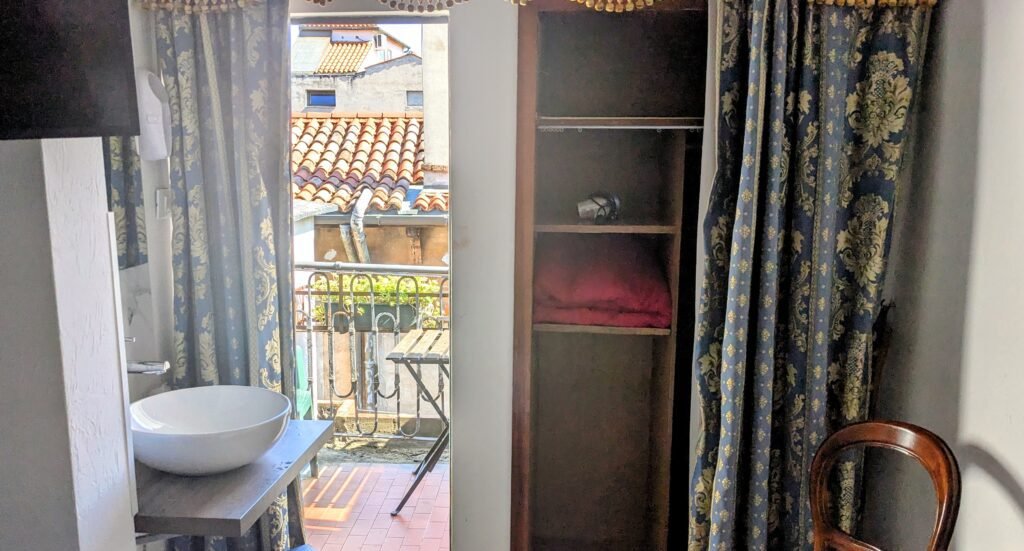
I stayed at Albergo Casa Peron, on the eastern edge of the district, close to the border with San Polo. I had a shower in my room, my own little private balcony, a spotlessly clean shared bathroom, and check in was easy. If you’re on a budget and want to go ‘full Venice’ on your first visit, then you might want to check it out.
Alternatively, if you prefer to do your own hotel search, then definitely take a look at the interactive accommodation map below to find your ideal accommodation in Venice.
Venice Hotels Map
Non-Touristy Things to Do in Venice (And How to See the Big Hitters Crowd-Free)
Obviously, as this post is about avoiding the crowds, I’m focusing on some of the more unique things to do in Venice, i.e activities and tours which are truly different from the rest, and which will lead you away from the sweaty, heaving, all-consuming human throngs…
Cannaregio: The Local, Historic Haven
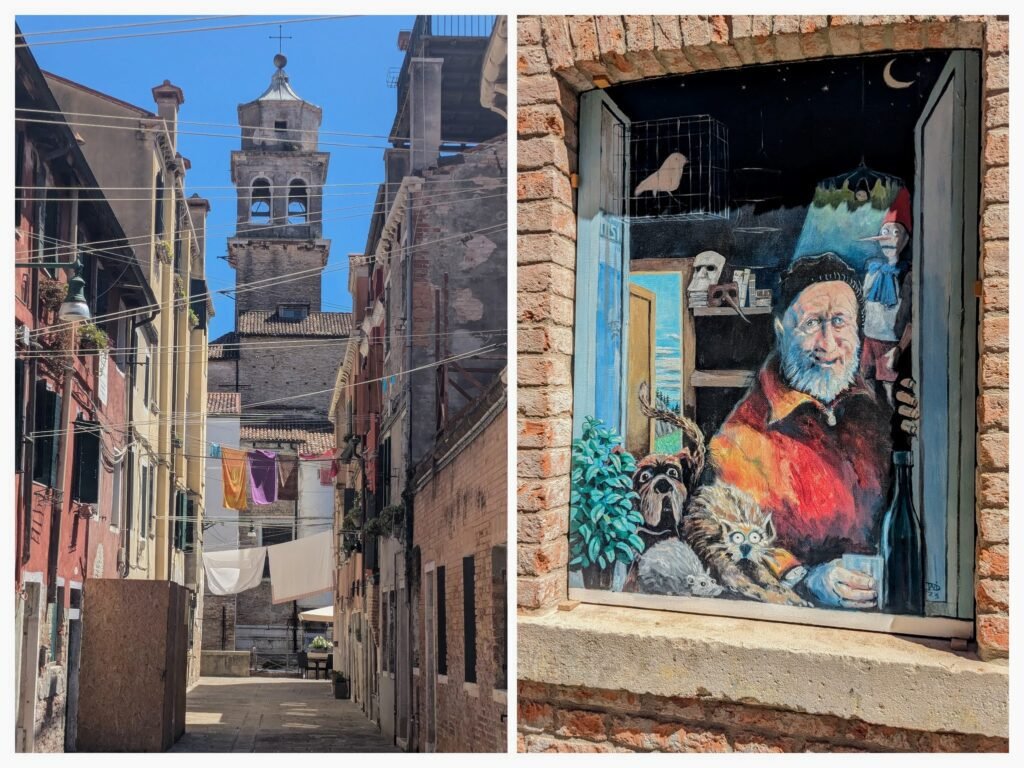
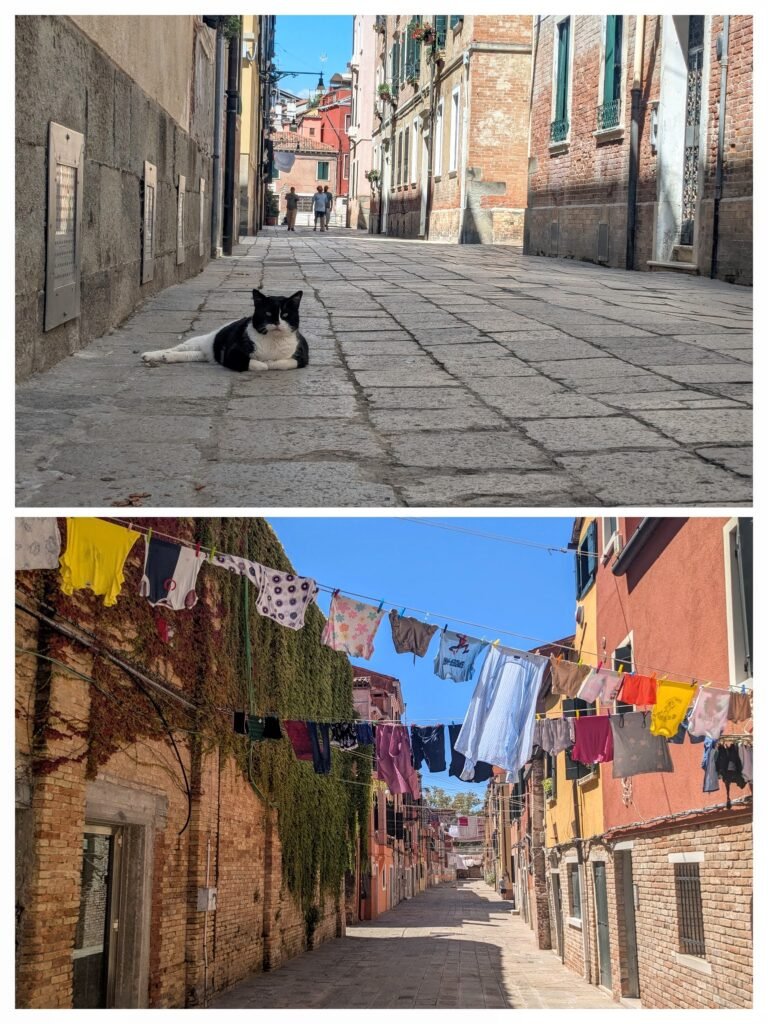
If you wanna know where the real Venetians hide from the cruise-ship invasions, they’re up here in Cannaregio – Venice’s northernmost residential district. It’s home to the historic Jewish Ghetto, wide-open residential canals, and locals hanging their laundry across quiet side alleys.
While the main thoroughfare connecting the train station to the Rialto Bridge is still a chaotic sea of rolling suitcases, all you have to do is step one block north into the quiet back-canals of Fondamenta Misericordia.
Suddenly, the air clears, and you’re surrounded by kids playing football in empty squares and locals drinking house wine at prices that won’t make you cry.
Non-Touristy Things to Do in Cannaregio
Escape the Alleys: The Venice Kayak Experience
What better way to avoid the crowds than by literally getting in a kayak and paddling away from them? In addition to so effectively meeting our remit, this guided kayaking tour was of great interest to me as I also run my own kayak tours in Vienna, so I was keen to compare how they do things!
Unfortunately, I forgot my phone so I have no photos of the activity, but I can wholeheartedly confirm that my two hours on the water was a very cool way to see the city and the lagoon. Here’s how it worked:
We met in Cannaregio and got kitted up before a quick safety explanation. Shortly after our small-group (there were just five of us) launched using their range of both single and double hard-shelled kayaks. With my own tours I use inflatables, as I find that guests tend to find these a little more comfortable and easier to manoeuvre, but I was pleasantly surprised by the comfort level here.
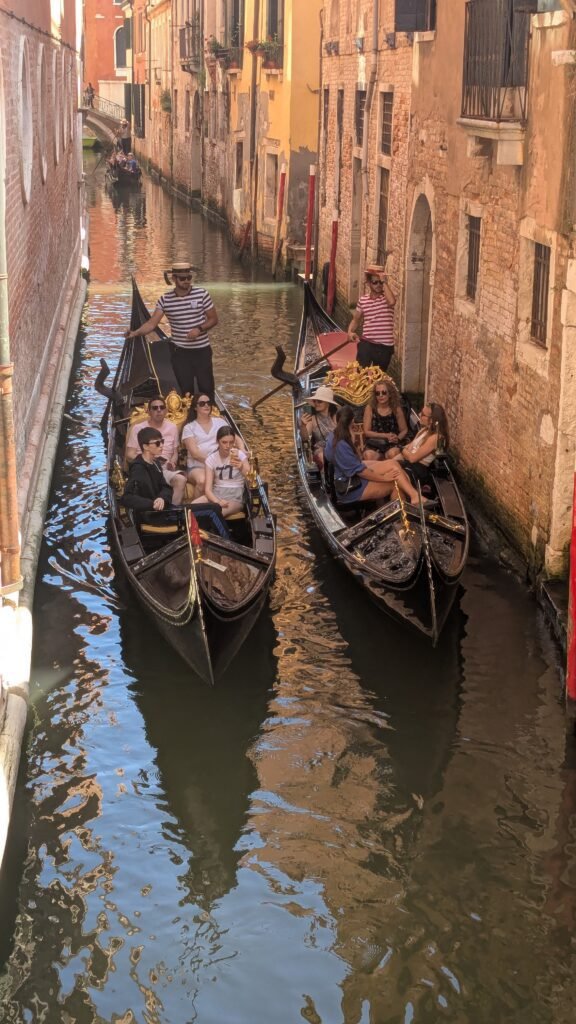
Anyway, busman’s holiday comparisons aside, what I loved most about this activity was being able to paddle through Venice’s canals and narrow waterways, and the genuinely unique perspective it gave me of the city. Thankfully, we avoided some of the busier canals and their Vaporetti (water buses), but still, we saw large parts of the Centro Storico during our two-hour tour, while also receiving some solid historical commentary and background from our guide.
Some of you may be thinking that this sense of freedom and exploration is also possible to achieve on a gondola, but I beg to differ, as powering oneself through the water feels way more intrepid, and much less like everyone else. And besides, in a gondola there’s always Mario or Luigi stood over you breathing down your neck.
I loved every second of it, and I reckon you should give it a go too. It’s absolutely beginner friendly, and no experience, nor anything above slug-level fitness is required (trust me, I do this for a living!). Tours operate daily from March until the end of October and you can choose between daytime or sunset paddles.
Secret Food Tour in Cannaregio
Much like the grand tourists who preceded us, Venice is the kind of place where we go to feel more sophisticated, ideally by trying to live as the Venetians do. In terms of delving into the local food culture, this means visiting Venice’s many small bars (bacari).
Inside a typical bacaro (singular), you’ll find locals snacking on various bite-sized morsels (cicchetti), while sipping a small glass of local wine (ombra) or Spritz. Think of these cicchetti as Venetian tapas.
However, in the ever popular bacari of San Marco and San Polo, not only are you more likely to be paying over the odds, but you’ll be sharing air with Karen, Toshiyuki, and Juan, rather than Leonardo and Carla.
Equally, having ignorantly strolled into several bacari in my time, I understand how daunting this can actually be, especially if you don’t really know the etiquette or how they work (my guide on navigating this below).
So, if you wanna visit the bacari where the locals still go, as well as experience the best value and best tasting cicchetti, a great place to do this is the far less touristy sestiere (district) of Cannaregio.
This guided Secret Food Tour focuses exclusively on this quieter neighbourhood, exploring local bars and their cicchetti offerings, as well as main dishes, sweet treats and the Jewish ghetto (the oldest in the world). Tours operate year round and start at 10:30 every morning.
Alternatively, if you’re travelling on a stricter budget, then you may want to check out this 2.5 hour Venice street food tour instead, as it runs to only 39 EUR. Tours operate year round and start at either 10:30am or 17:00.
Dorsoduro: For Art & Local Squares
Situated across the Grand Canal to the south, Dorsoduro is Venice’s university and arts district. It exudes a chilled-out, slightly bohemian elegance that instantly lowers your blood pressure the second you get here.
Because it lacks the claustrophobic, narrow funnel-alleys of San Marco, the crowds here disperse naturally. Instead of getting trapped in a human traffic jam, you’ll find wide, sun-drenched canal promenades, perfect for a peaceful afternoon stroll, hidden contemporary art spots, and Campo Santa Margherita – a massive square where students gather for €3 Aperol Spritzes.
Off-the-Beaten-Path Things to Do in Dorsoduro
Italian Cooking Class
As part of my research for my third trip to Venice, I was shocked by how good the reviews for one particular activity were: this pasta and tiramisu cooking class. As someone who has done multiple pasta making classes in Italy, and because I operate food tours myself with my own tour company, this is seriously impressive, so I want to see how they do things and what makes this class so highly rated.
The cooking class takes place in a long-established local restaurant in Dorsoduro, one of Venice’s less-touristy districts to the south of San Polo, on the much quieter side of the Grand Canal.
Hidden Venice Walking Tour
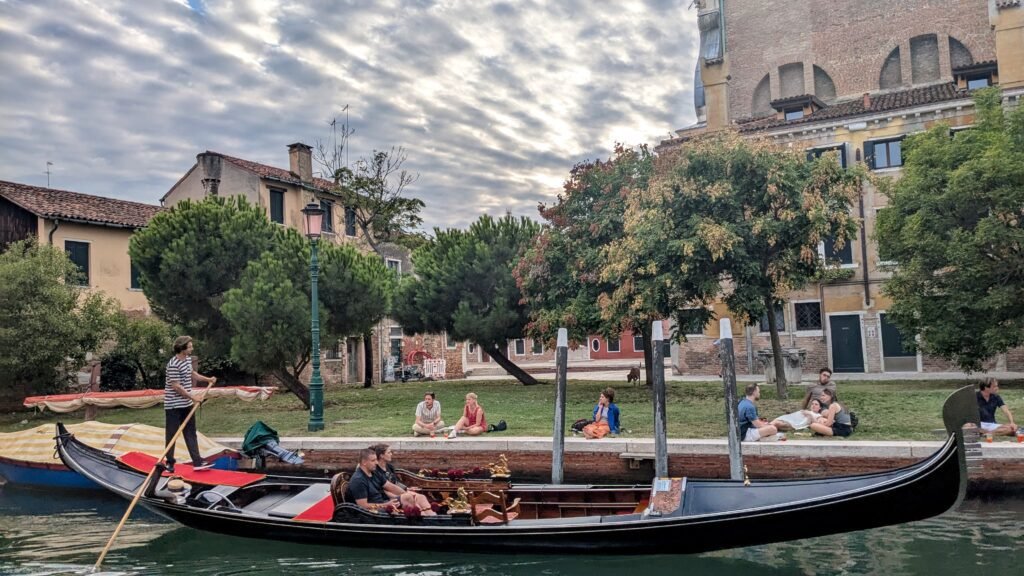
This small-group or private walking tour of Dorsoduro with Venice local, Valerio, starts on the Grand Canal at Ca’ Foscari, where you get Palazzo Gothic grandeur away from the selfie-stick scrum! The tour then moves into San Pantalon church to see the world’s largest canvas painting, as well as a nearby waterside Banksy, also largely ignored by the gondola-chasing masses.
You’ll then visit Campo Santa Margherita square, where Venice is young, loud, lived-in, and unapologetically local, before moving to the more serene Campo San Barnaba, better known for playing host to some iconic film scenes.
The walk then stretches out along the Zattere, a blissfully wide and crowd-free promenade along the Giudecca Canal, before peeking into the working boatyard of Squero San Trovaso, where real working gondolas are crafted and repaired.
This is a really unique and comprehensive exploration of Dorsoduro, and is perfect for those of you who want to get off-the-beaten-path in Venice. Check out Valerio’s other off-the-beaten-path Venice tours too, and always book directly with him to get the best prices!
How to See St. Mark's & Doge's Palace Without the Chaos
Just because you’re an anti-social git, shouldn’t mean that you lose out on seeing Venice’s big-hitting sites. Fortunately, there are some very innovative tour companies that have tried to address Venice’s problem with over-crowding at its most famous locations…
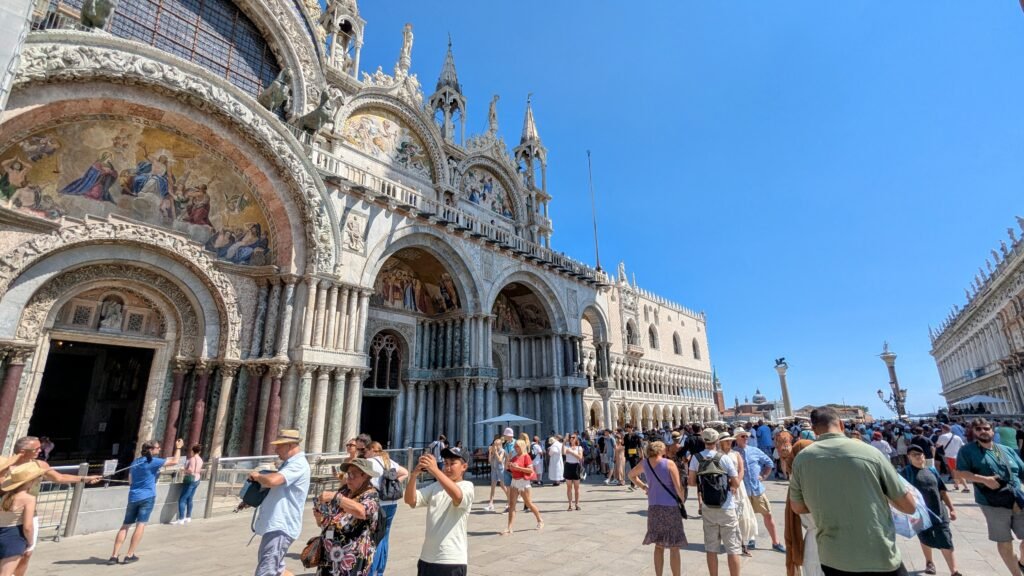
Walks & Devour Tours are one such company, as they have somehow negotiated after-hours access to Doge’s Palace and St Mark’s Cathedral. When I say after hours, I mean once both venues have closed to the public. This enables you to look around and actually enjoy both sites without the insane crowds that are there during the day.
You’ll be able to truly appreciate the stolen Byzantine gems which adorn St Mark’s Basilica, the frescoes of Veronese and Tintoretto, and the Doge’s famous prisons with just you, a small group of fellow people haters, and your guide on this 3.5 hour evening tour. Alternatively, if you’re only interested in visiting St Mark’s, or you just prefer a shorter tour, they also offer a 75 minute exploration of the Basilica, its Pala d’Oro, the famous crypt, and the undeniably impressive blend of both Western and Byzantine artwork.
I love it when tour companies recognise a problem and decide to do something about it like this. If you’re interested in learning about Venice’s spectacular past and how it became what we see today, then definitely check out these thoughtfully curated experiences. Both are also available with Get Your Guide, as well as completely private options for your group, in case you prefer to book directly through them.
Authentically Venetian: Where to Eat in Venice Away From the Tourist Traps
Before I get into my specific restaurant and Bacaro bar recommendations, if you want to learn the unwritten rules of Venetian dining without looking like a clueless tourist and getting ripped off, booking a Secret Food Tour of Venice on your first night is the best way to set you up to enjoy only the best local recommendations for the rest of your trip!
What is a Bàcaro? And What is a Cicchetto?
If you sit down at a restaurant with laminated photos of lasagna, you’ve already lost the battle, as you’re about to pay €25 for a microwaved monstrosity.
Instead, look for a Bàcaro (pronounced BAH-kah-ro). These are tiny, no-frills, historic wine taverns—often no bigger than a walk-in closet—where locals stand at the counter (or outside) to eat, drink, and socialise.
Inside, you’ll find two things:
- Cicchetti: Venetian tapas. Think bite-sized crostini topped with creamed cod, marinated seafood, or local cheeses, usually costing just €2 to €4 a pop.
- Ombra: A small glass of local house wine.
The Unwritten Rules of the Bàcaro
If you to look like you know what you’re doing inside a Bàcaro, you might wanna do the following:
- Stand up, don’t sit: Most authentic places only have a few tables, which often carry a hidden service fee (coperto). Stand at the bar or spill out onto the canal pathway like everyone else.
- Order an “Ombra” or a Spritz: Grab an Ombra (usually around €1.50!) or a classic Campari Spritz (if you like them – I personally find them way too bitter and don’t understand what all the fuss is about).
- Point to order: There are mostly no printed menus, so if you ‘no hablo Italiano’ just walk up to the display case, point to the cicchetti that look good, and grunt. Sorted!
- Do a “Giro d’Ombra” (A Venetian Pub Crawl): Don’t fill up at just one place. Do what the locals do: have a drink and a couple of snacks at one bàcaro, then head to the next! You’ll be crawling home in no time 😉
Some Classic Cicchetti To Try
Baccalà Mantecato: Salt cod whipped into a rich, creamy cloud and spread on bread or polenta. The absolute must-try—it isn’t “fishy” at all.
Sarde in Saor: Sweet-and-sour marinated sardines with onions, vinegar, pine nuts, and raisins. An old-school sailors’ classic with a unique flavor.
Polpette: Crispy, deep-fried meatballs made of beef, tuna, or eggplant. The safest bet if you are traveling with a picky eater.
Folpetti: Tiny baby octopuses boiled whole and tossed in lemon and olive oil. Tender and delicious if you are feeling adventurous.
Authentic Venetian Restaurants & Cicchetti Bars to Track Down
Here are my suggestions for where to eat in Venice without the inflated prices of those central tourist traps around San Polo and San Marco…
Osteria San Isepo (Castello)
While wandering the mostly deserted streets of Castello, I was very glad to have stumbled upon Osteria San Isepo. It looked inviting and pretty local from the outside (I could tell this because it was early lunch time, yet most patrons were drinking wine). I got chatting with the owner and he told me that this recently opened restaurant (2024) was in fact their second establishment in Venice (more on the other one below).
With indoor and outdoor seating that spilled out into in a plaza in the heart of Castello, this place seemed to perfectly match Castello’s relaxed energy. Its diverse menu tempted with several seafood options (as is typical in Venice) and daily specials. After much deliberation and FOMO I finally went for Tagliatelle with shrimps, chanterelle mushrooms and smoked ricotta. Predictably, it was lush, and I could have eaten triple the amount. Check it out.

Trattoria dai Fioi (Castello)
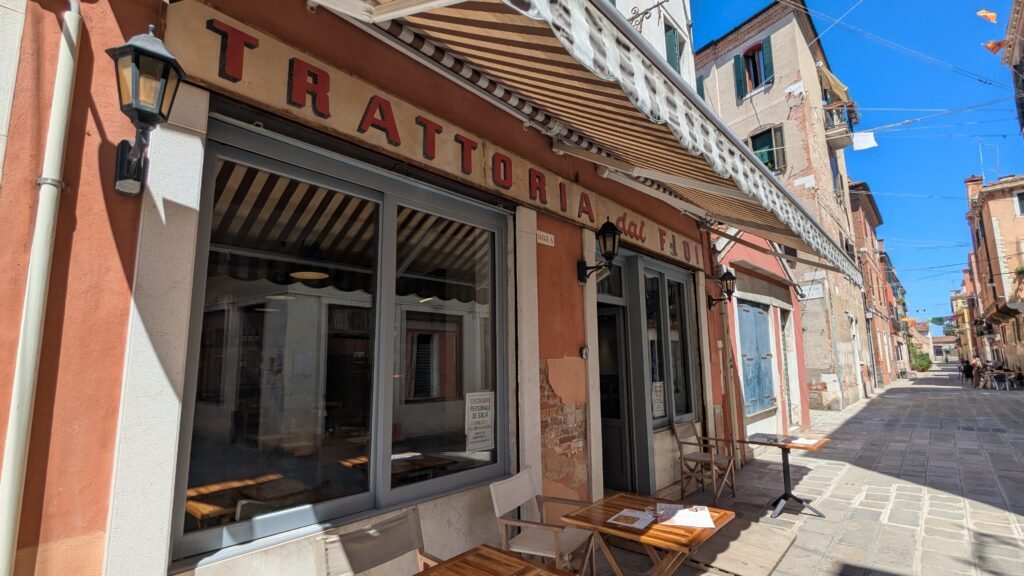
Arguably the best pizza joint in Venice, these guys specialise in proper Neopolitan pizza. Pizza haters relax, as there’s other options available too, including various pasta dishes, burgers and steak. There are a few streetside tables available outside, but the large buzzing space inside will provide endlessly authentic Italian vibes. The pizza was sensational, service was friendly and fast, and the final bill was very reasonable!
Bacaro ae Bricoe – the predecessor and older brother to Osteria San Isepo, Bacare ae Bricoe is an ever-buzzing locals’ hangout in Cannaregio. Expect great cicchetti, and a wide selection of beer and wines in this authentic Venezian locals hangout.
Also in Cannaregio, albeit a little closer to the selfie-stick carrying hordes, check out Un Mondo Divino for a very thorough selection of local wines and really good cicchetti.
For foodies seeking authentic northern Italian culinary experiences away from tourist traps, I’d very much recommend asking yourself is Bologna worth visiting for your next stop too 😉
Practical Logistics: How to Get to Venice
Flying
Because of its enduring popularity, Venice naturally has very good transport links, with multiple direct flights from the US, as well as the middle east and most major European cities. Its two airports, Venice Marco Polo, and Treviso are located a little out of the city (about a 20 or 30-minute bus or taxi ride away respectively).
Getting from the Airport to the City
From Venice Marco Polo airport you have two options. The cheaper and faster choice is to pre-book a direct express bus for 10 EUR each way, or pick up an open return ticket for 18 EUR. Pre-booking is actually cheaper than buying at the airport, so I’d recommend doing that. The coaches leave twice an hour at twenty and fifty minutes past, and this is how I arrived — the journey took only 25 minutes.
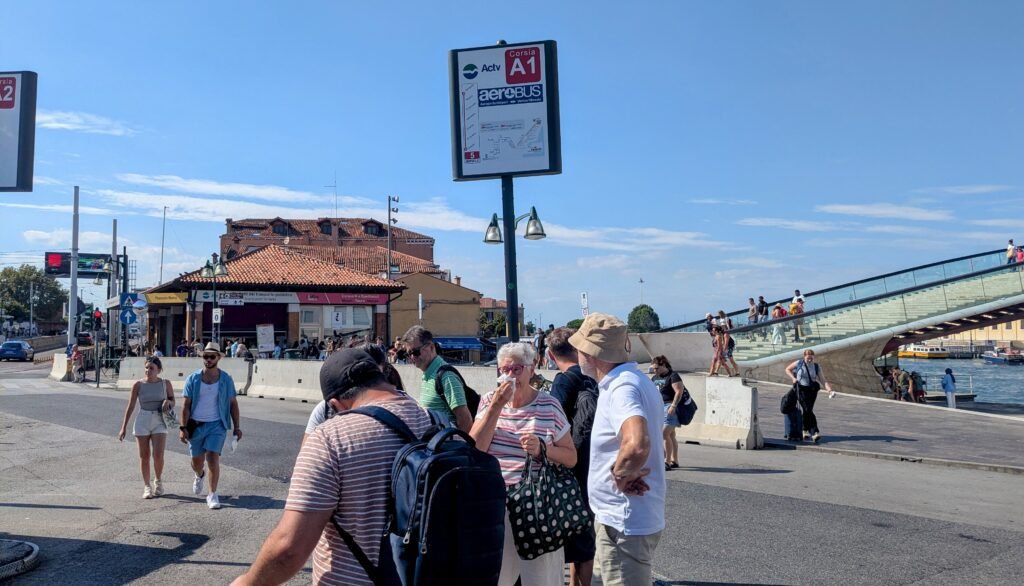
The bus drops you off at Piazzale Roma on the western edge of the Centro Storico, and from there most hotels are easily walkable (unless you have loads of heavy luggage!). Check out the map below to get an idea of how long it would take you to walk from the bus station drop-off point to other parts of the centro storico…
If you’re travelling heavy, or simply prefer to arrive in style and be dropped a little closer to your hotel, you can instead choose a water taxi from the airport to the city center. The meeting point at the airport is easy to find, and the 50-odd minute journey covers various drop-off points in the city center and along the Grand Canal.
By Train
Venice is insanely well connected to other Italian cities through the bloody brilliant Italian high speed rail network. Arriving into Venice by train is also very cool because Santa Lucia station is located right in the Centro Storico (or main island). This means that as you walk out of the station you’re immediately hit with the city’s magnificence. If you’re travelling light, you should also be able to walk pretty easily to wherever you’re staying, assuming it’s somewhere relatively central.
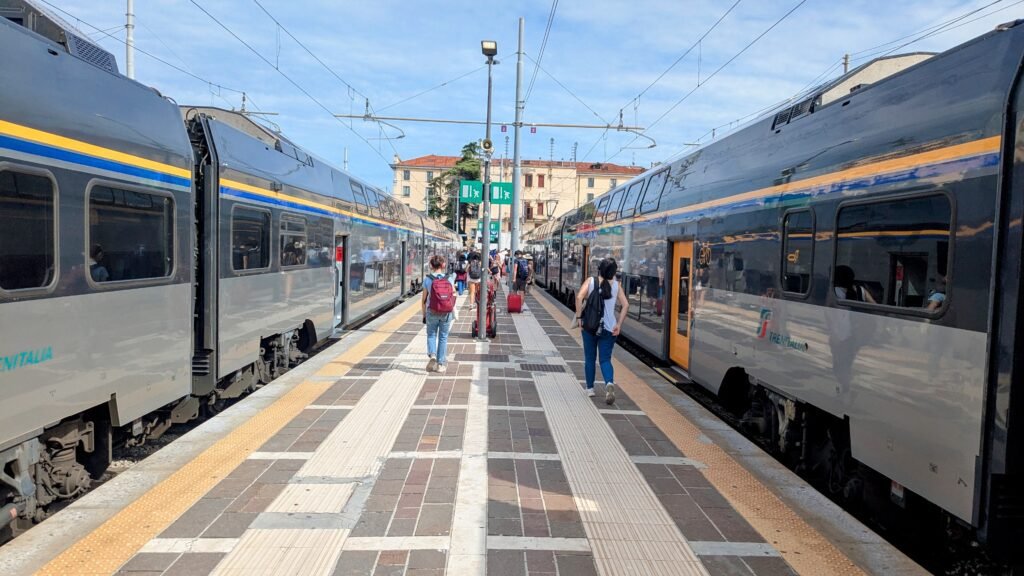
In case you’re visiting Venice as part of a wider Italian trip, here are some of the most common direct train routes in from nearby cities:
From Milan
From Verona
From Bologna
From Florence
From Rome
Duration: 2.5 hours
There are LOADS of daily direct trains running from Milan to Venice Santa Lucia every day. You’re spoilt for choice. Tickets costs around 22 EUR. Book them here with TrainPal.
Duration: approx 1 hr 12 minutes
The fastest direct trains typically depart from Verona Porto Nuova and cost around 12 EUR.
Duration: approx 1 hr 33 mins
From Bologna Centrale you can expect to be in Venice Santa Lucia in just over an hour and a half. Again, there are multiple daily departures, and fares costs around 16 EUR for a one-way ticket.
Duration: approx 2 hours 14 minutes
If you’re travelling from Florence, choose between several different daily departures leaving from Firenze Santa Maria Novella (Firenze S.M.N). Expect to pay around 25 EUR per ticket.
Duration: 4hrs
From the capital, a direct train ride to Venice takes around 4 hours, leaving from either Rome Termini or Rome Tiburtina stations. The cheapest direct fares will cost around 40 EUR.
How to Avoid the Crowds in Venice: Outro
The greatest shame would be if future visitors were alienated due to Venice’s reputation for over-tourism. I believe that Venice is still worth visiting, just more so when we think critically in terms of when, where we stay, and what we choose to do when there.
Without question, Venice in winter and the shoulder seasons is far less crowded, which means that its accommodation, food, and activities are generally cheaper and more available than the peak summer months. Equally, finding peace among the chaos at these times of the year is considerably easier, especially for the more introverted among you.
But with a little creativity, and by following my recommendations in this post, La Serenissima can be enjoyed regardless of whether you visit in July, November or April! And if the Venetian crowds still get too much, hop on a short direct train heading west toward the Italian lakes. You can read my full guide on where to stay in Lake Garda without a car for a much more relaxed pace, as well as my recommendations for things to do in Lake Garda.


Leave a reply