
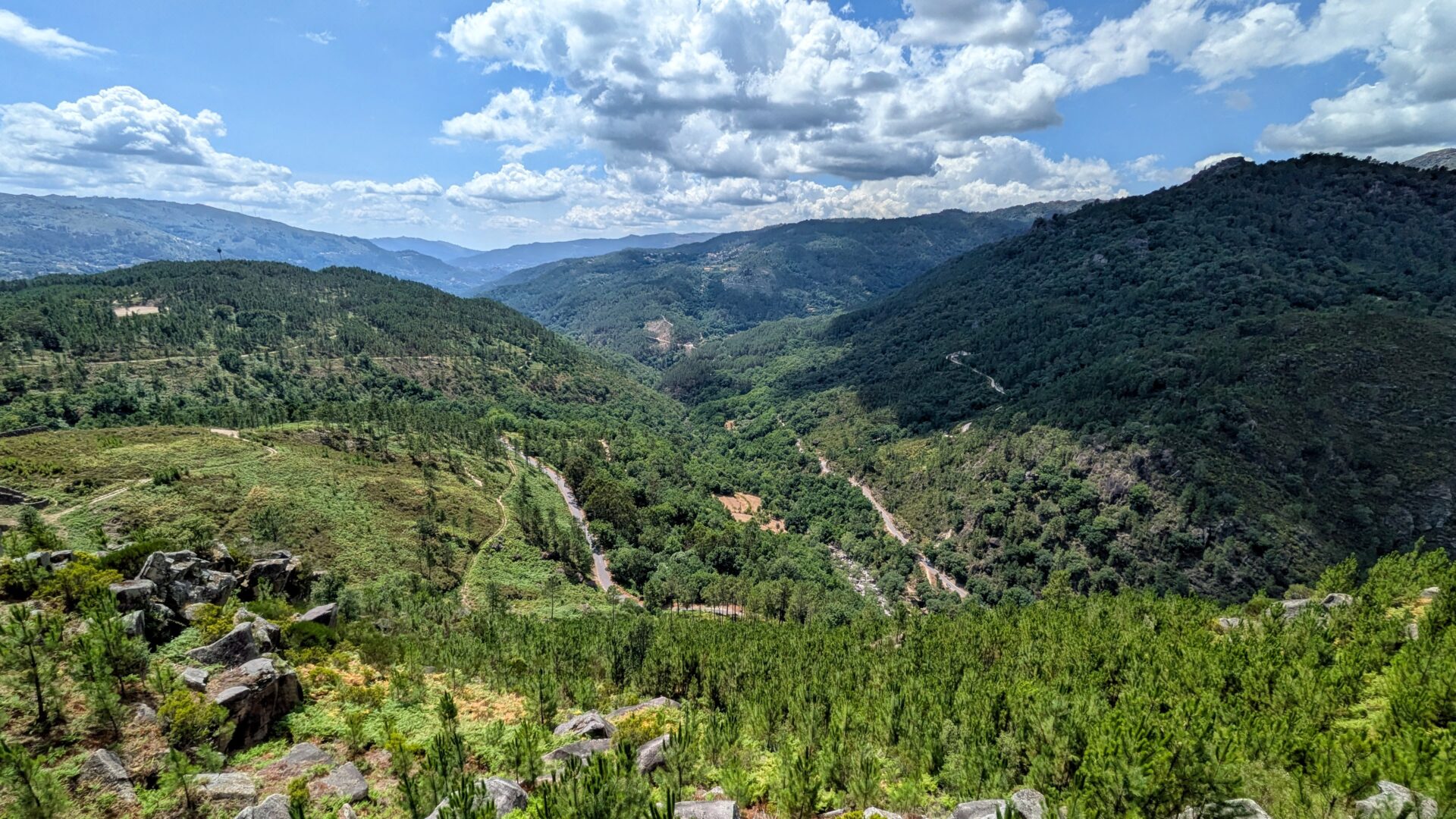
One of my primary goals with the Travel Tortoise is to discover and then talk about destinations that are well and truly off-the-beaten-track. One such place that I recently had the pleasure of visiting is Peneda-Gerês National Park, on the border between northern Portugal and Spain.
Despite this incredible region being so close to Porto (just over an hour’s drive), and relatively well-populated, I had to really go deep when researching before my trip to find (m)any foreigners who’d visited and fed back their experiences. It seems that most visitors to Porto tend to ignore this wild, natural region in favour of a day trip or short stay in the Douro valley. But this is a huge mistake, because, for me at least, Peneda-Gerês was an exciting, challenging, fulfilling, accessible and reinvigorating destination, and one of my favourite wild places in Europe.
The food was incredible, the hiking brilliant, and the views breath-taking. Add to that the fact that this is a region that mostly just Portuguese visit, and you have an unspoiled region with strong local communities and traditions, which has somehow remained the well-trodden tourist trail.
So grab your hiking shoes and steak knife, and let’s go into the wild, as I give you my guide to Peneda-Gerês National Park…
A Guide to Peneda-Geres National Park, Portugal
Where is it?
Situated approximately 100 kms northeast of Porto, Peneda-Gerês straddles the border between northern Portugal and the autonomous Spanish province of Galicia. The park is reachable by car in less than an hour and a half from Porto airport. From Braga, it takes less than an hour.
Awarded park status in 1971, this 700 square kilometer area remains Portugal’s only official National Park, and together with Spain’s Baixa Limia – Serra do Xurés Natural Park, it forms a recognised UNESCO Transboundary Biosphere Reserve.
Ecosytem, Flora & Fauna
Peneda-Gerês has a remarkably diverse range of different ecosystems, due to the meeting of Atlantic, Mediterranean, and Alpine climate zones. The park is known for its steep granite sierras, with the Cávado, Lima, and Homem rivers forming and feeding the area’s many valleys, gorges, natural lagoons and waterfalls.
It’s a haven for both flora and fauna, with primeval Atlantic oak forests, the last remaining Iberian wolf population in Portugal, as well as free-roaming Garrano Ponies, wild boar, deer, reintroduced Iberian Ibex, several birds of prey, and various endemic amphibian and reptile species.
Remarkably, among these amazing ecosystems and often Endangered wildlife, the area has maintained its rich pastoral heritage, which means that – unlike wilderness preserves stripped of humans – Peneda-Gerês is a living landscape home to around 9,000 residents, scattered across more than 50 traditional stone villages.
How to Get There
Most international travelers will base themselves in northern Portugal’s main hub of Porto first. If you’re starting your journey in the city, check out my guide on where to stay in Porto by neighbourhood before hitting the road.
Renting a car in Porto and driving to Peneda-Gerês is by far the fastest, easiest, and most flexible option, not least because once you are in the park itself, public transport options are very limited.
The Drive:
- The trip takes about 1 hour and 15 minutes to 1.5 hours (approx. 95-100 km).
- Take the A3 highway north towards Braga/Valença, then exit onto the IC28 or N101/N203 depending on which side of the park you’re targeting (e.g., Vila do Gerês in the south or Ponte da Barca/Soajo in the west). Or, just use Google Maps!
Tolls & Roads:
- Highways in Portugal use electronic toll gates (Via Verde), so make sure your rental car includes a toll transponder. If it does, always drive through the gates that indicate this – it will be quicker than going into the cash lanes.
- Roads inside the park are scenic but winding and steep in areas, so take your time on these tighter mountain turns.
Where to Stay in Peneda-Gerês
Fafião
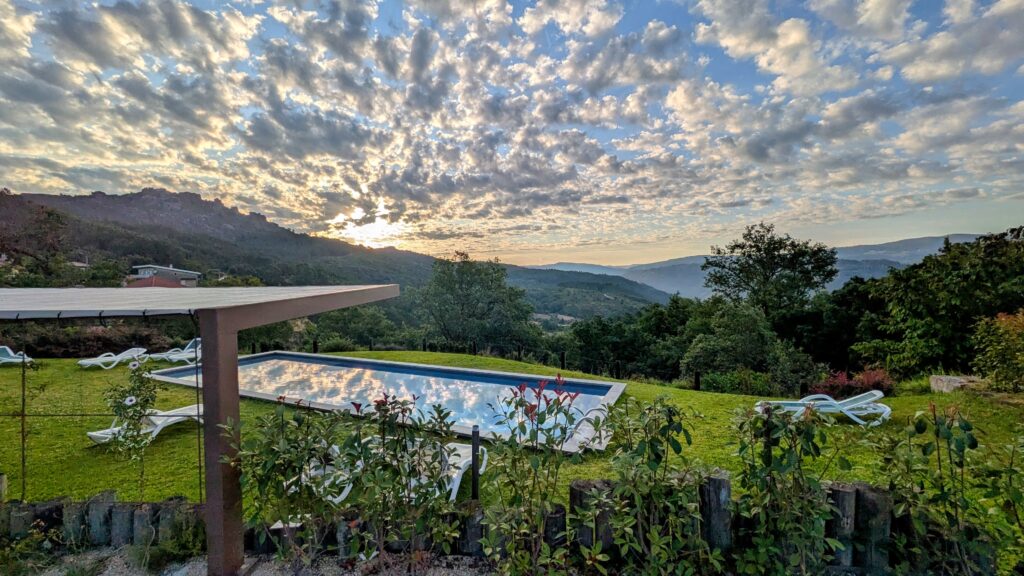
I stayed in a village called Fafião on the southern edge of the park. Known as the ‘village of wolves’, Fafião itself is a small but quite lively village, with a few off-road vehicles picking-up and dropping-off hiking tour groups each day. As I learnt, Fafião is also blessed with some wonderful restaurants (but more on that below).
Every July, the town also plays host to the festival ‘Aldeia de Lobos’ which is a community event, apparently designed to shift the historical narrative from hunting Iberian wolves to protecting them. During the festival, local animal stables are converted into art galleries, and the town’s ancient stone wolf trap (fojo) becomes a focal point stage for various performances and local storytelling. There are also guided hikes, and regional food on offer.
If you’re staying anywhere in the park in July, do check the dates of the festival to see if it overlaps with your visit. We missed it by just one weekend unfortunately, but I certainly got the sense that it has become a hugely important event in the park’s cultural calendar.
Retiro do Gerês
The hotel I stayed at was called Retiro do Gerês, right in the centre of town – a (relatively) bustling hostel/hotel on the main road through Fafião.
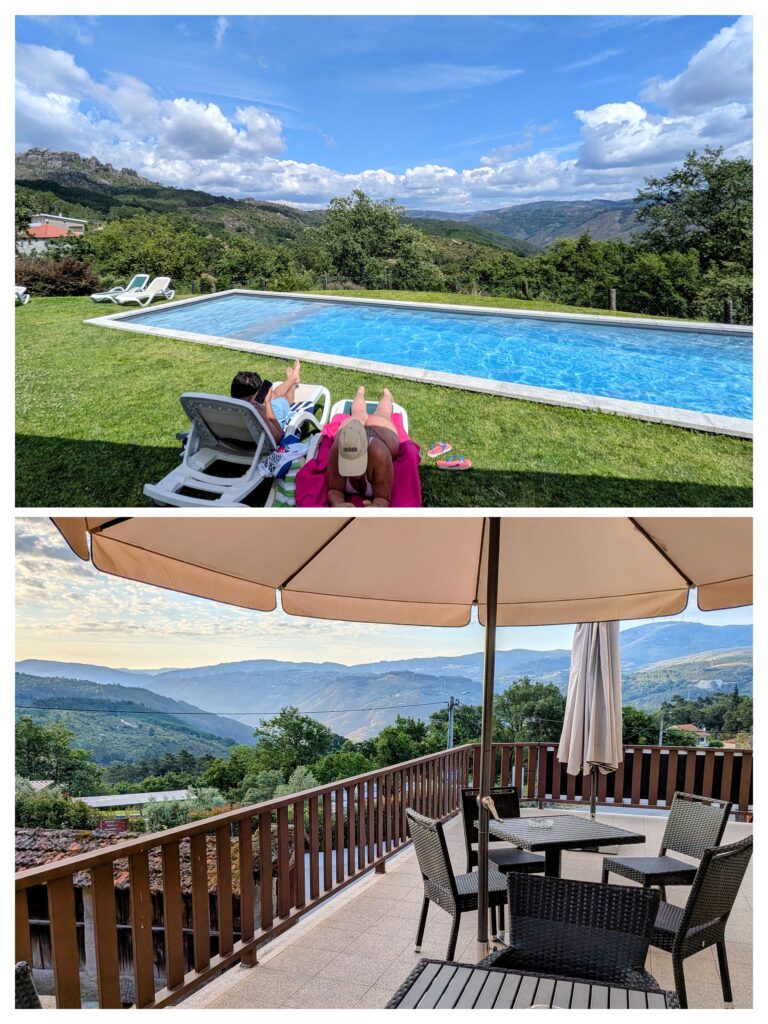
Its only drawback was the small size of the bedroom and beds, which was a bit of a squeeze for the three of us travelling. Otherwise, I found the adjoining bathroom spacious and fully equipped. There was a relaxing outdoor communal balcony and kitchen area (in case you wanted to cook for yourself (that would be absolute madness here though – again, see below!), as well as a downstairs café and breakfast area.
The best things about Retiro do Gerês though, were its wonderful (and plentiful) breakfasts, and its super relaxing swimming pool, jacuzzi and sauna area, which overlooked the mountains across the valley. I would have been perfectly happy not leaving the hotel for a few days due to those views and facilities, and they certainly provided welcome rest bite and recovery after a day’s hiking in the wider park area.
The only thing to keep in mind about this place if you’re travelling with a child – they’ll probably squeeze you into the same room together, as I’m not entirely sure if they offer more than two-person rooms.
Other Villages & Towns to Consider
Beyond Fafião, several other villages make excellent bases for exploring Peneda-Gerês National Park, depending on your travel style…
The South - Gerês
For those who want to focus more on wellness in the park, Caldas do Gerês (sometimes also know as just ‘Gerês’) is probably the best place to base yourselves. Thermal waters are abundant here, thanks to deep tectonic fault lines in the park’s ancient granite mountain rock. Effectively, rainwater seeps miles underground through these cracks, where natural geothermal heat then warms it, before it then re-emerges (now mineral rich) at the surface springs.
Because of these thermal springs, Gerês has become a somewhat livelier tourist hub with spas, a wider choice of restaurants, and also easy access to major waterfalls, including Cascata do Arado (via 20 minute drive), Cascata da Portela do Homem right on the Spanish border, and for an accessible hike directly from the town itself – Cascata da Laja.
If you decide to stay in Gerês then check out Chalet Villas Gerês or Gerês Valley.
The West - Soajo and Lindoso
If you prefer to delve into the area’s rural heritage, Soajo and Lindoso in the northern part of the park, are both good places to see the park’s famous granite granaries (espigueiros), and other stone houses. They also provide direct access to several mountain hiking trails.
Check out either Casa Serra De Soajo or RH Casas de Campo Design in nearby Parada.
The North
If you prefer to get really off-the-beaten-path, and you value tranquility above everything, the high-altitude mountain village of Pitões das Júnias in the north east features ancient monastery ruins, while Castro Laboreiro in the far north is famous for its castle ruins, medieval stone bridges, and distinct shepherd traditions.
Check out either Pitões Nature House (with pool) or Aldeia de Pontes (farm stay in a traditional stone house) respectively.
The East - Montalegre
Also, located on the eastern edge of the park, Montalegre is a major gateway town dominated by its 14th-century medieval castle. It’s ideal if you want a base that has generally more facilities, including hotels, plentiful taverns serving hearty local Barroso beef, and a few museums, while still being close to the eastern trails and high-altitude hamlets like Pitões das Júnias.
Montalegre is also famous for its Sexta-Feira 13 (Friday the 13th) street festivals celebrating local folklore, witchcraft, and pagan heritage!
Check out Casa Albelo do Gerês for a gorgeous pool overlooking the lake, or the budget Oficina Do Joe Guesthouse with similarly great views.
Where & What to Eat
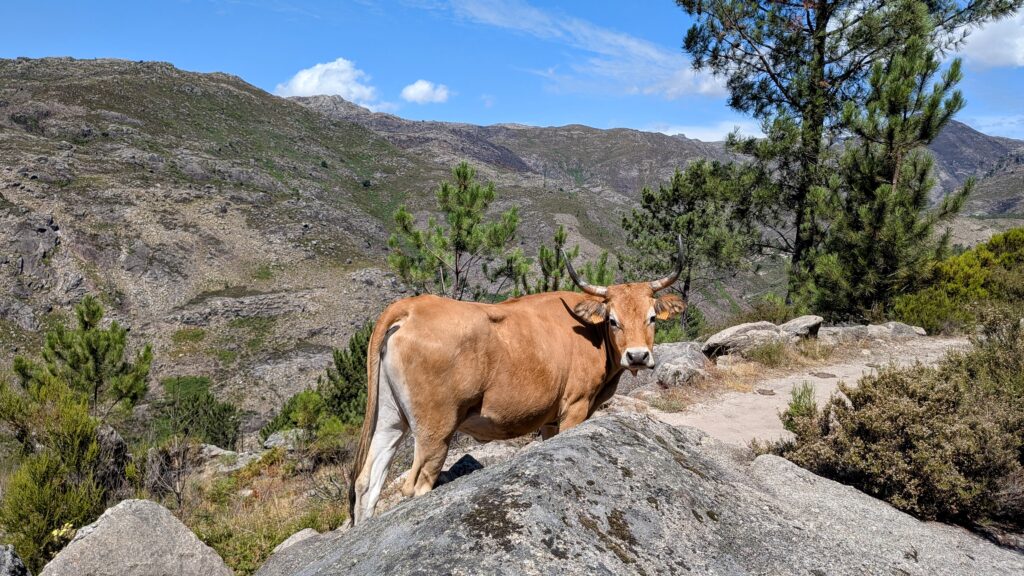
Holy Cow! Literally – I pray with thanks to the ones that provided us with such amazing steaks in Peneda-Gerês. Because this region is an active pastoral landscape, you’ll find A LOT OF MEAT on the menus here. Indeed, it’s largely thanks the local Cachena and Barrosã cattle (which I even found myself hiking alongside one day), why this area is so blessed as culinary region for carnivores.
I don’t mind a bold statement from time-to-time, so here’s another – Peneda-Gerês is the best place in Europe I’ve been to as a meat-eater. I ate lamb chops, veal steaks, ribeyes, tomahawks, as well as hearty local potatoes and vegetables ‘til my stomach was chanting ‘no mas’ like Duran after 8 rounds with Sugar Ray.
What made it all the more remarkable, was that I was able to eat like a king without bankrupting myself too. This is because the meat was sourced locally, direct from the national park area. Dining in Peneda-Gerês is as close to farm-to-table or pasture-to-table eating as you’ll get, and speaking truthfully, it’s one of the main reasons why the area resonated so much with me.
I’m usually the type of traveller that looks at prices almost before I read about the dish, but in Peneda-Gerês I could order anything I wanted without crying into my wallet once the meat sweats had died down. Incidentally, when eating out in mountain villages, avoid foreign transaction markup fees by using one of the best travel money debit cards for Europe instead of standard bank cards!
Eating in Fafião
My favourite restaurant was a truly wonderful place called Taberna S. Tiago – order anything on their menu, particularly their lamb chops or ribeye for two, and you can’t go wrong. Your steak will be served rare if you don’t specify how you like it cooked – and they won’t ask you either. We all ordered ours medium-rare, and even then they came on the rarer side, so my advice is to not be afraid of jumping up a notch on your cooked steak than you might otherwise fear doing back home.
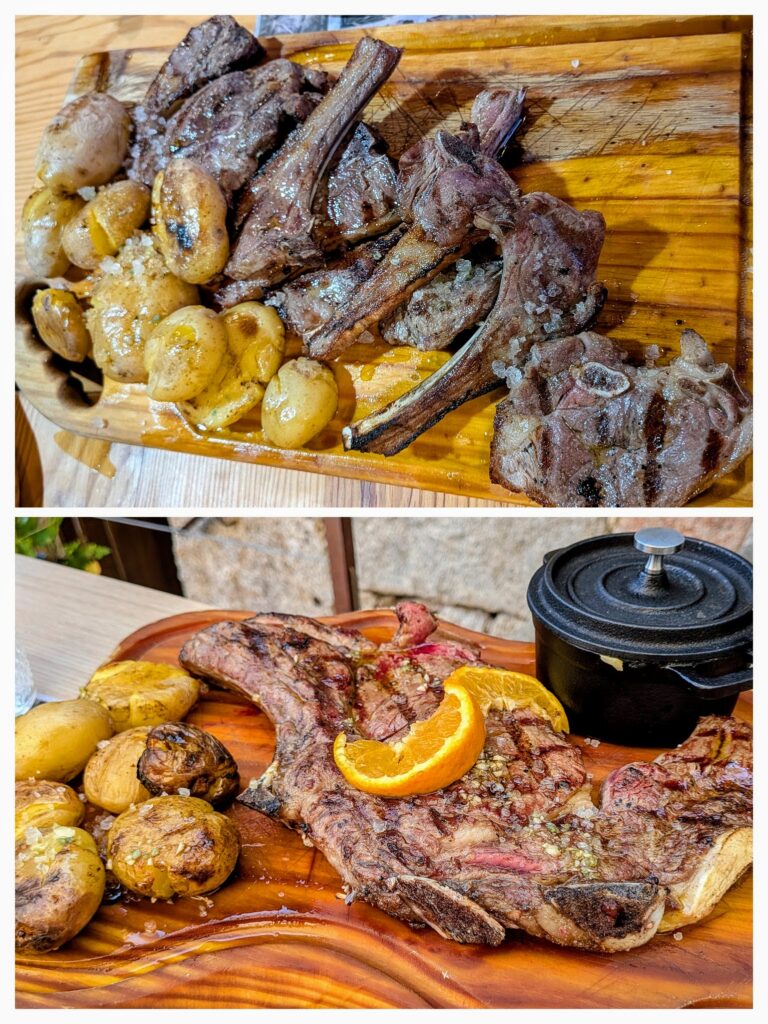
While Taberna S. Tiago was our favourite restaurant overall, due to its great food, and cosy, almost hunting lodge, ambiance both inside and out, it was actually another restaurant in Fafião, located a little further up the hill behind Retiro do Gerês, which gave me a taste of the best steak I’ve ever eaten in my life. Check out O Fojo dos Lobos and order their Barrosa beef chop for the most tender, melt-in-the-mouth steak you’ll eat. It was incredible.
The only bad thing about it was that it wasn’t me that ordered it – but my Dad – and I only got a mouthful. I didn’t begrudge him though; the old man needed a stroke of luck after shoe-gate (read below to find out more about that!).
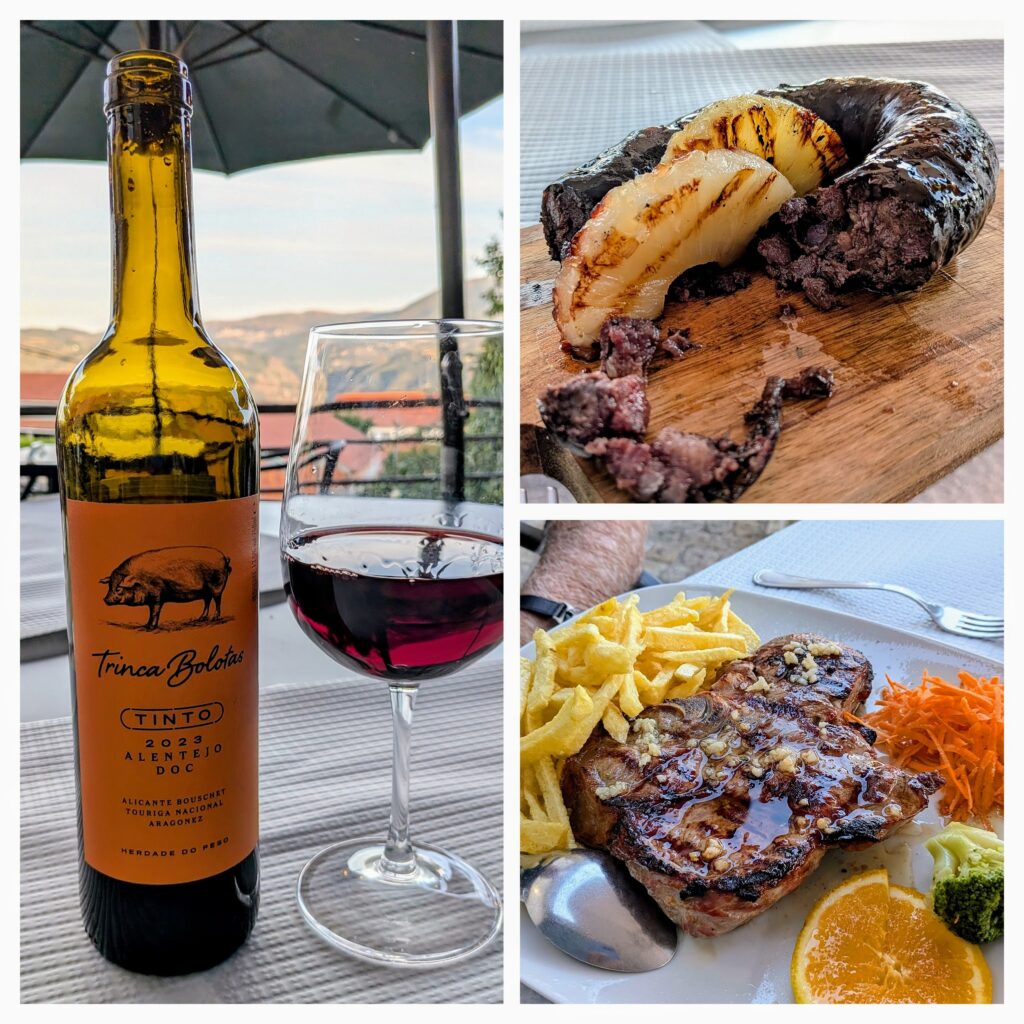
Wherever you’re staying in Peneda-Gerês, it is absolutely worth your time to visit Fafião and dine in either, or both restaurants above. You won’t be sorry.
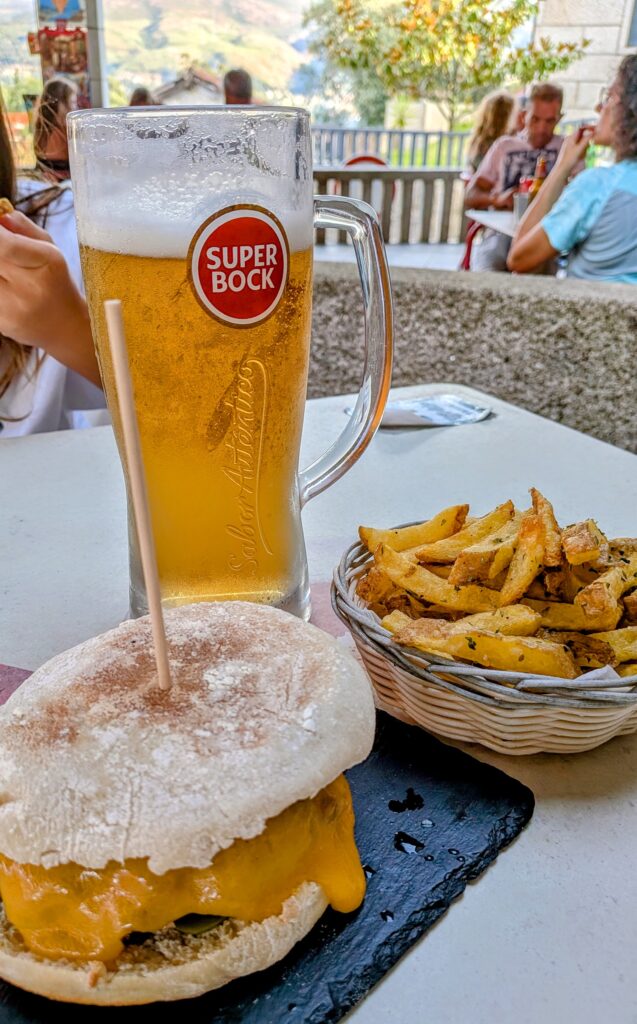
And for something a little less formal, or for those travelling with kids, the bar in town – Café Fojo dos Lobos – does great Black Angus burgers, which were juicy, well-seasoned and extremely popular with the locals and tourists we met there each time we visited. The bar also served some of the cheapest beer I’ve found in Portugal, with half a litre of Super Bock coming to just 3 EUR.
What to do in Peneda-Gerês
Get active! Simply put, you need to get off your arse and get outside, because exploring and appreciating nature is what this national park is all about!
Hiking
This region has some of the best and most accessible hikes in western Europe, and there are many hiking routes to choose from. You can choose between hikes that include waterfalls, lagoons, high mountain plateaus, lakes, rivers, or some of the area’s traditional stone villages.
To be honest, though, there are so many highly rated hikes here that you can definitely feel a little overwhelmed by the choice. You’ll most likely be visiting the park in your own hire car too, so pretty much every hike in the park is a feasible choice. I typically considered proximity to where I was staying, hike length, difficulty, and duration and the main highlights before making my choices.
The Xertelo to 7 Lagoons Loop
As I was using Fafião on the southern side of the park as my main base, I decided to do the 7 lagoons hike, which took us from the tiny hamlet of Xertelo (about a 25 minute drive from Fafião) along a gorgeous mountain ridgeline to a succession of sapphire lagoons, which cascaded neatly down into a river valley.
The trailhead was really easy to find, with a big car park, and a small roadside cafe where you can pick up any last-minute supplies before starting. Absolutely make use of this place in case you didn’t pack a lunch with plenty of water. We were well stocked up due to the huge breakfast back at Retiro do Geres, which meant I could make sandwiches to take with us.
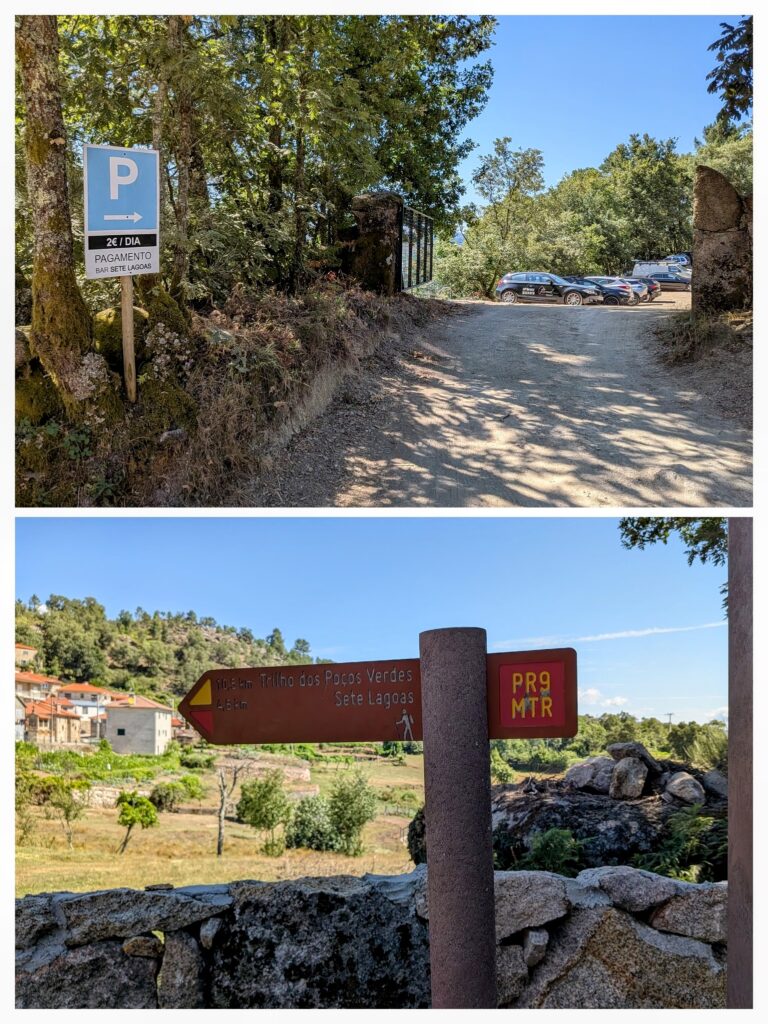
The hike was very picturesque, taking us along winding mountain paths with wonderful views from the very first minute. The trail itself wasn’t too crowded at all, despite visiting in July, and we even encountered some local Barrosa cattle en-route.
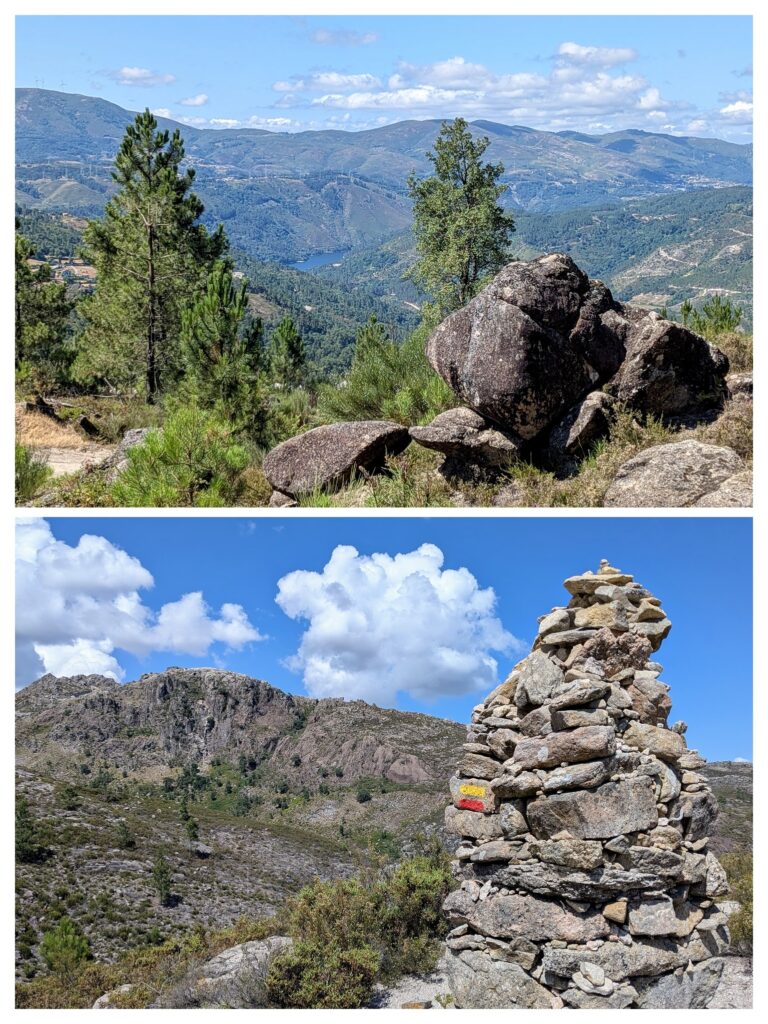
On arrival to the lagoons, we were told by another hiker that the area at the bottom was somewhat quieter, so we took his advice and headed further down the lagoon sequence, passing several inviting natural blue pools as we descended.
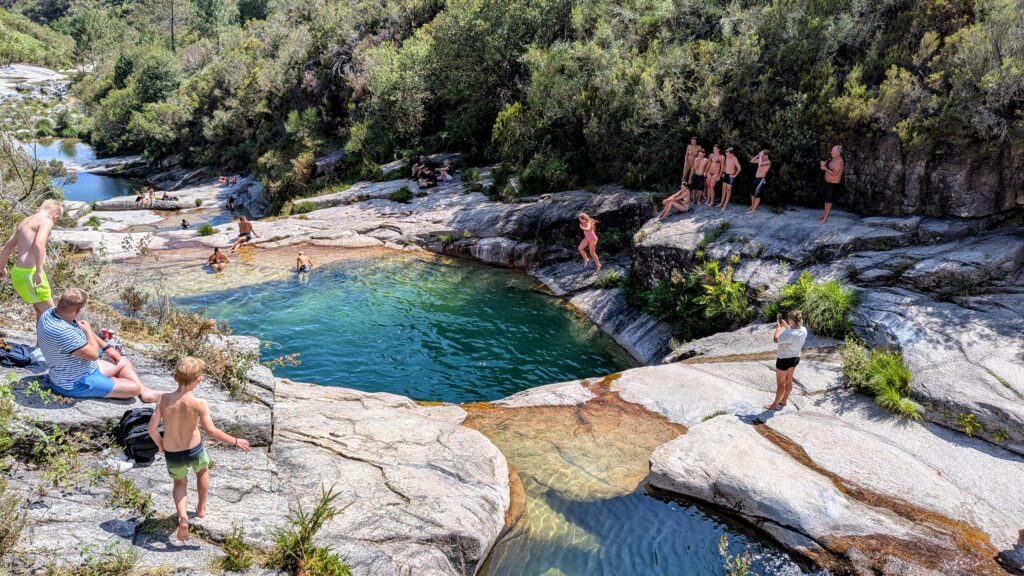
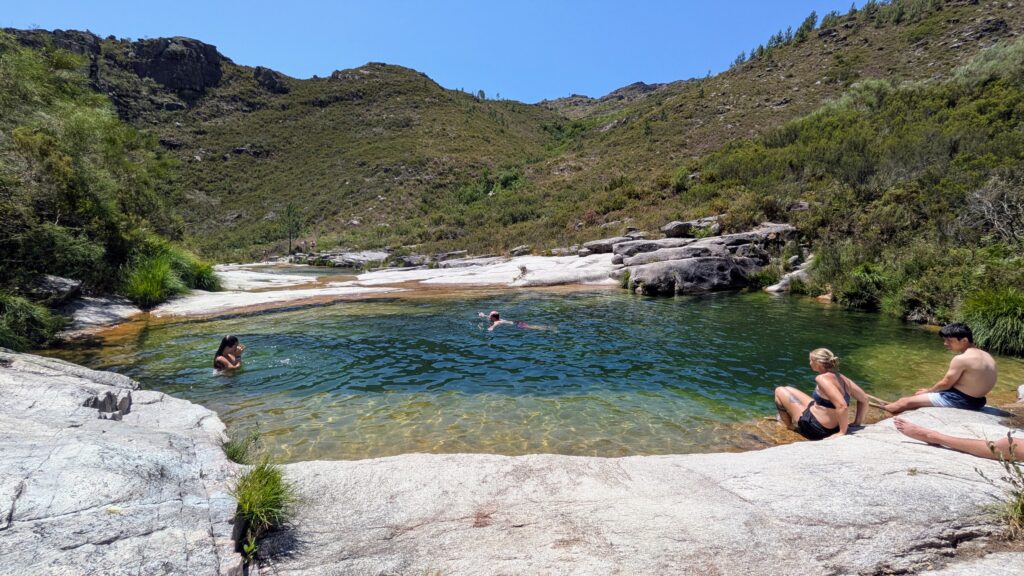
Having reached lagoon number 5, we made a little base, did the old wrap-the-towel-around-your-waist-and-get-your-speedos-on routine, and happily swam, sunbathed and pottered for the next few hours. The cold water was the perfect remedy for our rather salty bodies after the 1.5 hour hike from Xertelo.
Our return journey however, wasn’t quite so smooth, as we ended up taking the wrong trail ‘back’ to our car at the trailhead. This resulted in a return trip which took double the time! This was compounded by the wholly unsuitable choice of footwear made by my 78-year-old father, who, for some unknown reason, decided to hike that day wearing a pair of grey going-out shoes with zero grip – which he’d only worn once before – and which literally disintegrated on the park’s rugged trails. Having completely lost the entire sole from his right shoe, my father found himself hiking with one shoe and one sock over the rocky terrain, until the sole from his left shoe eventually flapped off too!
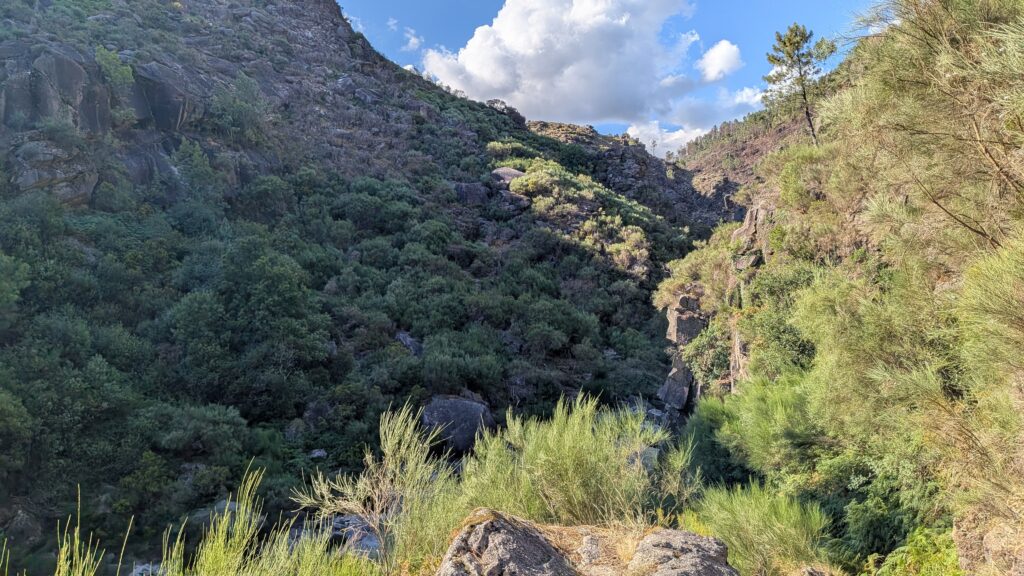
Feeling somewhat guilty about having led us along this much harder (and wrong!) trail back, I gave the old man my shoes and did the last few kilometres (on stone and gravel) in my socks. A few long-term splinters later, we eventually made it back to the trailhead for some much-needed refreshments and a short rest before driving back to Fafião to be comforted by a few giant steaks.
To some a hiking disaster story, to others a Shackleton-esque tale of grit and determination – what I learnt from that day was, 1) never condone a 78-year-old hiking Peneda-Geres in poorly made cardboard plimsoles; and 2) it’s always a good idea to have an app like AllTrails to monitor your progress and get you home when hiking on unfamiliar trails – it certainly helped me to get us back once we had veered off-piste.
Other Hikes to Consider
For me it was a straight toss-up between the ‘Xertelo to 7 Lagoons Loop’ and the ‘PR9 MTR – Pocos Verdes Trail’. In fact, with the help of AllTrails, I’m only just now learning that we, in fact, did half of the 7 lagoons loop out, and the return journey back on the PR9! The reason I had opted for the 7 lagoons trail was because the terrain on PR9 was reported as somewhat more challenging, with several much steeper sections, and so it certainly proved.
I would also say that PR9 Pocos Verdes is also a considerably less hiked route, with more over-grown vegetation on the trail. Having said that, its trail markings were clear throughout – so if you do fancy a more challenging hike out to the lagoons then give it a go! The views were absolutely spectacular. Hell! Why not just follow my example and do the 7 lagoons trail from Xertelo to the pools, and then the PR9 back to Xertelo!
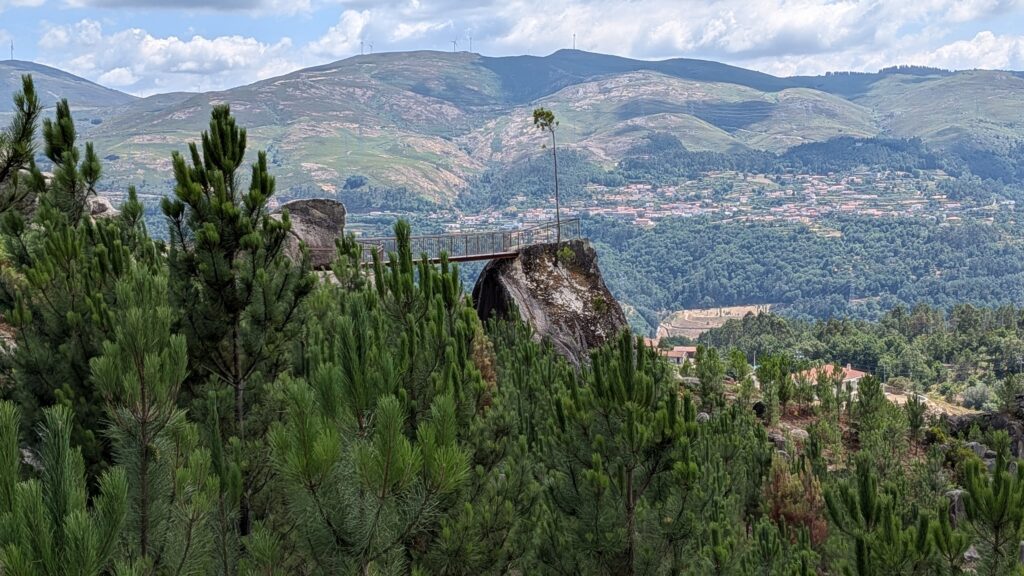
Other nearby trails include the Arado Waterfall and Blue Well Trail (10km), and the considerably shorter Fafião Viewpoint & Green Well Trail, which includes the wonderful Fafião viewpoint perched just above the village. Even you’re not much of a hiker you can wander up to this in just 15 minutes of casual walking from the village centre, and you’ll be rewarded with some truly awe-inspiring views over the Toco river valley below.
Peneda-Geres National Park - Final Thoughts
Peneda-Gerês is one of those places every traveller dreams of – relatively little known, strong local traditions, amazing locally sourced food, gorgeous views over varied landscapes, unique flora and fauna, and an excellent range of outdoor and wellness activities to keep even the most energetic and curious entertained for days.
What I loved most about the national park was that this is a region that made me feel at home, unlike most places that I temporarily visit. I could imagine a life lived in Peneda-Gerês; one filled with juicy steaks, mountain walks, expansive views, local festivals and parties, cold water lagoons, waterfalls, and steaming hot jacuzzis each day. Yeah, I could handle that, I reckon…not sure about the shepherding though – that’s hard work.
I urge you to check this wonderful region out, and not just for a fleeting look, or as a second choice of country escape after the Douro Valley. Peneda-Gerês has so much to offer a particular type of tourist, i.e. anybody one that loves nature, great food and being outdoors.
Anyway, if you’re planning at trip to northern Portugal it’s very likely that Porto will also be on the menu, so do check out my article on where to stay in Porto, for the complete lowdown on which part of the city will most likely suit you. And in case you’re heading further south, I’ve also written guides for elsewhere in Portugal (including Lisbon) and Fatima.
Leave a reply