
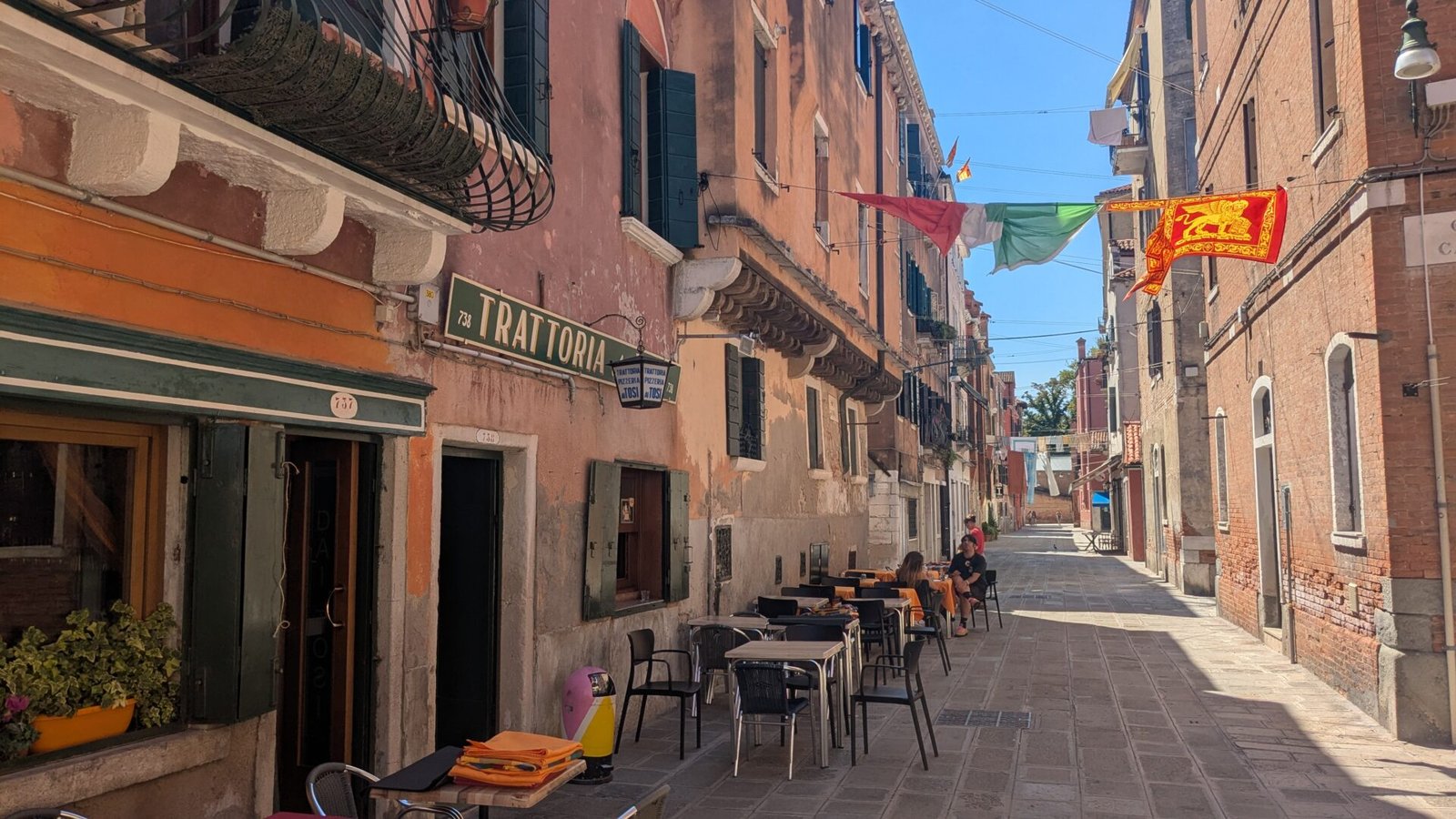
I both love and hate Venice. I love it because there’s nowhere else even remotely like it. It truly is a stunningly beautiful and genuinely unique open-air museum of a city. I hate it for pretty much the same reasons, or at least the resulting issues its beauty has caused with unsustainable tourism.
Certain parts of the city can pretty much be no-go from Easter until mid-Autumn, that is, if you place any value on experiencing a relaxing city break. From hordes of tourists clogging up its narrow and winding streets, or getting poked in the eye with selfie-sticks around every corner, Venice is often ruined by over-tourism.
Furthermore, pretty much every Venice travel blog out there blindly directs you to the same ‘must-do’ activities, hotels and restaurants in the city’s most well-trodden areas. So, as a fan of the city, but not of my fellow species, I went there to see if it was possible to claim at least a small portion of this amazing place for me – someone who needs to feel like an insider to enjoy my travels.
What I discovered is that with a little bit of effort and awareness, you can avoid the crowds in Venice, even in the peak summer months. You can still find good value accommodation, you can eat reasonably priced food at authentic local restaurants (without being obliged to smell the garlic breath of your fellow patrons sat very close to you), you can find some unique and off-the-beaten-path activities, and you can wander parts of the city in relative peace and quiet. You just have to know where and how.
So, welcome to my Venice travel guide, designed for both first timers as well as grumpier more discerning travellers who prefer to avoid the crowds…
THE VENICE TRAVEL GUIDE FOR INTROVERTS
Venice is located at the northern edge of the Adriatic sea, in Italy’s northeast. Lying on an archipelago of 118 islands, it is criss-crossed by an intricate network of 177 canals, which are connected by no less than 409 bridges. You’d think among all those narrow alleys and pathways that it’d be easy to find some peace and quiet, right?
Well, that task is made harder by the frankly astonishing numbers of international tourists who visit the city each year. In 2024 (the latest count) this came to almost 6 million overnight visitors, but add to that the huge number of cruise-ship day trippers, and it’s easy to see why this city with only 48,000 locals, is so easily swallowed up.
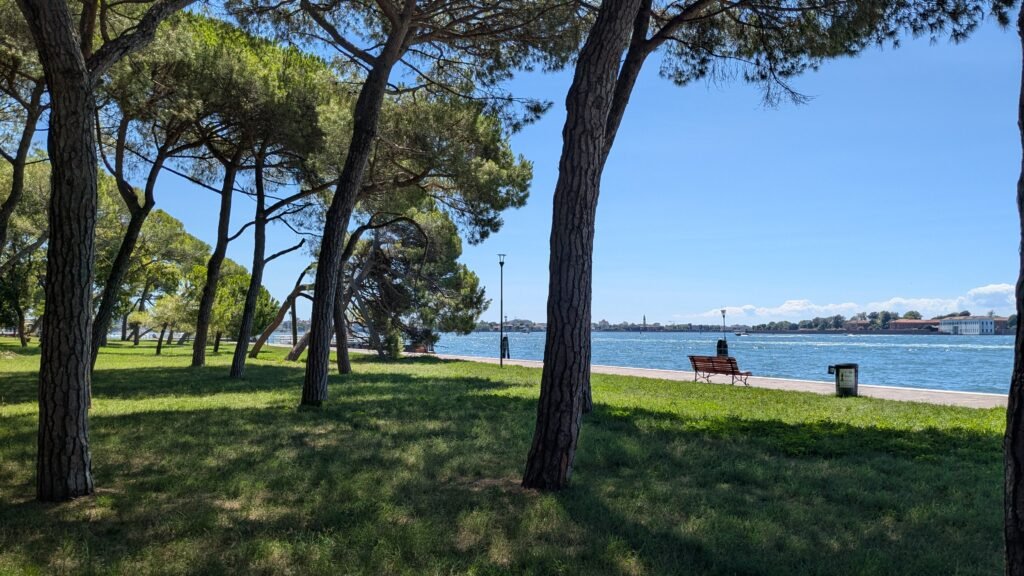
Why is Venice so Popular? A Woefully Inadequate History...
Rising improbably from a lagoon at the edge of the Adriatic, and built on more than a hundred small islands, Venice began life in the 5th and 6th centuries as a refuge for mainlanders escaping invasions by the rampaging Huns and Lombards. Its early settlers began driving wooden piles deep into the muddy shallows to build a community which over time grew into the powerful Republic of Venice, a maritime superpower and trading empire that connected Europe to the East.
Dominating trade routes from Constantinople to the North Sea, Venetian ships, mass-produced in its famous Arsenal, filled its ports with spices, silk, and wealth, enriching its aristocrat families. This, in turn, funded the creation of the city’s grand palaces and the work of several brilliant artists. Venice’s power and independence only began to wane in the 18th century, and in 1797 the republic fell to Napoleon Bonaparte, later passing into Austrian hands before joining a unified Italy in 1866.
Yet decline never dulled its mystique, and Venice became a glittering highlight of the Grand Tour – the long journey across Europe taken by young aristocrats in the 17th and 18th centuries to complete their ‘education’. British nobles, poets, and painters in particular, came to see the domes of St. Mark’s, and the art-filled palaces lining the Grand Canal, and to attend masked balls during Carnival.
These early travellers came seeking refinement, romance, and a touch of decadence. They collected prized masterpieces by artists like Canaletto, attended operas, and drifted through the canals in gondolas, writing various accounts of the city’s beauty. Their musings spread far and wide, helping to establish Venice as one of the first great travel destinations, while also reinventing the city as a place of art, elegance, and imagination.
The city survives as a living museum and a fragile marvel, ever popular with the modern-day Grand Tourers of the Instagram generation, who now visit from all over the world. It’s hard to imagine a more photographed city than Venice, and if there is, then it must be epileptic.
But Venice isn’t just fragile because of how swamped it gets with tourists, the city is at genuine risk of literally returning to the swamp once more, as it sinks and subsides excruciatingly slowly back into the lagoon, a process hurried by nearby industrial shipping lanes and a rise in sea levels.
Nobody knows just how long Venice will be around to adore. Hopefully clever people will determine ways to preserve the city before parts of it are lost forever. In the meantime, it’s simply impossible not to be a fan, but let’s continue to appreciate it in a less exploitative way, which shares the tourist burden across its entire breadth. This is how I think we can do that a little better…
GETTING THERE
Flying
Because of its enduring popularity, Venice naturally has very good transport links, with multiple direct flights from the US, as well as the middle east and most major European cities. Its two airports, Venice Marco Polo, and Treviso are located a little out of the city (about a 20 or 30-minute bus or taxi ride away respectively).
Airport Transfer via Bus
From Venice Marco Polo airport you can pre-book a direct express bus for 10 EUR each way, or you can pick up an open return ticket for 18 EUR. This is actually cheaper than if you book it directly at the airport, so I’d recommend pre-booking above. The coaches leave twice an hour at twenty and fifty minutes past. This is how I arrived to Venice, and the bus journey took only 25 minutes.
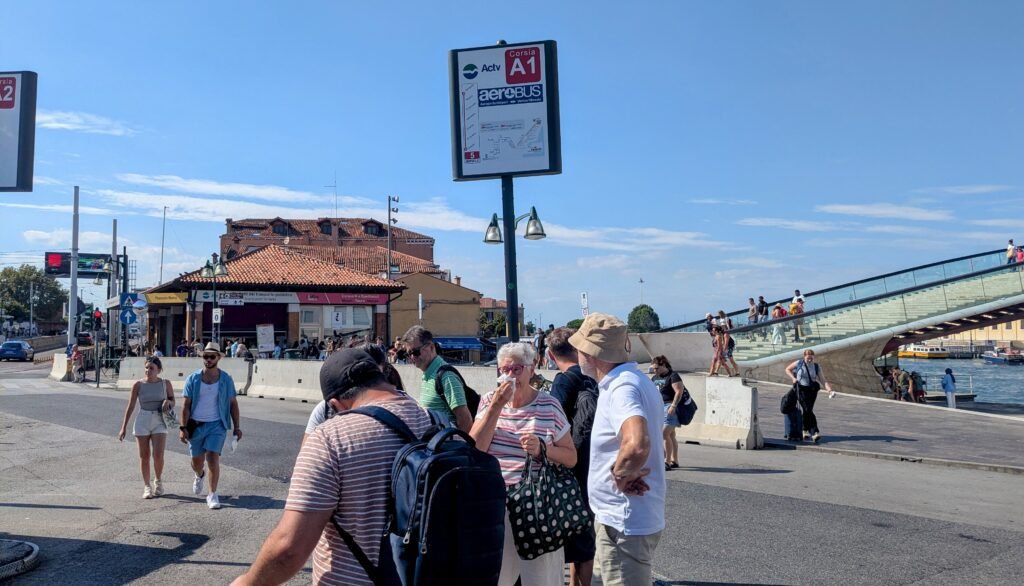
The bus drops you off at Piazzale Roma on the western edge of the Centro Storico, and from there most hotels are easily walkable (unless you have loads of heavy luggage!). Check out the map below to get an idea of how long it would take you to walk from the bus station drop-off point to other parts of the centro storico…
Airport Transfer via Watertaxi
For those of you who prefer to arrive in style, and be dropped a little closer to your hotel, you can always choose a water taxi from the airport to the city center instead. The meeting point at the airport is easy-to-find, and the 50-odd minute journey covers various drop-off points in the city center and along the Grand Canal. This is likely the better choice for those of you with lots of heavy luggage.
Trains
Venice is insanely well connected to other Italian cities through the bloody brilliant Italian high speed rail network. Arriving into Venice by train is also very cool because Santa Lucia station is located right in the Centro Storico (or main island). This means that as you walk out of the station you’re immediately hit with the city’s magnificence. If you’re travelling light, you should also be able to walk pretty easily to wherever you’re staying, assuming it’s somewhere relatively central.
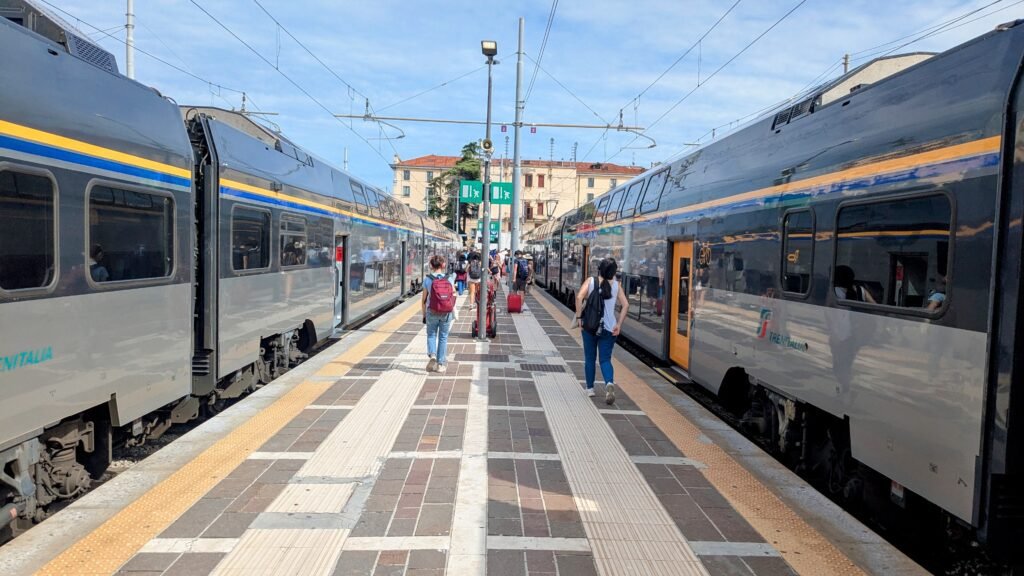
In case you’re visiting Venice as part of a wider Italian trip, here are some of the most common direct train routes in from nearby cities:
From Milan
From Verona
From Bologna
From Florence
- From Rome
Duration: 2.5 hours
There are LOADS of daily direct trains running from Milan to Venice Santa Lucia every day. You’re spoilt for choice. Tickets costs around 22 EUR. Book them here with TrainPal.
Duration: approx 1 hr 12 minutes
The fastest direct trains typically depart from Verona Porto Nuova and cost around 12 EUR.
Duration: approx 1 hr 33 mins
From Bologna Centrale you can expect to be in Venice Santa Lucia in just over an hour and a half. Again, there are multiple daily departures, and fares costs around 16 EUR for a one-way ticket.
Duration: approx 2 hours 14 minutes
If you’re travelling from Florence, choose between several different daily departures leaving from Firenze Santa Maria Novella (Firenze S.M.N). Expect to pay around 25 EUR per ticket.
Duration: 4hrs
From the capital, a direct train ride to Venice takes around 4 hours, leaving from either Rome Termini or Rome Tiburtina stations. The cheapest direct fares will cost around 40 EUR.
WHEN TO VISIT?
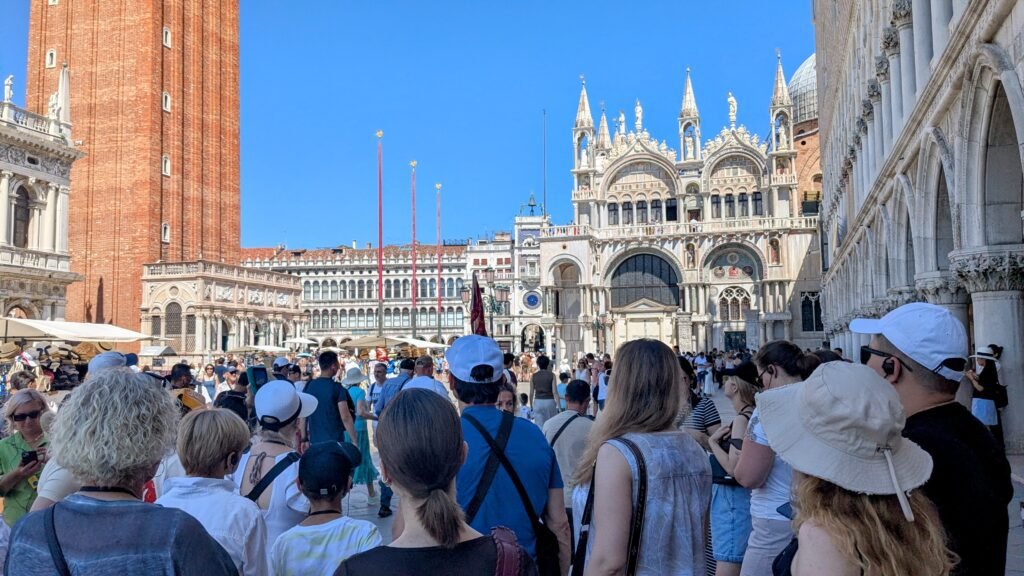
This is by far the most important decision you’ll make in terms of helping you to avoid the crowds in Venice. Essentially, it’ll be much easier to achieve our common goal, if you avoid the months of May – September altogether.
You can of course enjoy the city even if you do travel in peak season, but I think the best months to visit are March, April, and October. If you don’t mind the cold weather, Venice in winter is also considerably less crowded, although it’s a bit of trade off, as many of the best things to do in Venice (more on those below) don’t operate at this time of year.
When choosing when to visit, it’s not just about avoiding the crowds either, as visiting in the off-season conveys several other benefits, including cheaper accommodation, easier restaurant bookings, quicker access to the big-hitting museums and sites (Doge’s Palace, St Mark’s Square etc.), and much less competition for spots on the tours and activities that are still running.
Here’s a link to Venice’s average monthly temperatures to help you decide.
WHERE TO STAY IN VENICE?
My recommendation here is to try to avoid the most popular districts (or Sestieri in Italian). While central, these neighbourhoods are home to the biggest tourist attractions and thus also some of the highest-priced hotels. As such you may want to avoid San Marco, San Polo, and parts of Santa Croce in favour of Cannaregio, Castello and Dorsoduro.
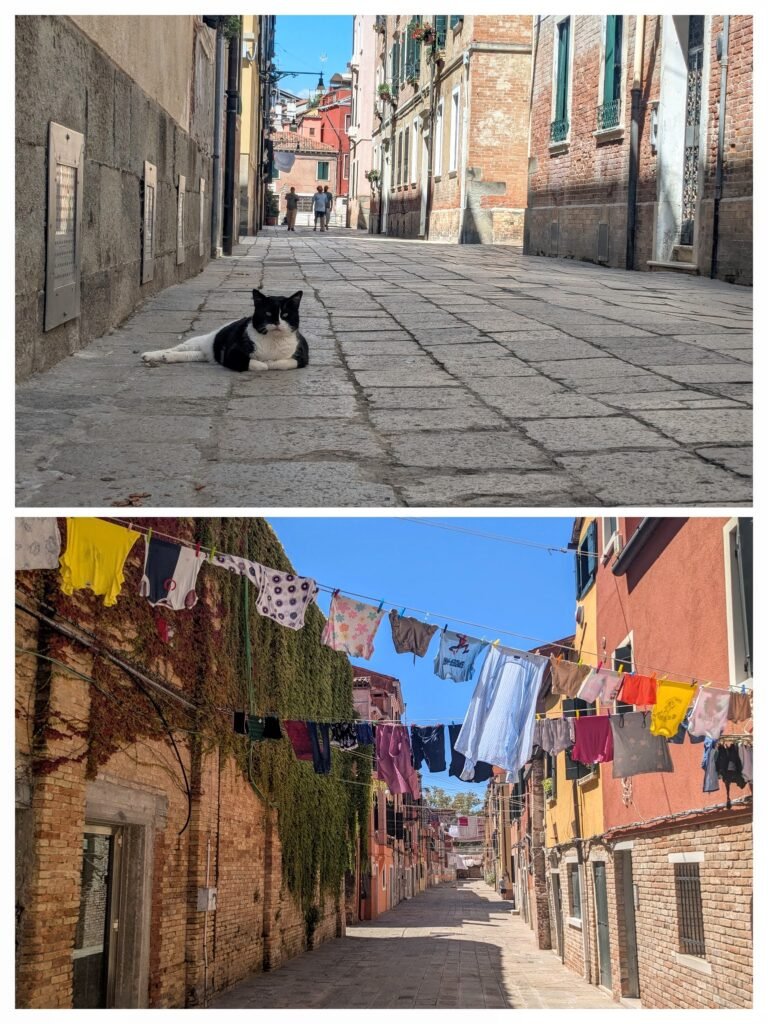
Personally, I absolutely loved the vibe of eastern Castello, which even in peak summer season had a bit of an end-of-the-world feel to it. I’m sure that sense was heavily influenced by just how busy the rest of the city was, but nonetheless, I felt like I was wondering through a local’s only ‘hood, and that was cool. If that sounds like music to your ears, then check out the Biennale Gallery Loft or Hotel Indigo Venice in Castello.
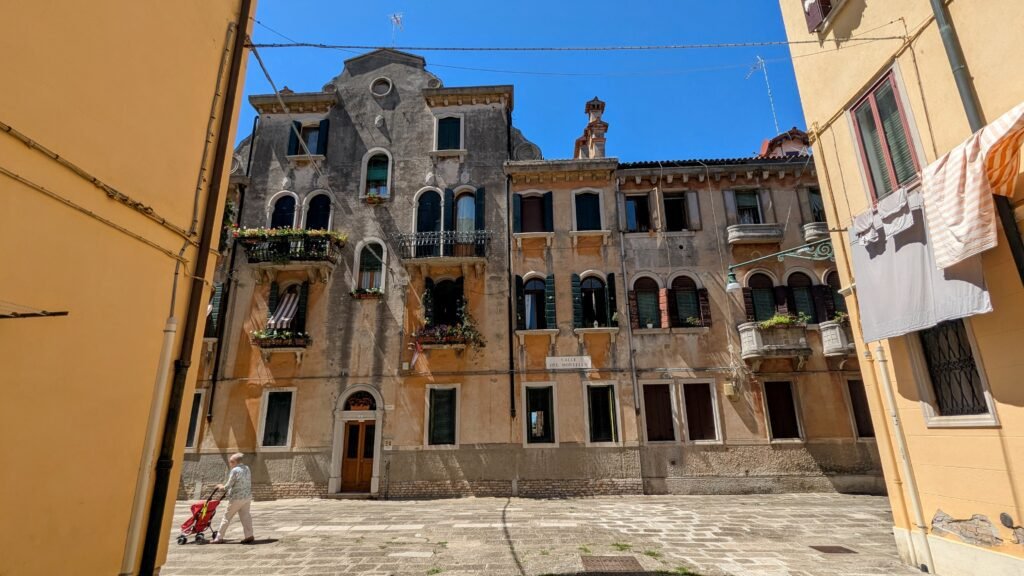
Cannaregio is another of Venice’s less-touristy Sestieri, and well worth a look too, especially if you prefer to be a little closer to the action compared with the eastern portion of Castello. Check out a place called 3749 Pontechiodo (mid-range) or Ca’ Bonfadini Historic Experience Hotel (splurge) in Cannaregio.
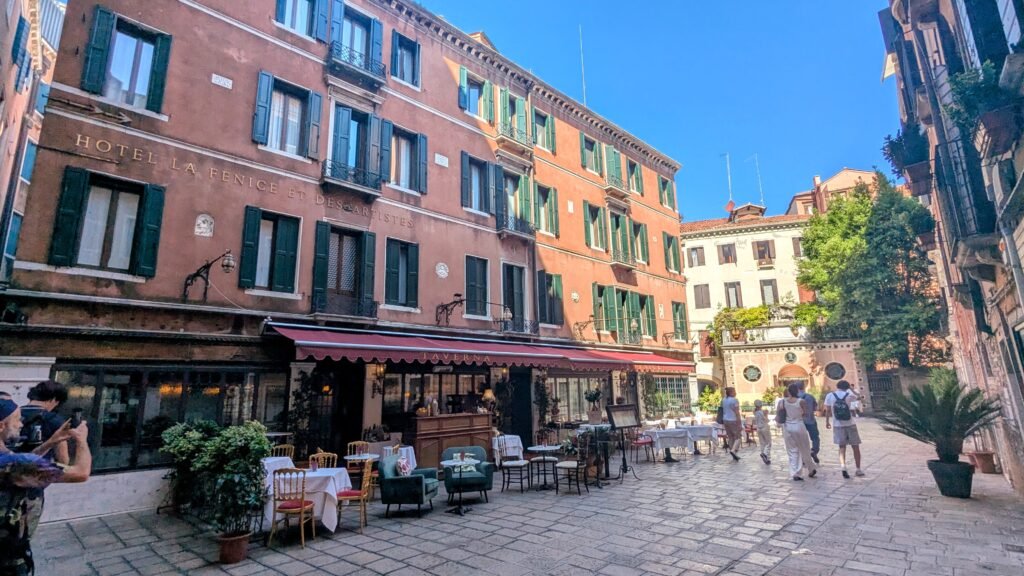
And if you really can’t resist the urge to be in center of everything, then check out Hotel La Fenice et Des Artistes, as it is at least somewhat tucked away in a (relatively) quiet courtyard, with a considerably calmer ambiance than everywhere else around it.
During my last visit to Venice, I stayed in Santa Croce. Because this district is closer to the bus and train stations (15 min walk), my road served as a thoroughfare for suitcase wielding tourists making their own way to their hotels. As such, I wasn’t a big fan of staying here, although I did appreciate my accommodation…
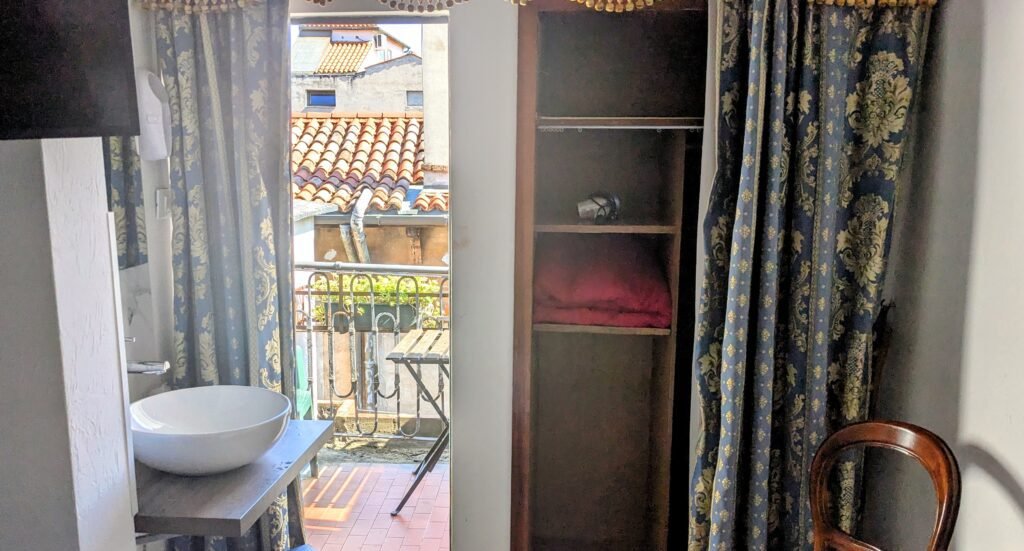
I stayed at Albergo Casa Peron, which is a budget hotel on the eastern edge of the district, close to the border with San Polo. I had a shower in my room, my own little private balcony, a spotlessly clean shared bathroom, and check in was easy. If you’re on a budget and want to go ‘full Venice’ on your first visit, then you might want to check it out.
Alternatively, if you prefer to do your own hotel search, then definitely take a look at the interactive accommodation map below to find your ideal accommodation in Venice.
Venice Hotels Map
GENUINELY DIFFERENT THINGS TO DO IN VENICE
Obviously, as this post is about avoiding the crowds, I’m focusing on some of the more unique things to do in Venice, i.e activities and tours which are truly different from the rest, and which will lead you away from the sweaty, heaving, all-consuming human throngs…
CANNAREGIO
Venice Kayak Tour
What better way to avoid the crowds than by literally getting in a kayak and paddling away from them? In addition to so effectively meeting our remit, this guided kayaking tour was of great interest to me as I also run my own kayak tours in Vienna, so I was keen to compare how they do things!
Unfortunately, I forgot my phone so I have no photos of the activity, but I can wholeheartedly confirm that my two hours on the water was a very cool way to see the city and the lagoon. Here’s how it worked:
We met in Cannaregio and got kitted up before a quick safety explanation. Shortly after our small-group (there were just five of us) launched using their range of both single and double hard-shelled kayaks. With my own tours I use inflatables, as I find that guests tend to find these a little more comfortable and easier to manoeuvre, but I was pleasantly surprised by the comfort level here.
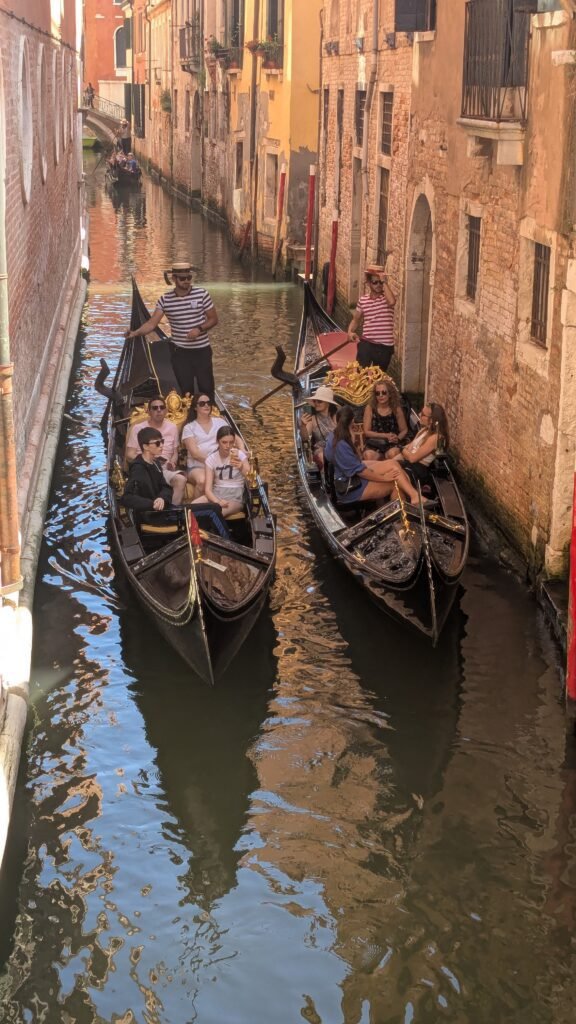
Anyway, busman’s holiday comparisons aside, what I loved most about this activity was being able to paddle through Venice’s canals and narrow waterways, and the genuinely unique perspective it gave me of the city. Thankfully, we avoided some of the busier canals and their Vaporetti (water buses), but still, we saw large parts of the Centro Storico during our two-hour tour, while also receiving some solid historical commentary and background from our guide.
Some of you may be thinking that this sense of freedom and exploration is also possible to achieve on a gondola, but I beg to differ, as powering oneself through the water feels way more intrepid, and much less like everyone else. And besides, in a gondola there’s always Mario or Luigi stood over you breathing down your neck.
I loved every second of it (well, I would wouldn’t I?), and I reckon you should give it a go too. It’s absolutely beginner friendly, and no experience, nor anything above slug-level fitness is required (trust me, I do this for a living). Tours operate daily from March until the end of October and you can choose between daytime or sunset paddles.
Secret Food Tour
Much like the grand tourists who preceded us, Venice is the kind of place where we go to feel more sophisticated, ideally by trying to live as the Venetians do. In terms of delving into the local food culture, this means visiting Venice’s many small bars (bacari). Inside a typical bacaro (singular), you’ll find locals snacking on various bite-sized morsels (cicchetti), while sipping a small glass of local wine (ombra) or Spritz. Think of these cicchetti as Venetian tapas.
Venice’s unique food culture, which is quite separate from the rest of Italy, is also affected by over-tourism, visibly so in the ever popular bacari of San Marco and San Polo. Here, in these tourist traps, not only are you far more likely to be paying over the odds, but you’ll be sharing air with Karen, Toshiyuki, and Juan, rather than Leonardo and Carla.
Equally, having ignorantly strolled into several bacari in my time, I understand how daunting this can actually be, especially if you don’t really know the etiquette or how they work. So, if you wanna visit the bacari where the locals still go, as well as experience the best value and best tasting cicchetti, my recommendation is (surprise surprise) to move away from the center in favour of exploring the Centro Storico’s outskirts.
A great place to do this is the far less touristy sestiere (district) of Cannaregio. Check out this guided Secret Food Tour which focuses exclusively on this quieter neighbourhood, exploring local bars and their cicchetti offerings, as well as main dishes, sweet treats and the Jewish ghetto (the oldest in the world).
Once you’ve visited some of the cicchetti bars with a local you’ll not only know how they work, but you’ll have recommendations for the rest of your stay. Tours operate year round and start at 10:30 every morning.
Alternatively, if you’re travelling on a stricter budget, then you may want to check out this 2.5 hour Venice street food tour instead, as it runs to only 39 EUR. Tours operate year round and start at either 10:30am or 17:00.
SAN MARCO
Avoiding the Crowds at Doge’s Palace & St Mark’s
Just because you’re an anti-social git, shouldn’t mean that you lose out on seeing Venice’s big-hitting sites. Fortunately, there are some very innovative tour companies that have tried to address Venice’s problem with over-crowding at its most famous locations…
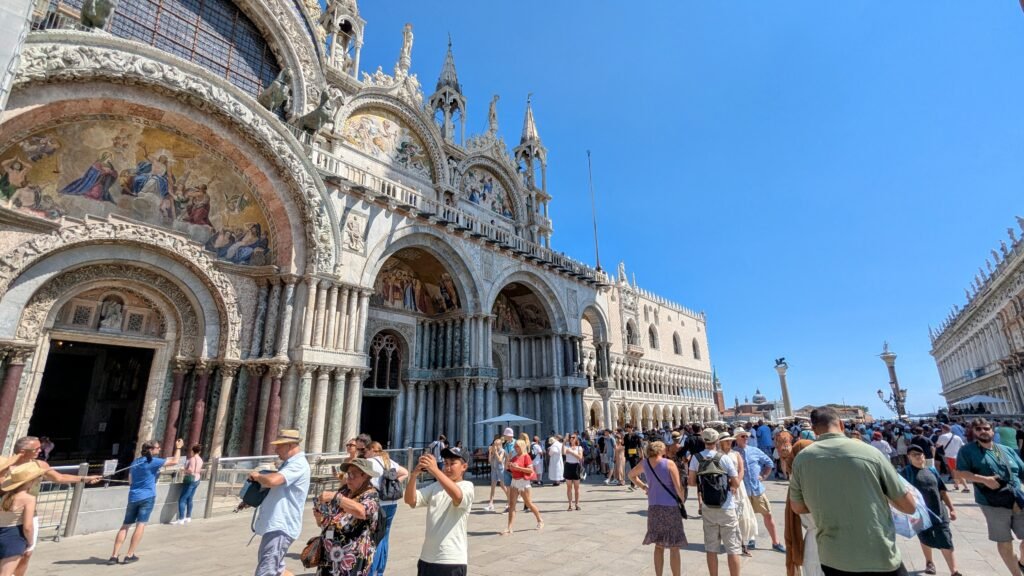
Walks & Devour Tours are one such company, as they have somehow negotiated after-hours access to Doge’s Palace and St Mark’s Cathedral. When I say after hours, I mean once both venues have closed to the public. This enables you to look around and actually enjoy both sites without the insane crowds that are there during the day.
You’ll be able to truly appreciate the stolen Byzantine gems which adorn St Mark’s Basilica, the frescoes of Veronese and Tintoretto, and the Doge’s famous prisons with just you, a small group of fellow people haters, and your guide on this 3.5 hour evening tour. Alternatively, if you’re only interested in visiting St Mark’s, or you just prefer a shorter tour, they also offer a 75 minute exploration of the Basilica, its Pala d’Oro, the famous crypt, and the undeniably impressive blend of both Western and Byzantine artwork.
I love it when tour companies recognise a problem and decide to do something about it like this. If you’re interested in learning about Venice’s spectacular past and how it became what we see today, then definitely check out these thoughtfully curated experiences. Both are also available with Get Your Guide, as well as completely private options for your group, in case you prefer to book directly through them.
DORSODURO
Italian Cooking Class
As part of my research for my third trip to Venice, I was shocked by how good the reviews for one particular activity were: this pasta and tiramisu cooking class. As someone who has done multiple pasta making classes in Italy before, and because I operate food tours myself with my own tour company in Vienna, this is seriously impressive, so I want to see how they do things and what makes this class so highly rated.
I will of course be taking this class myself to see what all the fuss is about. I’m optimistic that this will be a great activity, as not only are the reviews top notch, but it takes place in a long-established local restaurant in Dorsoduro, one of Venice’s less-touristy districts to the south of San Polo, on the much quieter side of the Grand Canal. Stay tuned as I’ll report back soon on my experiences.
Hidden Venice Walking Tour
Having already covered how to visit Venice’s most iconic sites without the crowds, as well as giving you tour ideas which show you the best of Cannaregio with the kayak and food tours above, what about Venice’s other quieter neighbourhoods?
This small-group or private walking tour of Dorsoduro starts on the Grand Canal at Ca’ Foscari, where you get Palazzo Gothic grandeur away from the selfie-stick scrum! The tour then moves into San Pantalon church to see the world’s largest canvas painting, as well as a nearby waterside Banksy, also largely ignored by the gondola-chasing masses.
You’ll then visit Campo Santa Margherita square, where Venice is young, loud, lived-in, and unapologetically local, before moving to the more serene Campo San Barnaba, better known for playing host to some iconic film scenes. The walk then stretches out along the Zattere, a blissfully wide and crowd-free promenade along the Giudecca Canal, before peeking into the working boatyard of Squero San Trovaso, where real working gondolas are crafted and repaired.
This is a really unique and comprehensive exploration of Dorsoduro, and is perfect for those of you who want to get off-the-beaten-path in Venice. Boo directly below with Valerio for the best prices!
WHERE TO EAT?
Continuing the theme, here are my suggestions for where to eat in Venice without the inflated prices of those central tourist traps around San Polo and San Marco…
Osteria San Isepo
While wandering the mostly deserted streets of Castello, I was very glad to have stumbled upon Osteria San Isepo. It looked inviting and pretty local from the outside (I could tell this because it was early lunch time, yet most patrons were drinking wine). I got chatting with the owner and he told me that this recently opened restaurant (2024) was in fact their second establishment in Venice (more on the other one below).
With indoor and outdoor seating that spilled out into in a plaza in the heart of Castello, this place seemed to perfectly match Castello’s relaxed energy. Its diverse menu tempted with several seafood options (as is typical in Venice) and daily specials. After much deliberation and FOMO I finally went for Tagliatelle with shrimps, chanterelle mushrooms and smoked ricotta. Predictably, it was lush, and I could have eaten triple the amount. Check it out.

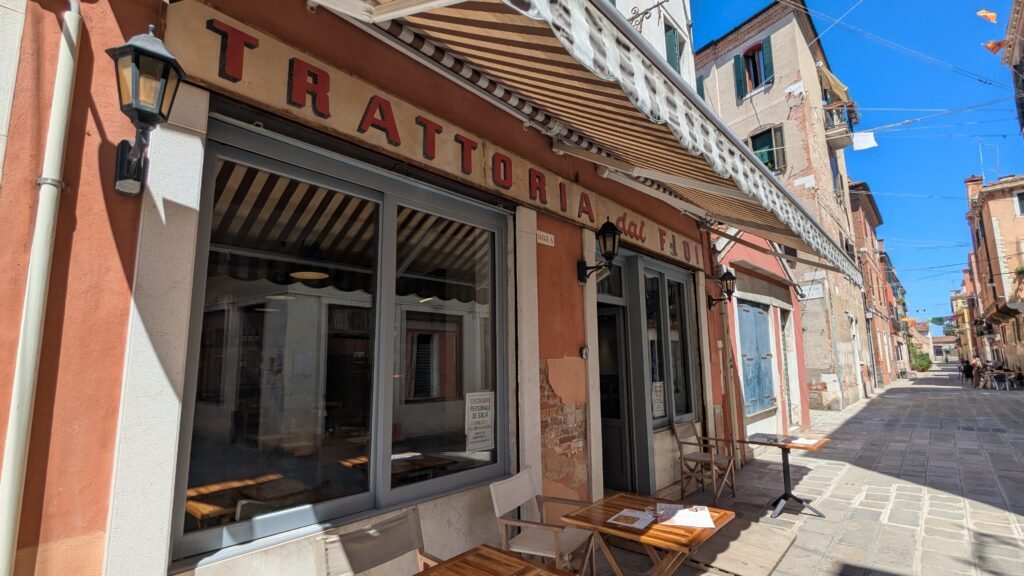
Trattoria dai Fioi
Arguably the best pizza joint in Venice, these guys specialise in proper Neopolitan pizza. Pizza haters relax, as there’s other options available too, including various pasta dishes, burgers and steak. There are a few streetside tables available outside, but the large buzzing space inside will provide endlessly authentic Italian vibes. The pizza was sensational, service was friendly and fast, and the final bill was very reasonable!
Cicchetti Bars
Bacaro ae Bricoe – the predecessor and older brother to Osteria San Isepo, Bacare ae Bricoe is an ever-buzzing locals’ hangout in Cannaregio. Expect great cicchetti, and a wide selection of beer and wines in this authentic Venezian locals hangout.
Also in Cannaregio, albeit a little closer to the selfie-stick carrying hordes, check out Un Mondo Divino for a very thorough selection of local wines and really good cicchetti.
VENICE TRAVEL BLOG: OUTRO
The greatest shame would be if future visitors were alienated due to Venice’s reputation for over-tourism. I believe that Venice is worth visiting at all times of the year, but only if we think critically in terms of when we visit, where we stay and what we choose to do when there.
Without question, Venice in winter and the shoulder seasons is far less crowded, which means that its accommodation, food, and activities are generally cheaper and more available than the peak summer months. Equally, finding peace among the chaos at these times of the year is considerably easier, especially for the more introverted among you.
But with a little creativity, and by following my recommendations in this post, La Serenissima can be enjoyed regardless of whether you visit in July, November or April!
For those of you visiting Venice as part of a wider Italian trip, then do check out my travel guide to Bologna, and also to the wonderful Lake Garda.


Leave a reply