

I love taking ferries to France. I’ve travelled pretty much every route since I first started going there on camping holidays back in the 80’s with my parents. There’s nothing quite like the excitement of it, with the building anticipation of arrival as you gradually cross the channel.
But with so many different ferry ports, and an ever-changing network of cross-channel routes to choose from, how do you know which one is best for you? And how do you find the cheapest ferry tickets? Sacre Bleu! Well, don’t panic Bruno, because this comprehensive guide brings together everything you need to know about UK-to-France ferries, saving you time and effort by delivering all the latest 2027 cross-Channel route updates in one convenient place.
I’m covering everything you need to know – including all the British and French ports, which companies operate each crossing, up-to-date route maps and how and where to book the best value tickets. So grab your baguette and a string of onions, cos we’re about to go port-to-port on a ferry to France…
Ferries to France From the UK
JUMP TO YOUR ROUTE:
Dover to Calais | Dover to Dunkirk | Newhaven to Dieppe | Portsmouth to Caen | Portsmouth to Cherbourg | Portsmouth to St Malo | Poole to St Malo | Plymouth to Roscoff | Plymouth to St Malo
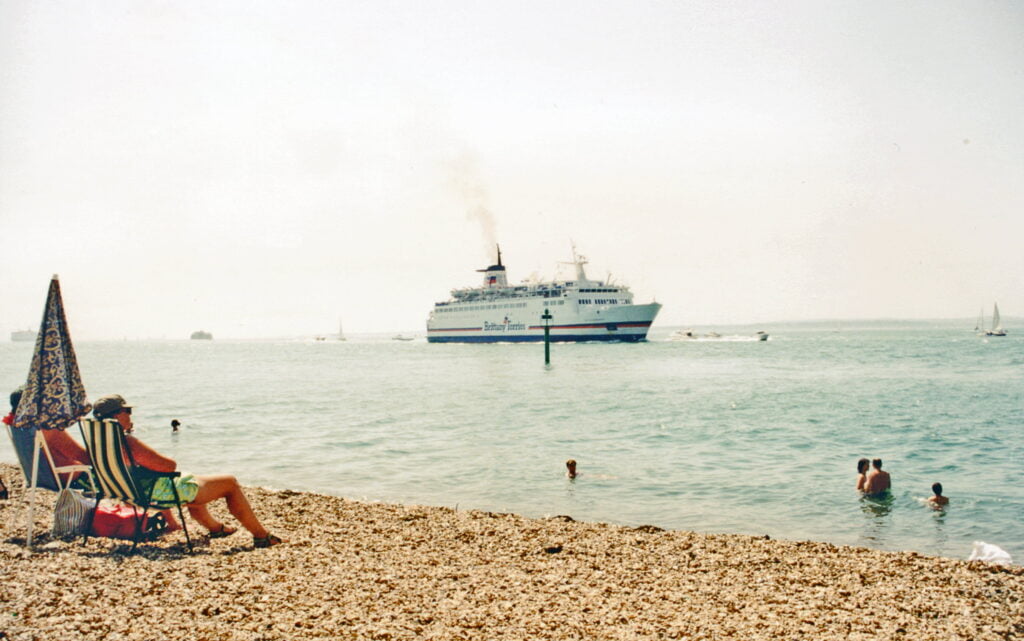
The big changes in 2027 are that Brittany Ferries have unfortunately taken the decision to cut two of its UK to France ferry routes due to ‘operational reasons’ – i.e. Poole to Cherbourg and Portsmouth to Le Havre. This is particularly gutting for me as Poole – Cherbourg on the classic ‘Barfleur’ was a route very close to home, and one that I watched many times from Bournemouth’s beaches chugging its way past Old Harry Rocks into the channel. Its final sailing was in October, 2026, while the Portsmouth – Le Havre route came to an end in September 2026.
UK to France Ferries: Quick Facts
- Routes: 9 ferry routes between the UK and France
- UK departure ports: Dover, Portsmouth, Newhaven, Poole, Plymouth
- French arrival ports: Calais, Dunkirk, Dieppe, Caen, Cherbourg, St Malo, Roscoff
- Ferry companies: DFDS, Brittany Ferries, P&O Ferries, Irish Ferries
- Shortest crossing: Dover to Calais — 1hr 30mins
- Cheapest route: Dover to Calais (from around £30–£50 foot passenger)
- Best for overnight: Portsmouth to Caen or St Malo with Brittany Ferries
The British Ports
Of course, when planning your trip, the first step is deciding which British ferry port to depart from. You’ve got five options, and all are located along the south coast of England. From west to east, these are:
Plymouth (Devon): Best for travellers from the South West, Wales, and the West Midlands. Serves Roscoff and St Malo via Brittany Ferries. Crossings are longer (6–9 hours to Roscoff) but Brittany is well worth the landing.
Poole (Dorset): Serves St Malo (via Guernsey) with Brittany Ferries. Good option for Hampshire and Dorset residents who want to avoid Portsmouth.
Portsmouth (Hampshire): The busiest ferry port for France, with three routes: St Malo, Cherbourg, and Caen – all operated by Brittany Ferries. Around 1 hour south of London via the M3/A3. Best for London, Midlands and South East travellers.
Newhaven (East Sussex): One route only: Newhaven to Dieppe with DFDS. Around 4 hours crossing time. Good option for East Sussex and Kent travellers who want to avoid Dover’s congestion.
Dover (Kent): The fastest and cheapest option. Dover to Calais takes just 90 minutes with DFDS, P&O or Irish Ferries. Ideal for foot passengers and anyone prioritising speed and price over comfort. Frequent sailings throughout the day.
Each port serves different cross-channel ferry routes, so the best choice for you will depend on 1) where you’re coming from; 2) the French port you’re aiming for, and; 3) whether you prioritise the cheapest or quickest options.
If you’ve never taken your vehicle or walked onto a cross-channel vessel before, by the way, start with my UK ferry guide for first-timers to understand boarding procedures and port layouts.

Ferry Ports in France
There are seven French ferry ports that you can arrive to from the UK. Again, moving from west to east, these are:
- Roscoff (Brittany)
- St. Malo (Brittany)
- Cherbourg (Normandy)
- Caen (Normandy)
- Dieppe (Normandy)
- Calais (Hauts-de-France)
- Dunkirk (Hauts-de-France)
Choosing the right French port to arrive at is arguably more important than which British port to leave from, as you’ll most likely want somewhere that gets you to your campsite, gite or hotel the quickest, or you’ll be choosing a port that leads you through nice countryside en-route to your final destination (perhaps even for an overnight stay).
Here’s a table detailing what each French port is best for, with driving times to Paris also included…
| French Port | Region | Best For | Drive to Paris |
|---|---|---|---|
| Calais / Dunkirk | Hauts-de-France | Cheapest crossings, Belgium, Netherlands | ~3hrs 15 |
| Dieppe | Normandy | Rouen, Honfleur, closest to Paris via N roads | ~2hrs 30 |
| Caen | Normandy | D-Day beaches, Bayeux Tapestry, Mont St Michel | ~3hrs |
| Cherbourg | Normandy | D-Day beaches, Cotentin Peninsula | ~4hrs |
| St Malo | Brittany | Mont St Michel, Dinan, Rennes | ~5hrs |
| Roscoff | Brittany | Morlaix, Quimper, the far west of Brittany | ~6hrs |
If taking a ferry to France is just the start of a broader European slow road trip, and you happen to be driving all the over to Austria, check out my Wachau Valley travel guide for an unforgettable stop.
UK to France Ferry Routes Map
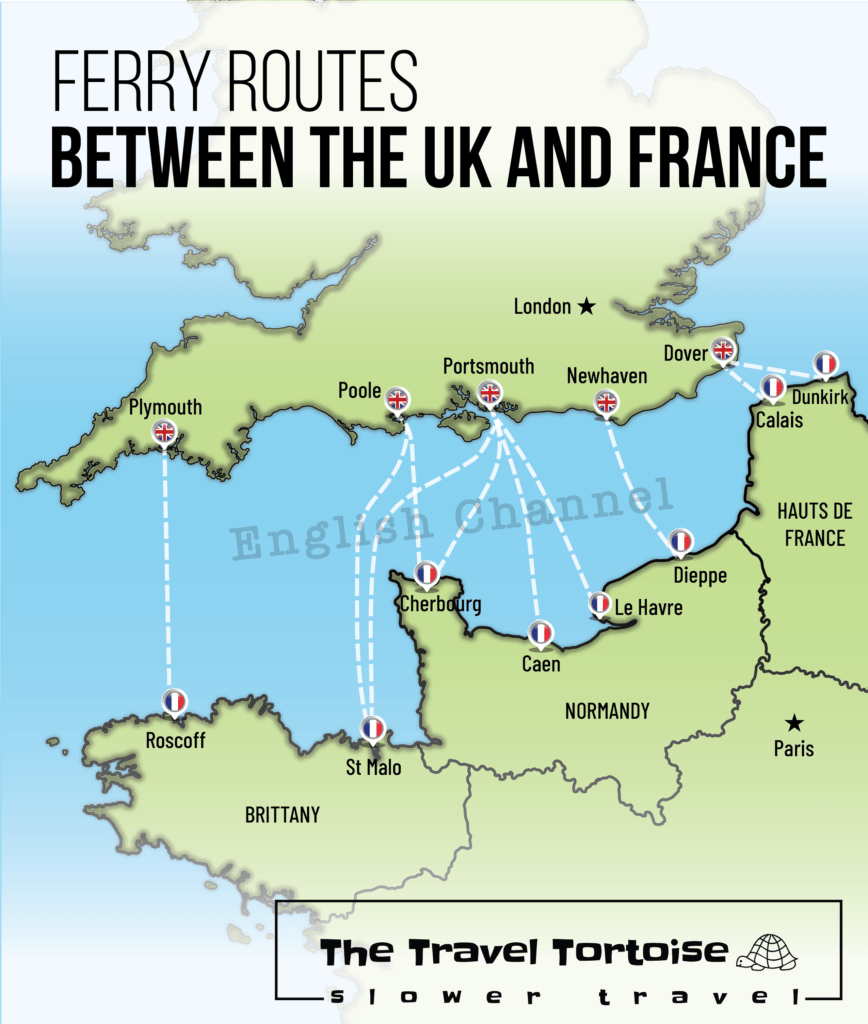
To give you a clear visual of all the options for traveling to France by ferry, here’s a map I made showing all UK to France ferry routes, including each of the corresponding British and French ports…
Route Breakdowns
There are currently 9 ferry routes operating between the UK and France, departing from five English ports. These are operated by four different companies: Brittany Ferries, DFDS Seaways, P&O Ferries and Irish Ferries.
Below is everything you need to know about each one – operator, crossing time, frequency, and rough price ranges – so you can choose the right crossing and book with confidence.
Dover to Calais
Operators: DFDS Seaways, P&O Ferries, Irish Ferries
Crossing time: Approximately 1 hour 30 minutes
Frequency: Every 60–90 minutes throughout the day and night, year-round
Foot passenger fares: From around £30–£60 each way
Car + 2 passengers: From around £60–£150 each way depending on the season and how far in advance you book
The Dover to Calais route is the undisputed champion of UK to France ferry crossings — the most frequent, the fastest, and almost always the cheapest. With three operators competing on the same route, prices are kept relatively keen, and you’re rarely waiting long for the next sailing. If speed and price are your priorities, this is your route. It’s also by far the best option for foot passengers, as frequent rail and coach connections from both Dover and Calais make it easy to continue your journey without a car.
DFDS and P&O both offer a solid onboard experience for such a short crossing — you’ll find restaurants, cafés, duty-free shopping, and outdoor decks. Irish Ferries tend to be the youngest fleet on this route and are well worth checking if you find them cheaper. Book early for the best fares, particularly in July and August when prices spike.
Dover to Dunkirk
Operator: DFDS Seaways
Crossing time: Approximately 2 hours
Frequency: Multiple daily sailings year-round
Foot passenger fares: From around £30–£60 each way
Car + 2 passengers: From around £60–£150 each way
DFDS also operates a slightly longer crossing from Dover to Dunkirk — about 30 minutes more than Calais, but often cheaper, particularly if you book well in advance or travel off-peak. Dunkirk is a useful port if you’re heading north into Belgium, the Netherlands, or northern Germany, as it’s slightly closer to those destinations than Calais. The onboard experience is essentially the same as Dover–Calais. Worth checking alongside the Calais route when comparing prices, as the difference can sometimes be significant.
Newhaven to Dieppe
Operator: DFDS Seaways
Crossing time: Approximately 4 hours
Frequency: 2–3 sailings daily, year-round
Foot passenger fares: From around £35–£80 each way
Car + 2 passengers: From around £80–£180 each way
The Newhaven to Dieppe crossing is a solid alternative to Dover if you live in East Sussex or want to avoid the congestion and queues at Dover. At four hours it’s a longer crossing, but Dieppe itself is a lovely small port city with a great market, excellent seafood, and a charming old town — well worth a night’s stop rather than driving straight through. From Dieppe you’re also well placed for Rouen (about an hour south), the D-Day beaches (around 2 hours west), and Paris via the A13 (around 2.5 hours). Prices are generally a little higher than Dover–Calais but the crossing is far more relaxed and less crowded.
Portsmouth to Caen (Ouistreham)
Operator: Brittany Ferries
Crossing time: Approximately 6 hours (day sailing) / 7 hours (overnight)
Frequency: Usually 1–2 sailings daily year-round
Foot passenger fares: From around £40–£100 each way
Car + 2 passengers: From around £120–£350 each way
Note: Caen ferry port is actually at Ouistreham, approximately 15km north of Caen city centre. Factor this into your onward journey plans.
The Portsmouth to Caen route is one of Brittany Ferries’ most popular crossings and for good reason — Caen is brilliantly positioned for exploring Normandy. You’re around 30 minutes from the D-Day landing beaches, 45 minutes from Bayeux and its famous tapestry, and a couple of hours from Mont St Michel. The overnight sailing is particularly good value if you’re travelling with a car, as you effectively turn your crossing into a free night’s accommodation. Book a cabin rather than a seat — it makes an enormous difference on an overnight crossing. Brittany Ferries’ ships on this route are well equipped, with restaurants, bars, shops, and comfortable cabins.
Portsmouth to Cherbourg
Operator: Brittany Ferries
Crossing time: Approximately 3 hours (fast ferry, seasonal) / 4.5 hours (standard crossing)
Frequency: Multiple sailings daily in peak season; reduced in winter
Foot passenger fares: From around £35–£90 each way
Car + 2 passengers: From around £100–£300 each way
Portsmouth to Cherbourg is one of the more versatile crossings – shorter than Caen or St Malo, but arriving at a port that still gives you decent access to the Cotentin Peninsula, the D-Day beaches (around 45 minutes east), and the west coast of Normandy. Brittany Ferries operate a fast ferry service on this route during peak season which cuts the crossing down to around 3 hours, making it feel almost like a short hop. The route will inevitably get a little busier from 2027 onwards, as it takes up the slack caused by the cancellation of the Poole-Cherbourg crossing.
Cherbourg itself has a surprisingly good city centre with an excellent covered market and the Cité de la Mer submarine museum if you’re looking for a reason to stop.
Portsmouth to St Malo
Operator: Brittany Ferries
Crossing time: Approximately 9–11 hours (typically overnight)
Frequency: Usually daily in peak season; check timetable for winter sailings
Foot passenger fares: From around £50–£120 each way
Car + 2 passengers: From around £150–£400 each way
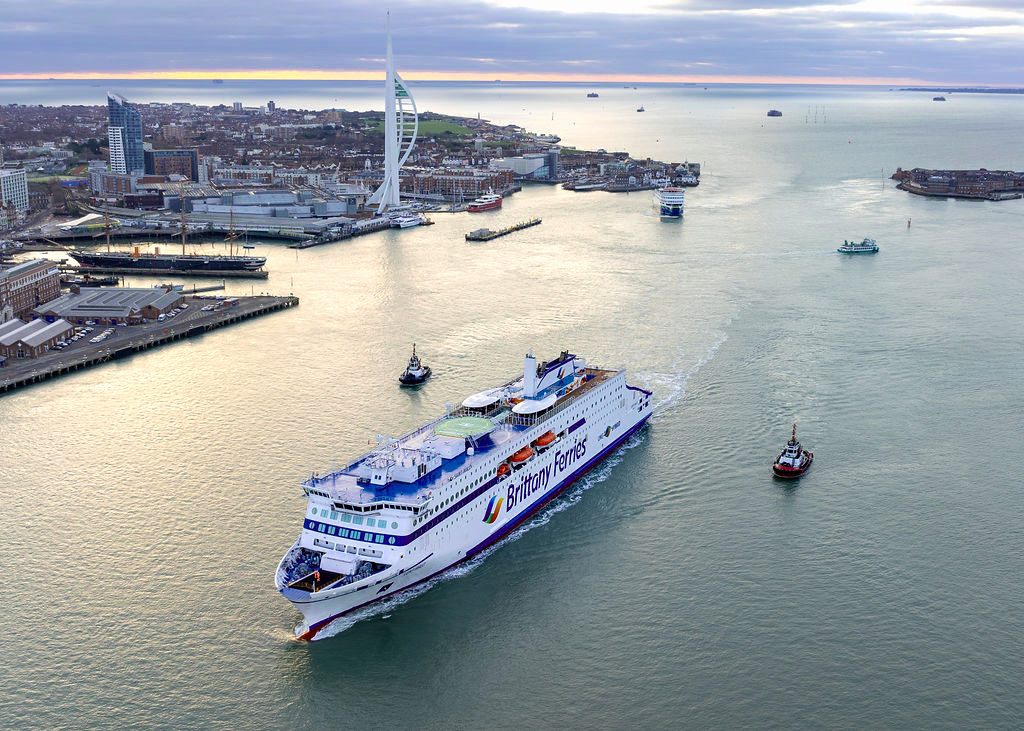
Portsmouth to St Malo is one of the great British ferry experiences — an overnight crossing that drops you into one of Brittany’s most beautiful walled port cities in time for breakfast and a stroll along the ramparts. St Malo is a superb base for exploring northern Brittany: the medieval town of Dinan is 30 minutes south, Mont St Michel is around 50 minutes east, and Cancale — famous for its oysters, eaten directly from the shell at the waterfront market — is just 15 minutes away. This is very much a crossing to savour rather than endure. Book a cabin; the seats aren’t worth it on a sailing this long.
Poole to St Malo (via Channel Islands)
Operator: Brittany Ferries
Crossing time: Approximately 4.5 hours to St Malo (via Guernsey/Jersey)
Frequency: Seasonal; typically several sailings per week in summer
Foot passenger fares: From around £50–£130 each way
Car + 2 passengers: From around £150–£400 each way
Brittany Ferries operate a service from Poole to St Malo calling at Guernsey en route. This makes it a good choice if you want to combine a Channel Islands stop with your France trip, or simply if you’re in Dorset and are missing the old Poole-Cherbourg route which sadly ended in late 2026.
Note that the fast ferry is generally comfortable, but is certainly more exposed to rough weather than a standard ferry. Keep this in mind if you’re a nervous sailor and pack some travel sickness tablets.
Plymouth to Roscoff
Operator: Brittany Ferries
Crossing time: Approximately 6 hours (day sailing) / 8–9 hours (overnight)
Frequency: Usually daily in peak season; reduced in winter
Foot passenger fares: From around £45–£110 each way
Car + 2 passengers: From around £130–£380 each way
Plymouth to Roscoff is the classic South West ferry route and one of Brittany Ferries’ founding crossings — they’ve been running it since 1972. It lands you in the far northwest of Brittany, which is simultaneously one of the most rugged and most charming parts of France. Roscoff itself is a gorgeous little port town with an impressive 16th century church, a thriving fishing harbour, and the famous Roscoff onion sellers who still cross the channel to sell their wares in Cornwall each summer. From Roscoff you’re ideally placed to explore Finistère, the wild Crozon Peninsula, the walled city of Quimper, and the pink granite coast. This is the route for people who want to get properly off the beaten track in France.
Plymouth to St Malo
Operator: Brittany Ferries
Crossing time: Approximately 7.5–8 hours
Frequency: Limited — seasonal service, check current timetable
Foot passenger fares: From around £50–£120 each way
Car + 2 passengers: From around £150–£400 each way
Brittany Ferries also offer a Plymouth to St Malo service on a limited, seasonal basis — worth checking if you’re based in the South West and would prefer to arrive in St Malo rather than Roscoff. Availability varies significantly by year and season, so check the current Brittany Ferries timetable directly to confirm if sailings are operating for your travel dates.
A Note on Portsmouth Ferries
As one of the busiest ferry ports in the UK, Portsmouth offers the largest number of cross-channel ferry routes. The Hampshire city on the south central coast of England, provides three different ferry routes to France, including two to Normandy (Cherbourg and Caen) and one to Brittany (St Malo).
Portsmouth is the main hub for Brittany Ferries, who are in fact the only cross-channel ferry operator that use Portsmouth as a departure point. Portsmouth ferries are an ideal choice for those traveling from London and the Midlands, as the city is easily accessible via the M25 and the A3, with just over an hour’s drive south of London.

How to Book a Cheap Ferry to France?
The best approach is to start with a ferry price comparison site like Direct Ferries to see all available crossings and prices at a glance – particularly useful if your travel dates are flexible. Once you’ve found the route and sailing time you want, you can then check whether booking direct with the operator (Brittany Ferries, DFDS, etc.) gives you a better price or more flexibility on changes. Often it will, especially for Brittany Ferries’ multi-day fare deals.
And always book as early as possible, as ferry companies release their cheapest cabins and tickets months in advance. Prices rise significantly closer to departure!
Current Ferry Deals to France
Dover to Calais
If price is the all important factor for you, then Dover to France ferries will almost always be the cheapest, as the journey time is way shorter compared with all other routes. DFDS Seaways regularly offer discounts for early bookings from Dover to Calais and Dunkirk, while Irish Ferries also offer mega cheap Dover to Calais crossings, and similar discount for early bookings, so check them out too if this is your preferred route.
Brittany Ferries Deals
Elsewhere, Brittany Ferries currently have some brilliant three and five day fares to France from Portsmouth, Poole and Plymouth, as well as an unbeatable 7-day fare from just £224 return for a car + 2 people, or £286 for a car, 2 adults and 2 children. Travel up to 30 April 2027.
Ferry Travel Insurance
Before you confirm your ferry booking, it’s worth sorting your travel insurance. Heymondo travel insurance covers UK-to-France ferry travel by offering trip cancellation reimbursement if severe weather, technical breakdowns, or port strikes cancel your crossing, alongside disruption and delay benefits to cover out-of-pocket expenses like meals or emergency lodging during prolonged delays.
Additionally, it provides coverage for missed departures if an unexpected vehicle breakdown or public transport delay on your way to the port causes you to miss the ship, as well as crucial emergency medical expenses if you fall ill or have an accident while traveling. TTT readers also get an exclusive discount, which is automatically applied when clicking the link above.
England to France Ferry: FAQ
Do I need a passport to take a ferry to France?
Yes – you need a valid passport. A driving licence is not enough. Since Brexit, UK citizens are also subject to EES (Entry/Exit System) checks when crossing into EU countries, so allow a little extra time at the port.
Are there any special requirements for driving in France?
If you’re planning to bring your car with you on the ferry (as most people usually do), French law requires all drivers to carry certain items in their vehicle, and failure to do so could result in a fine. To be compliant, you need to get hold of a European Driving Kit, which covers everything you’ll need, including:
- Reflective vest
- Headlight deflectors & bulb kit
- Magnetic UK car sticker
- Warning triangle
- Breathalyzers (in case you can’t resist a cheeky glass of Vin de Pays with your lunch)
This isn’t optional, by the way – these items are required not just in France, but also several other European countries including Spain, Germany, Italy, Belgium, Austria, and Poland. So if you’re planning on driving in any of these countries, use your headlight deflectors and your car sticker, and make sure that the other items are at least ready for inspection by local police in case you get stopped or have an accident/breakdown.
What is the cheapest ferry to France from the UK?
Dover to Calais is almost always the cheapest option, with foot passenger fares starting from around £30–£50 each way with DFDS or Irish Ferries on off-peak sailings. Travelling with a car adds significantly to the cost. Booking early and being flexible with travel dates are the biggest factors in finding cheap tickets.
How long does a ferry to France take?
It depends entirely on the route. Dover to Calais is the shortest at around 1hr 30mins. Portsmouth to Caen takes around 6 hours in the day, or slightly longer overnight. Portsmouth to St Malo takes around 9–11 hours. Plymouth to Roscoff is around 6–9 hours.
Can I take a dog on a ferry to France?
Yes – most ferry operators allow pets, though you’ll need to meet the UK’s pet travel scheme requirements, including a valid pet passport, microchip, and rabies vaccination. Brittany Ferries in particular have good facilities for travelling with pets, including dedicated kennels on longer sailings. More details on pet travel on ferries in my UK ferry travel guide for first timers.
Is the Eurotunnel better than the ferry?
The Eurotunnel is faster (around 35 minutes) but offers no onboard experience and less luggage flexibility. Ferries take longer but give you space to stretch, eat, and genuinely enjoy the crossing – particularly worthwhile on overnight sailings. For foot passengers, the Eurotunnel is not an option either.
Which Ferry Route Should I Take?
Choosing the right ferry to France for you will depend depend mostly on where you’re traveling from, and where you plan to explore. If you’re pretty flexible though, I’m a big fan of WW2 history, and I have nostalgic memories of childhood visits to Mont Saint Michel, so my top picks are St Malo or one of the Normandy ferry ports like Caen or Cherbourg to visit the D-Day landing beaches.
If you’re bringing your own car or you prefer to hire one on arrival, you can pretty much head to any of the French ports though, as northern France has so many worthwhile places to visit, including Morlaix, Dinan, Honfleur and Rouen to name a few.
UK to France Ferries: Outro
With so many UK to France ferry routes to choose from, there’s really no excuse not to pop over and visit our Gallic neighbours. Add in the fact that taking a ferry to France is often even quicker than flying, way more fun, and better for the environment, and there’s really no excuse not to at least give it a go if you’ve never travelled by ferry before.
The location of most of the French ports are also gladly in two of France’s biggest hitting regions (Brittany and Normandy), which both punch well above their weight culturally and gastronomically. I’ve certainly enjoyed many happy family holidays to both over the decades, even more so as an adult given the allure of cider, camembert, and all those pretty off-the-beaten-track French countryside villages.
But even if you plan to skip Brittany and Normandy, and drive straight down to Paris, the south of France, or further afield, travelling by ferry with your car gives you so much freedom to explore.
If you’re new to all this, be sure to check out my first timer’s guide to ferry travel to make sure you’re fully prepared. And if you’re considering taking a ferry to other European countries, explore my other detailed guides on ferry routes across Europe. And who knows? Maybe there’s even a couple of Frenchies coming the other way, who may be interested in my guide to driving and hiring a car in the UK.
Anyway, just as I did in the early 90’s, it’s time to dig out your old Sony Walkman and some 80’s cassettes, and rock out to this belter while cruising through the French countryside in your car – Bon voyage, mes amis…


Leave a reply