
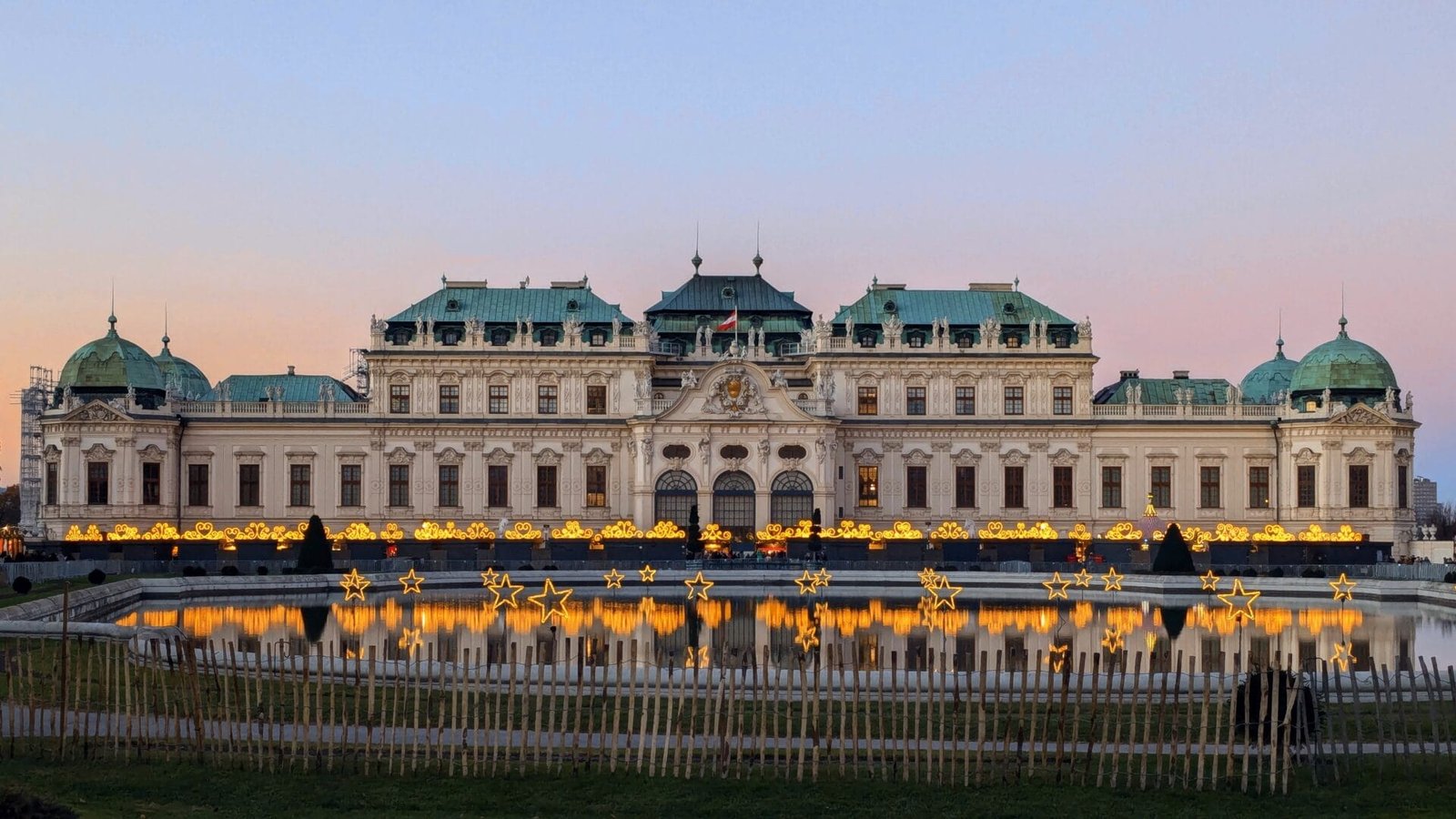
Having spent the last 12 winters in Austria, I reckon that December, January and February may just be the best months to visit the Austrian capital, assuming you don’t suffer from Raynaud’s syndrome, of course.
I say this because Vienna is a city which thrives in the colder weather, from its Christmas markets, cozy cafes, its city ice rinks with pretty backdrops, and all those famous concert halls, operas and museums to confuse yourself in.
Rather inconveniently though, Vienna seems intent on going all out for the title of ‘Capital of Christmas©‘ and with that comes a sh$t-load of tourists like you. So, with an ever-increasing number of winter-time visitors, how do you avoid the tourist traps and crowds and stay authentic?
Well, reading this guide to Vienna in winter is a good start! So, whether you’re a curious philistine, or you just fancy a romantic city break, grab a pair of gloves, and a hot mug of Glühwein, and let’s get into the most authentic things to do in my home city when the mercury drops…
Vienna in Winter: Quick Stats
| MONTH | AVG HIGH / LOW | DAYLIGHT & SUNSET | ATMOSPHERE & HIGHLIGHTS |
|---|---|---|---|
| December | 4°C / -1°C (39°F / 30°F) | ~8.5 hours Sunset: 4:10 PM |
• Peak Christmas markets • Heavy festive light displays • Maximum tourist crowds |
| January | 3°C / -2°C (37°F / 28°F) | ~9.0 hours Sunset: 4:40 PM |
• Quietest winter month • Lowest hotel room rates • Wiener Eistraum skating opens |
| February | 5°C / -1°C (41°F / 30°F) | ~10.0 hours Sunset: 5:25 PM |
• Traditional Ball season • Cozy coffee house weather • Minimal queues at attractions |
Month-by-Month Breakdown
December in Vienna
December is pure festive chaos. The city transforms into a fairy tale backdrop with around a dozen Christmas markets taking over major squares and other corners of the city.
The Catch: It is by far the busiest and most expensive month to visit. Expect big crowds at major markets like Rathausplatz and Schönbrunn.
Insider Tip: Christmas markets pack up and close down rapidly on the evening of December 23rd. But if you visit after Christmas Day, don’t panic, because several transition into so-called New Year’s markets, offering pretty much the same experience.
If you’re visiting specifically for the festive season, staying in the right district makes a huge difference to your walking routes. Take a look at my curated list of the best boutique hotels in Vienna by district to find a base near the best markets.
January in Vienna
Once the holiday markets clear out, Vienna returns to us locals. January brings cold, crisp air, occasional snow, and significantly lower hotel prices for tourists.
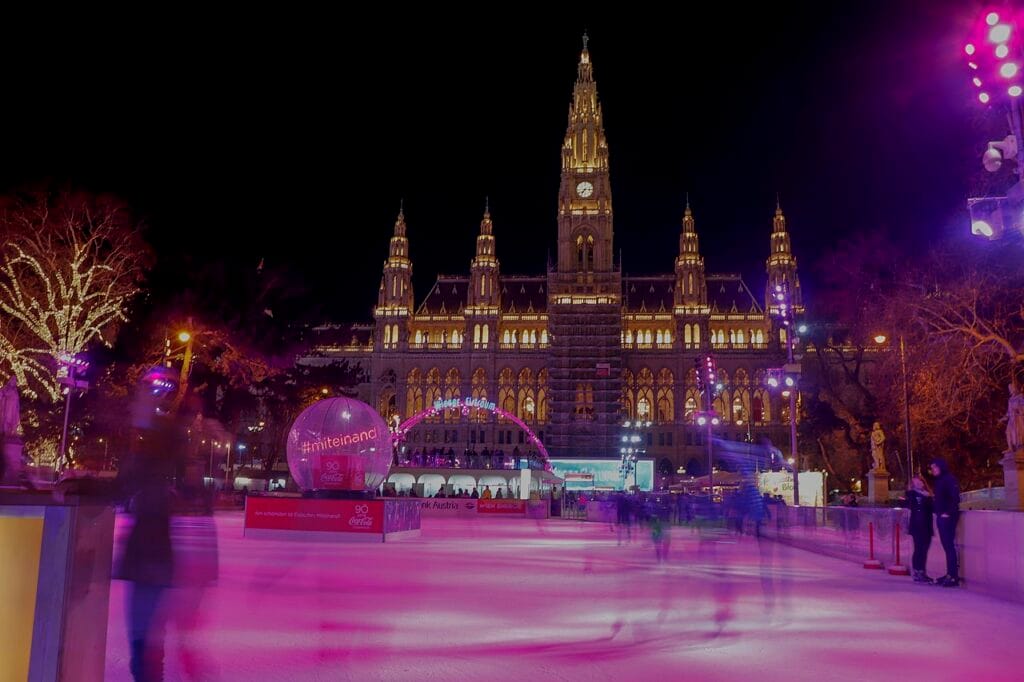
Insider Tip: The massive Wiener Eistraum (Vienna Ice Dream) opens in front of City Hall, turning the park into a giant multi-level ice rink. Museums, palaces, and coffee houses are far less crowded too, making January arguably the best month for indoor cultural exploration.
Febuary in Vienna
February is the heart of Vienna’s traditional Festival/Ball Season (Fasching), when over 400 formal balls take place across the city, including the famous Vienna Opera Ball. The streets are visibly less crowded in February too, with international tourist numbers way down.
The Vibe: Days start getting visibly longer, but temperatures usually remain chilly. Ideal for relaxing in historic Viennese cafes, sampling heavy Austrian comfort food, and trying to up your cultural game with a classical concert. I reckon February is the most local, and thus most authentically Viennese of all calendar months.
Things to do in Vienna in Winter
The Vienna Christmas Markets
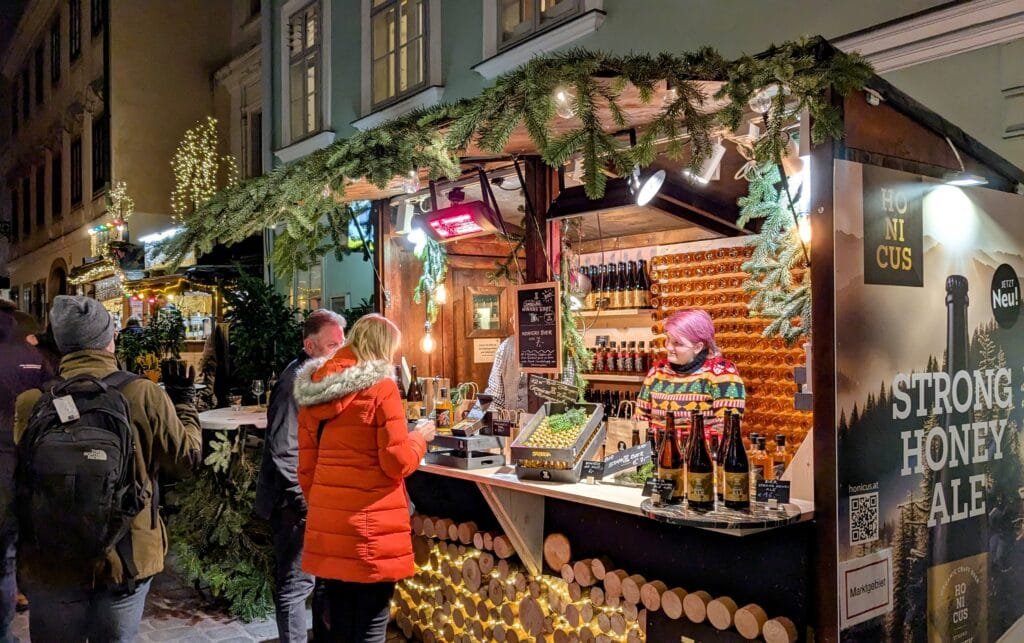
No trip to Vienna in December is complete without seeing its world-famous Christmas markets. Known locally as Christkindlmarkts, these are the heart and soul of the holiday season here, attracting visitors from all over the world. They offer a great mix of festive hussle & bussle, handmade products, and comforting street food. They’re also a great place to grab some last-minute presents – especially if your loved ones are heavily into soap, beeswax or scarves. Vienna boasts several markets, each with its own distinct character. I have my favourites (more on that below), but here are the big hitters first:
Wiener Christkindlmarkt at Rathausplatz
Set right in front of the grand city hall (Rathaus), this is Austria’s largest and most iconic Christmas market, and it’s probably the one you saw photos of when you first googled Vienna in December! With over 150 stalls, it’s a festive behemoth, replete with all the lights, gingerbread (Lebkuchen), and selfie-taking tourists that you could imagine.
Due to its popularity, it does have its fair share of mass-produced trinkets, as well as some less traditional Austrian snacks (Raclette, etc.), but it’s still a must-see. The lights and location alone make it worth braving the crowds.
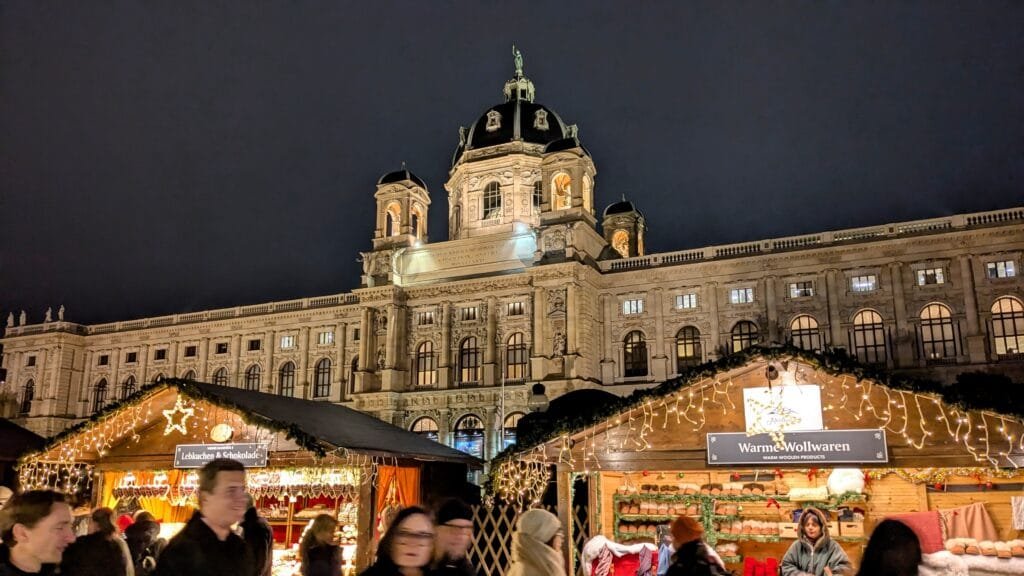
Maria-Theresien-Platz Christmas Market
Nestled between the Kunsthistorisches and Naturhistorisches Museums, this market offers a smaller, more intimate experience compared with the Rathaus, although because of its central location it remains one of Vienna’s busiest.
The food options here are better compared with Rathaus in my opinion, and the location is also very cool, with two of the city’s most imposing buildings staring each other down, with little old you caught in the middle nibbling on a chesnut.
After a one year hiatus in 2025, Maria-Thersian-Platz Christmas Market is back in 2026.
Schönbrunn Palace Christmas Market
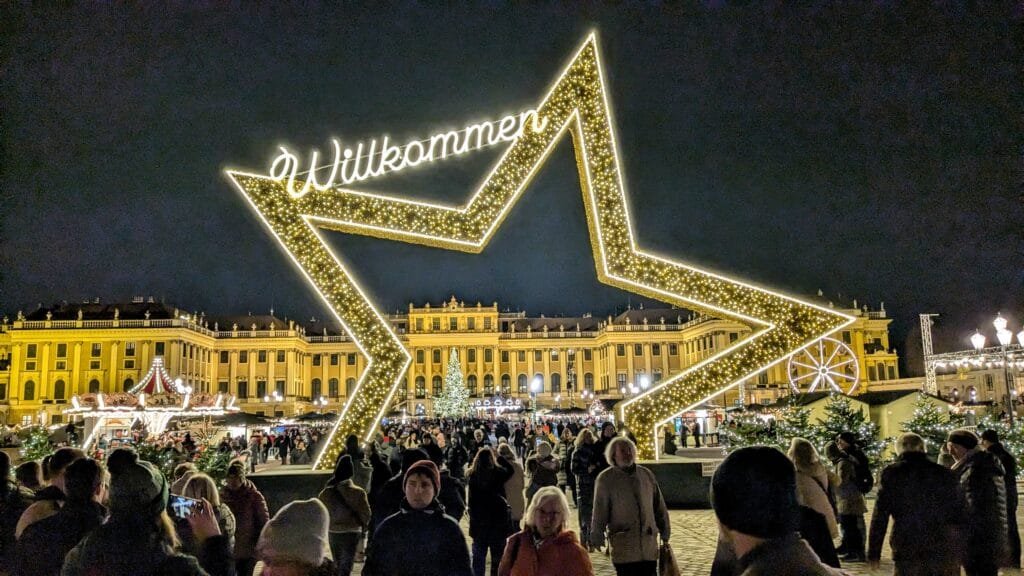
The Christmas market at Schönbrunn is a legit fairy tale experience, with the backdrop of one of Vienna’s most iconic landmarks. Since 2024 the market has been under new ownership, and I think this has resulted in a marked improvement in the quality of its food and handicrafts.
If you decide to visit, don’t miss the chance for a stroll through the beautifully lit palace back garden (it’s free), and even up to the Gloriette to enjoy some lovely raised winter views over western Vienna.
The Vienna Christmas Market Food Tour
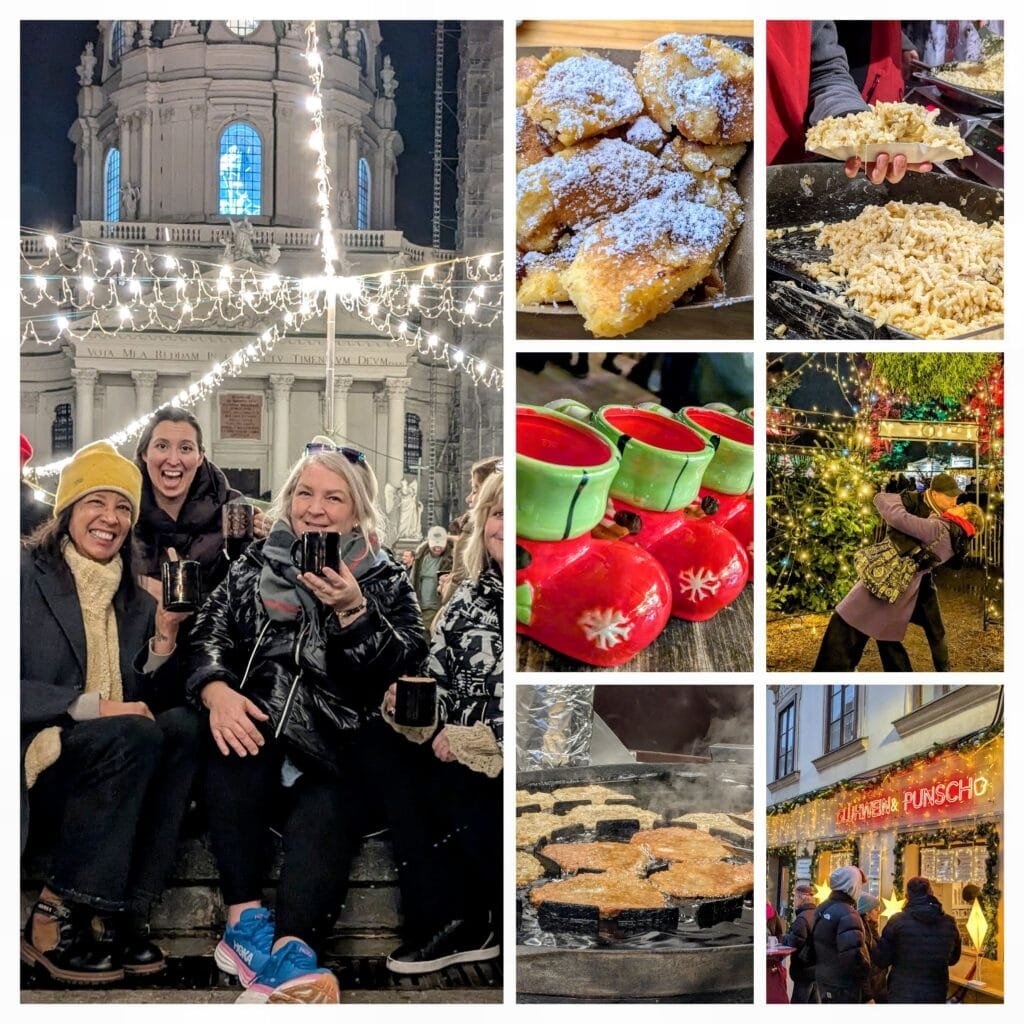
If, however, you want to escape the tourist crowds and explore the markets loved most by us locals, then check out the Christmas Market Food & Drink Tour by my sister company, Venture Vienna. This exclusive tour takes you to four of Vienna’s less touristy markets, where you’ll savor traditional Austrian festive treats, sip on seasonal drinks, and pick up some interesting insights into Viennese food culture. Plus, you’ll master the city’s public transport system while exploring more off-the-beaten-path (but still centrally located) neighborhoods.
Tours run from mid-November to early January each year, so they’re perfect for anyone looking to experience a more authentic Christmas in Vienna.
Austrian Christmas market stalls still heavily favour cash over card payments. To avoid extortionate bank conversion rates at local ATMs, make sure you carry a low-fee travel debit card for Europe like Wise or Revolut.
Attend a Winter Concert or Opera
Alright, you animal, it’s time to drag you out of the gutter and get a little classier, because Vienna, the City of Music™ comes into its own in winter.
While you’re probably thinking more Ultravox and Falco rather than Strauss and Mozart, there’s a surprisingly diverse range of classical music performances that you might enjoy during winter. Here’s a guide to Vienna’s top music venues:
Staatsoper (Vienna State Opera)
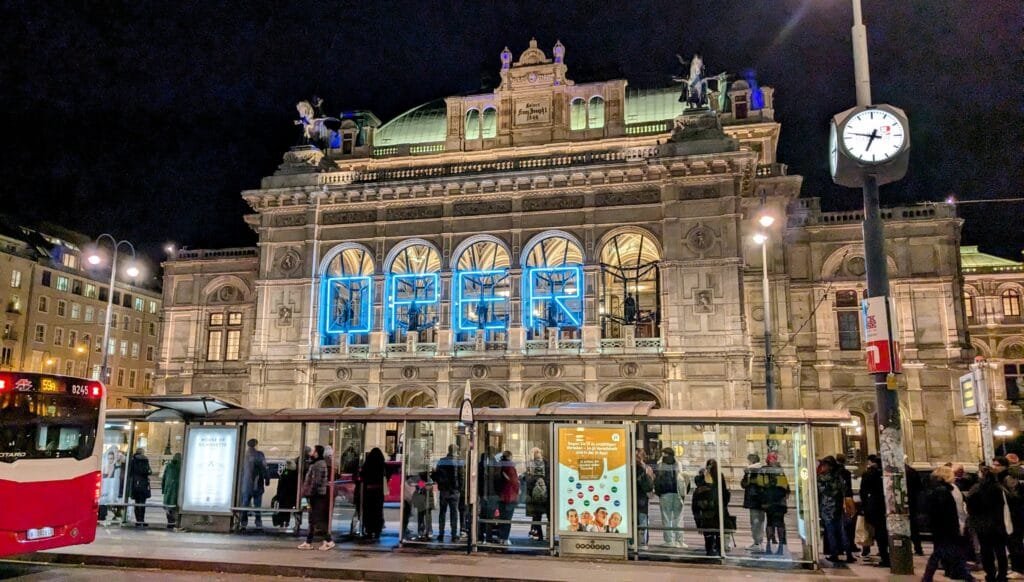
A visit to the Vienna State Opera is about as Vienna as it gets. Located in the heart of the city on the famous ‘Ringstrasse‘, you’ll find a dazzling array of operas and ballets. Even if opera isn’t your usual cup of tea, the experience of attending a performance here is worth it for the grandeur alone, and you can get some reasonably priced standing tickets too. Alternatively, you could just take a tour of the building if you can’t quite bring yourself to go full opera.
If Staatsoper tickets are hard to come by during your visit, as they often can be, also consider performances at the Volksoper (the people’s Opera) in Vienna’s 9th district, as well as Theater an der Wien, located at Naschmarkt.
Wiener Musikverein
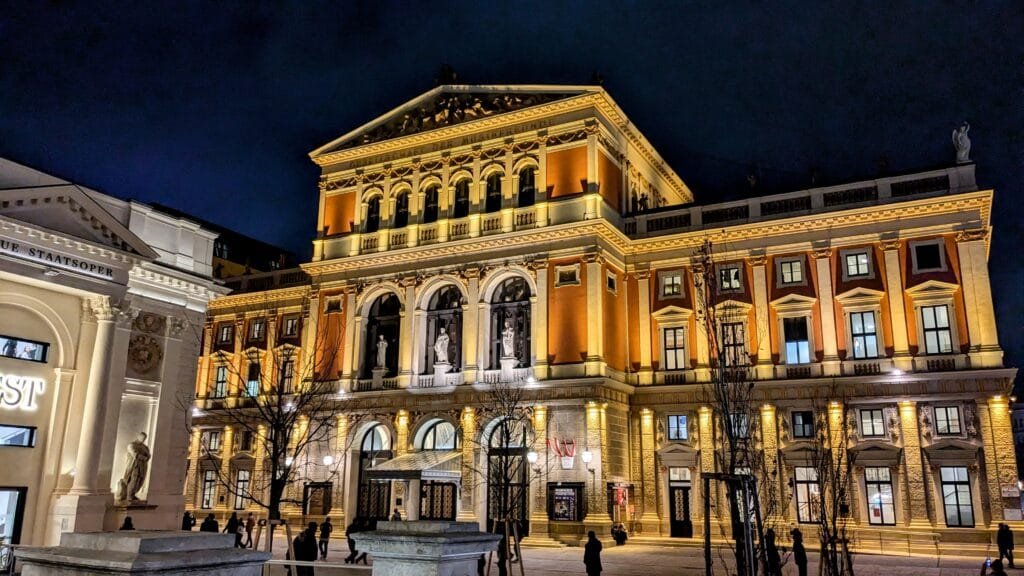
Arguably the most famous concert hall in the world, the Musikverein is home to the Vienna Philharmonic Orchestra. Known for its exceptional acoustics, especially in its impressively grand, Golden Hall, the Musikverein hosts a variety of holiday-themed concerts in December and January, including classical recitals and special Christmas performances. Don’t hold your breath if you want a ticket to the renowned New Year’s Concert though – tickets are drawn by lot exclusively on the Vienna Philharmonic website.
Schönbrunn Palace Orangerie
Part of the imperial Schönbrunn Palace (the summer residence of famous Habsburg Empress, Maria Theresa), the Orangerie holds a special place in Vienna’s musical heritage, as Mozart himself performed here regularly. Today, concerts feature both Mozart and Strauss heavily. For an extra dose of historical authenticity, musicians wear traditional 18th-century costumes during performances.
The palatial setting, and the proximity to the Schönbrunn Christmas market, make this venue a big favourite for visitors in winter. Here are the options for Orangerie tickets.
Kursalon
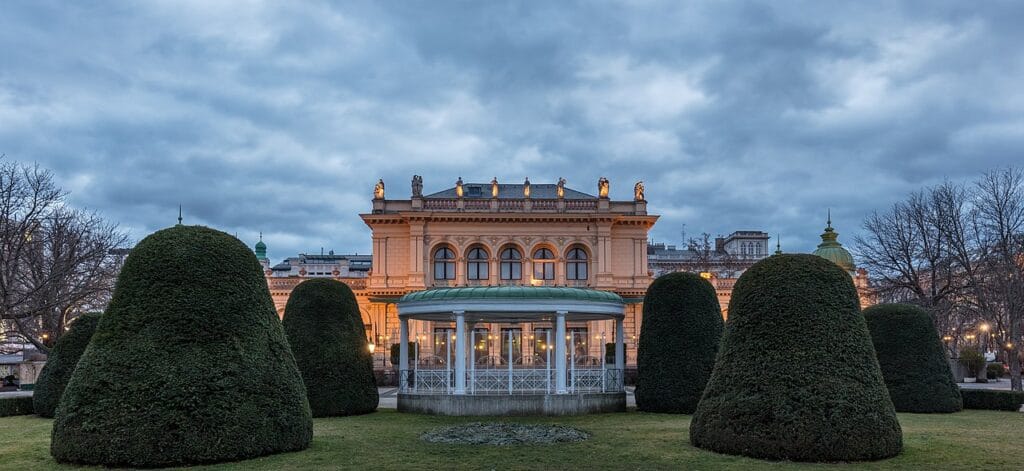
If you prefer your classical music a little less intense, the Kursalon is the location for you as it features Vienna’s more energetic classical music style, particularly the works of Johann Strauss.
Located in Stadtpark on the Ringstrasse, the Kursalon is home to the Salonorchester Alt Wien, who perform a repertoire of waltzes, polkas, and ballets, which are typically more upbeat and celebratory in tone.
Tickets here are a little easier to come by compared with the Musikverein above. Check out what’s on offer at the Kursalon this winter.
Visit a Viennese Cafe That Locals Actually Do!
Now that we’ve mercifully got classical music out of the way, let’s talk coffee and cake. There’s no better time to experience Vienna’s coffeehouse culture than in winter, when retreating to a warm, inviting café for a mug of hot liquid and a slice of diabetes just makes sense.
While many visitors flock to the big hitters like Café Central, Café Landtmann, Café Sacher, and Café Demel, I personally avoid them as I’m not a fan of long waits and crowds. Especially so in winter, as the last thing you want when its freezing outside is to have to wait in line.
By the way, don’t feel obliged to revert to the frankly overrated Sachertorte or Apfelstrudel options here either, as I reckon there are better dessert options.
If you prefer to go where us locals go, to enjoy a more authentic and relaxed coffee house experience, check out the following:
- Location: Gumpendorfer Straße 11, 1060 Vienna
- What makes it special: Though it has a rich history dating back to 1880, Café Sperl tends to fly under the radar compared to more famous spots. With its original interior and traditional billiard tables, it offers an old-world atmosphere. It’s perfect for experiencing a quieter side of Viennese coffee culture. High ceilings, typical cakes, grumpy waiters and Goulash – it’s got everything you’d expect (but perhaps didn’t necessarily want) from a Vienna cafe.
- Location: Gumpendorfer Straße 10–12, 1060 Vienna
- What makes it special: not just some random guy from London, as the name may suggest, Phil is actually a hybrid café and bookstore with a hip, modern ambiance. The ‘Phil’ part is short for philosophy. While not a traditional Viennese café as such, it’s a favourite among locals for its laid-back atmosphere, good coffee, and interesting selection of books and records. They do a decent lemon meringue pie too. And if it’s a little too modern for you, then just walk over the road and go to Café Sperl instead.
- Location: Josefstadter Straße 66, 1080 Vienna
- What makes it special: Located in the less-touristy, but extremely Viennese 8th district, Café Hummel is a true Viennese institution. With a laid-back vibe, it attracts locals who enjoy its classic décor, good coffee and Apfelstrudel.
- Location: Stubenring 24, 1010 Vienna
- What makes it special: Café Prückel is known for its 1950s-style interior (no jukeboxes, though, I’m afraid). As such, it has a markedly more understated feel compared with some of the other big hitters in the first district, but nonetheless it offers a quintessential Viennese coffeehouse experience.
- Location: Otto-Bauer-Gasse 5, 1060 Vienna
- What makes it special: A charming and cozy café with vintage, slightly worn furniture that gives it ‘character’. It’s a beloved local hangout, known for its coffee and homemade cakes. It hasn’t changed in decades.
- Location: Alser Straße 67, 1080 Vienna
- What makes it special: a bit of a hidden gem, loved by locals for its laid-back atmosphere, affordable prices, and big collection of board games. Cosy and somewhat quirky, unlike the grand tourist-filled cafés, Benno is more of a neighbourhood café that attracts students, locals, and people up for a game. Expect traditional Austrian comfort food like Schnitzel, goulash, and Kaiserschmarrn. Completely unpretentious.
- Location: Argentinierstraße 49, 1040 Vienna
- What makes it special: Tucked away in the 4th district, Café Goldegg has beautiful Art Nouveau interiors and a quiet, cozy atmosphere. It’s a great place to spend a leisurely afternoon with coffee and pastries, and like all of the above, it’s far less touristy than more central cafés. Very close to the Belvedere, so a great retreat for anyone feeling a bit queasy after seeing ‘the kiss’.
Authentic Vienna Coffee House Map
Ice Skating in Vienna
If you’re looking for a quintessential winter activity in Vienna, and you don’t particularly value your ligaments or bones, then ice skating should be at the top of your list. Whether you’re an ice skating pro or a teeth-gritting beginner, Vienna offers two standout ice-skating venues:
Vienna Ice Dream (Wiener Eistraum)
Set against the stunning backdrop of the illuminated Rathaus (City Hall), the Vienna Ice Dream is way more than just a standard ice rink, as it features winding ice trails that snake through the beautifully lit park. With such a pretty backdrop, it doesn’t matter if you’re gracefully twirling your way through the trees, or nursing a freshly broken hip, the sight of the Rathaus in its festive glory makes it all worthwhile.
And the fun doesn’t stop once the Christmas markets have closed either, because the Wiener Eistraum runs well into January and February.
Wiener Eislauf-Verein (Vienna Ice Skating Association)
For a more traditional skating experience, head to the Wiener Eislauf-Verein at 22 Lothringerstraße, near Stadtpark. This massive 6,000m² rink offers a classic rectangular layout, perfect for skating purists who need more space to express themselves on the ice. Located on the south side of the 1st district, it’s a 2 minute walk from the Stadtpark U-Bahn station (U4).

Open from 9am til 8pm (9pm on Fridays), the rink boasts one of the longest operating seasons in Vienna, running from November through March, making it a reliable spot for winter activities well into January and February.
If you’re totally crap on the ice, no worries – they have a few artificial penguins that you can lean on to help get you round in one piece. You may have to steal one from an unsuspecting kid though, as there aren’t that many of them.
You can purchase tickets online via their official website, but the interface is a bit clunky and lacks an English translation. Alternatively, buy tickets on-site, but to avoid queues during peak times go earlier in the day.
In summer, the venue transforms into a beach volleyball court and basketball venue, proving it’s truly a venue for all seasons. I personally cannot wait for next October’s conker championship.
Visit a Museum
Winter in Vienna provides the perfect excuse to have a look around some of its world-class museums and historic sites. With fewer outdoor distractions, now’s the time to dive headfirst into art, history, and science like never before. If that sounds too much like hard work, just bring a kid so you’ve got an excuse to visit some of the fun ones.
Art Museums
For lovers of fine art and history, you can’t go wrong with these iconic venues:
- Kunsthistorisches Museum: Home to masterpieces by Raphael, Caravaggio, and Bruegel, this is a must for art aficionados.
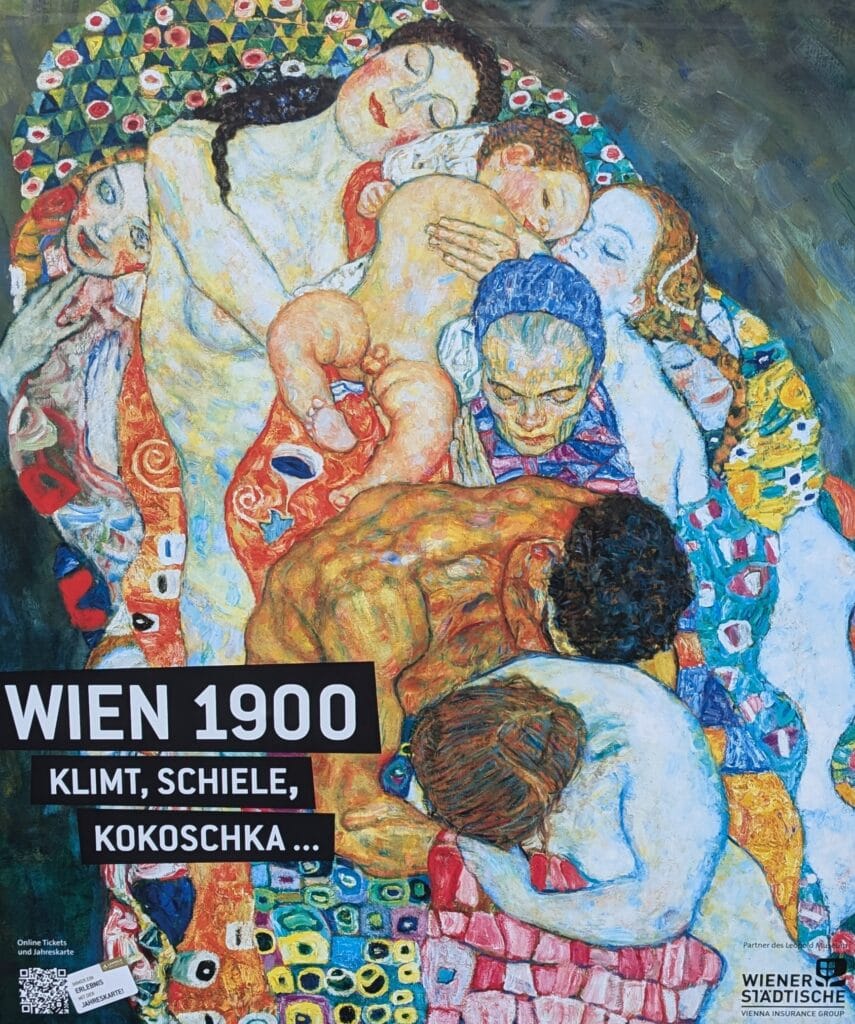
- Belvedere Palace: Famous for housing Gustav Klimt’s The Kiss, this baroque palace itself is gorgeous.
- Albertina Museum: A blend of classical and contemporary art, with rotating exhibitions that cater to ‘diverse’ tastes.
I’ve already written a very silly guide to Vienna’s art galleries and museums, so if you don’t know your kisses from your towers of Babel, you might find it useful.
Natural History Museum
Travelling with kids? The Natural History Museum is definitely a crowd pleaser. Your little ones will love/hate the giant moving dinosaur model, while the extensive collection of stuffed animals offers plenty of weird and wonderful creatures for them to gawp and laugh at. It’s an educational and entertaining stop that works even better when the weather outside is freezing, as it often is here in winter.
Museum of Science and Technology (Technisches Museum Wien)
My personal favourite, and another great choice for families is the Vienna Technical Museum in the 14th district, very close to Schönbrunn Palace. It has plenty of transport related exhibits from old steam trains, airplanes, as well as games and play areas for little ones to charge around in. There’s more than enough here to keep Mums and Dads entertained too. If your kids even remotely like trains and other vehicles, they’ll love this museum. Book tickets here.
Wien Museum (Vienna Museum)
The newly renovated Wien Museum (Vienna Museum) located at Karlsplatz, features an exhibition about life in 1920’s and 30’s Vienna in the build-up to Austria’s ‘Anschluss’ with Nazi Germany. This self-effacing portrayal of how many Austrians welcomed Hitler into the city is essential for anyone seeking a deeper understanding of the city’s complex history. Admission is free.
Imperial Treasury
While not exactly a hidden ‘gem’, jewel be crazy to miss it, boom boom! Step further back in time with a visit to the Imperial Treasury. Located within the Hofburg Palace complex, this treasure trove boasts an 800-year collection of dazzling jewels, crowns, and regalia from the Habsburg and Holy Roman Empires. It’s a glimpse into the opulence and power of one of Europe’s most influential dynasties. Entrance tickets can be booked here.
Austrian Food in Winter
Food, glorious food! Now, while I’ve already made my views on Austrian cuisine clear in another post, it does make for ideal winter eating. Not too many people want to eat a pound of fried meat and potatoes when it’s 30+ celsius outside, as it often is here in summer, but when the temperatures are closer to zero, the heaviness of Austrian cuisine really comes into its own.
The biggest challenge is trying to stay just the right side of hibernation mode having paired those heavy dishes with a few glasses of Blaufränkisch red wine from Burgenland, or some opulent Austrian Grüner Veltliner.
Anyway, here are some of my favourite seasonal dishes to eat in Vienna during winter:
Martinigansl: making November great again
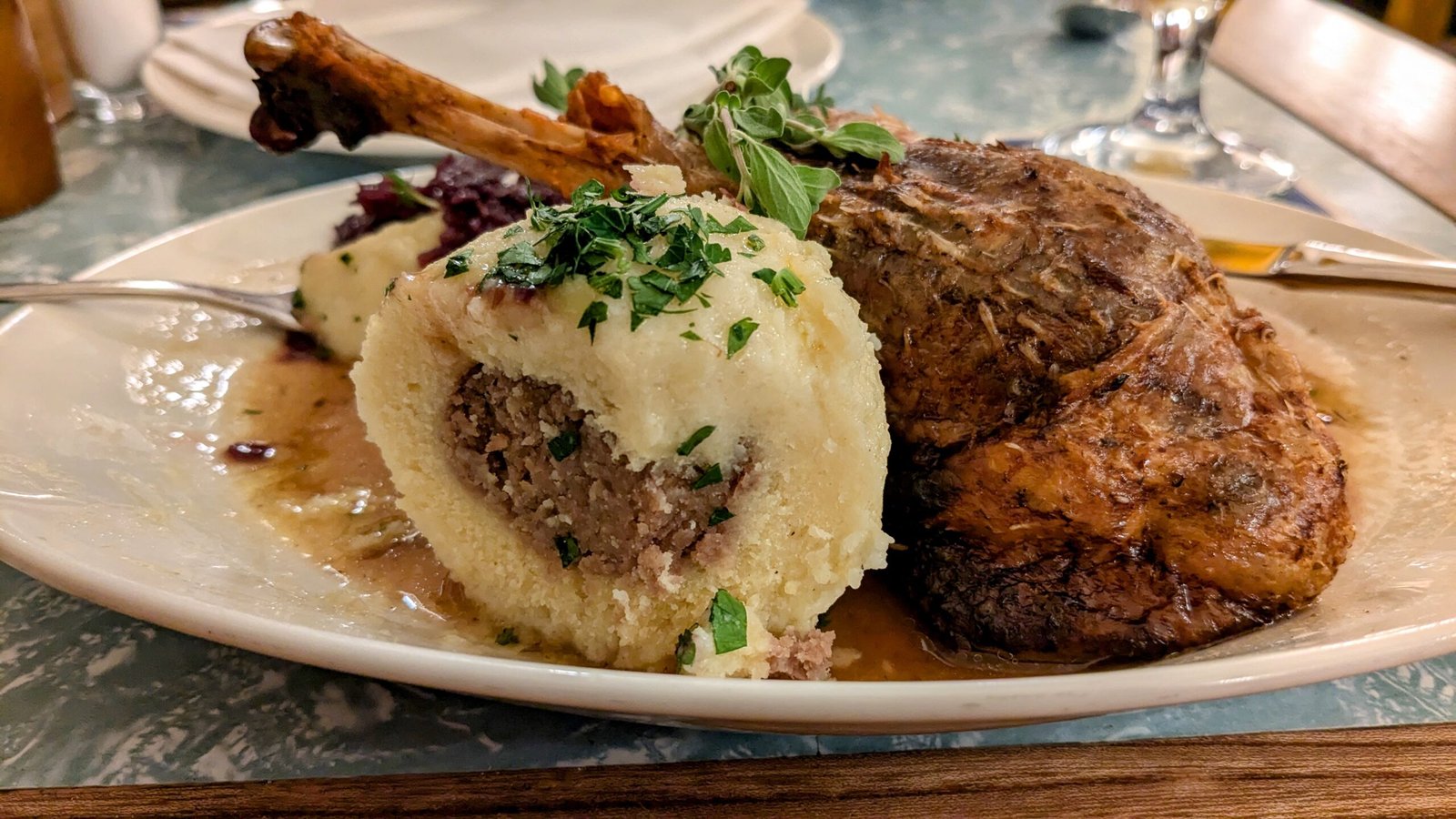
In Austria, Gänsezeit (Goose season) is usually celebrated from the end of October until just before Christmas. So if you’re visiting then, you could be getting your chops around a roasted crispy goose served with the typical sides; red cabbage, potato dumplings, chestnuts, and sometimes baked apples.
Especially popular from St Martin’s day (Nov 11th) onwards, goose remains a popular dish in restaurants well into December. Restaurants, hotels, and heurigen (wine taverns) offer special Gansl menus during this season, so it’s an ideal time for tourists and locals alike to get stuck in.
Vanillekipferl: Christmas cookies
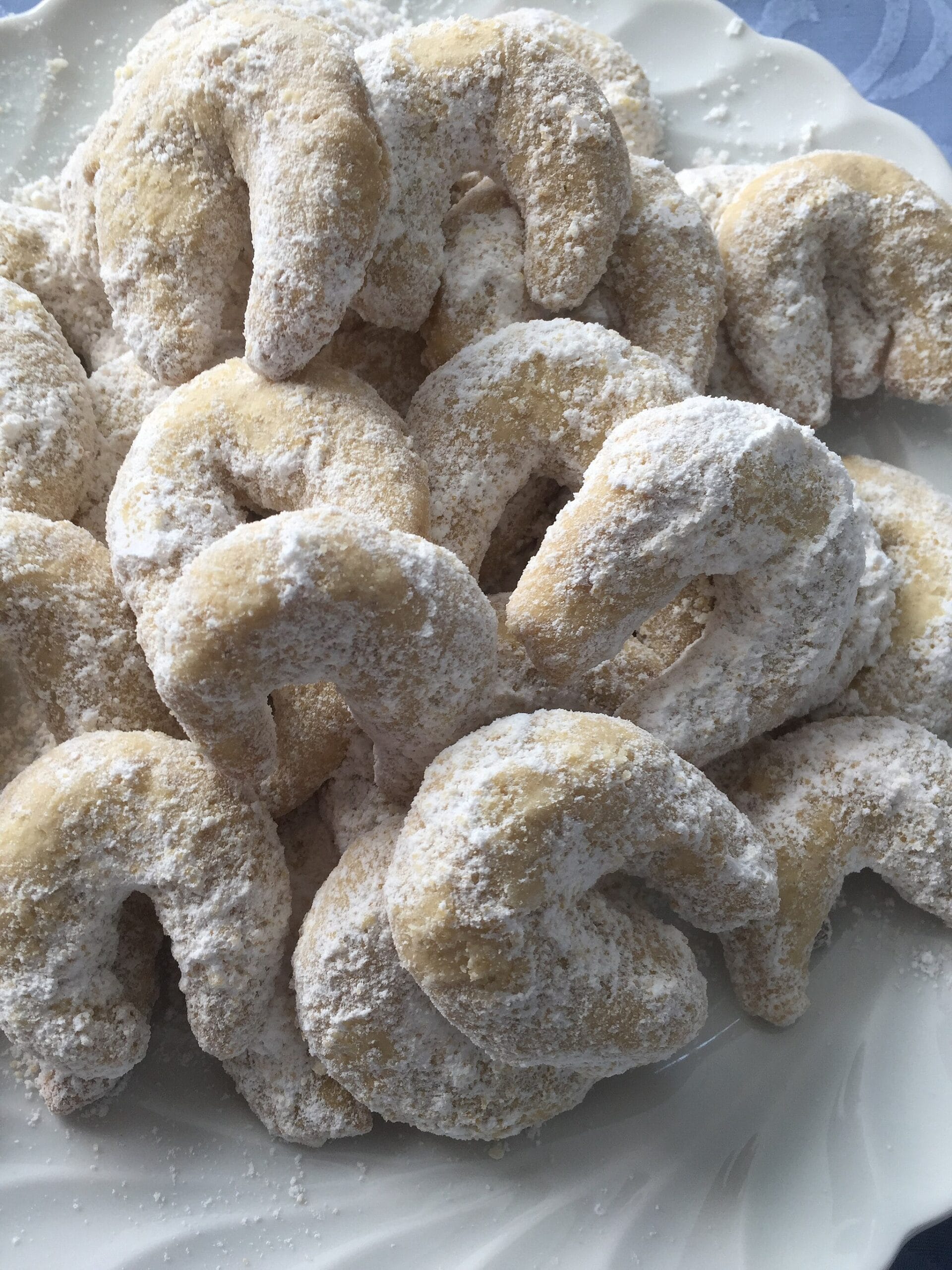
Arguably the most festive of all Austrian food are Vanillekipferl. These crescent-shaped cookies made with a buttery dough of flour, ground almonds (or hazelnuts), and vanilla, are dusted with vanilla-infused powdered sugar after baking to create a lovely buttery, sweet, vanillary bite.
Originating in Vienna, their crescent (kipferl) shape is said to symbolize the Ottoman crescent, and is linked to Austria’s victory at the Siege of Vienna in 1683. Vanillekipferl are a beloved part of Austrian holiday baking traditions, and they are attempted (with varying degrees of success) by many an Austrian family (myself included) throughout advent.
What to Wear & Pack for Vienna in Winter
Viennese cold isn’t just about low temperatures. This is surprisingly windy city too, and those biting, chill gusts arriving from across the Wienerwald (Vienna Woods) cut through you and any cheap layers like a hot knife through butter! Especially when walking near the Danube or on open squares.
If, like me, you already have a very generous layer of protective subcutaneous fat insulating you, then great, but for the rest of you, consider the following:
- Waterproof Walking Shoes/Boots: Vienna is a highly walkable city, but winter streets are frequently treated with salt, and they get all slushy and mucky quite quickly after snowfall. So it’s definitely worth bringing insulated, water-resistant footwear with good tread.
- Thermal Undies: A pair of merino wool thermal tops and leggings under your jeans makes a world of difference when standing around outdoors at Christmas markets drinking Glühwein.
- A Heavy Woolen Coat: Anything that covers your butt and thighs helps to block those icy gusts that whip through the Innere Stadt. Wolly Hat, Scarf & Gloves: Non-negotiable!
Vienna in Winter: Final Thoughts and Tips
There’s an undeniable charm about Vienna in winter, and its guaranteed to thaw even the coldest of bah-humbugging scrooge hearts. So go ahead and over indulge at those Christmas markets and cafes, attend that classical concert you’ve been avoiding all these years, be forced to remember your age out on the ice rink, warm up in a Viennese museum, or simply take a stroll around the UNESCO-listed city center to appreciate those winter vibes.
If this guide has you got you feeling like a kid on Christmas morning, then check out some of my other resources to really get the most from your trip:
- Where to stay: Explore my curated list of Vienna’s independent boutique hotels for the best places to hang your stocking this December.
- Getting around: Thinking of visiting a few other places during your stay in Austria? Then don’t miss TTT’s take on car rental in Austria.
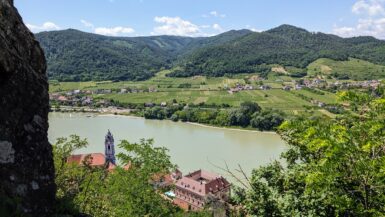
- Day Trips from Vienna: Thinking of taking a day-trip to somewhere nearby? Then definitely consider the Unesco World Heritage Wachau Valley. I’ve written a comprehensive Wachau Travel Guide to help.
Leave a reply