
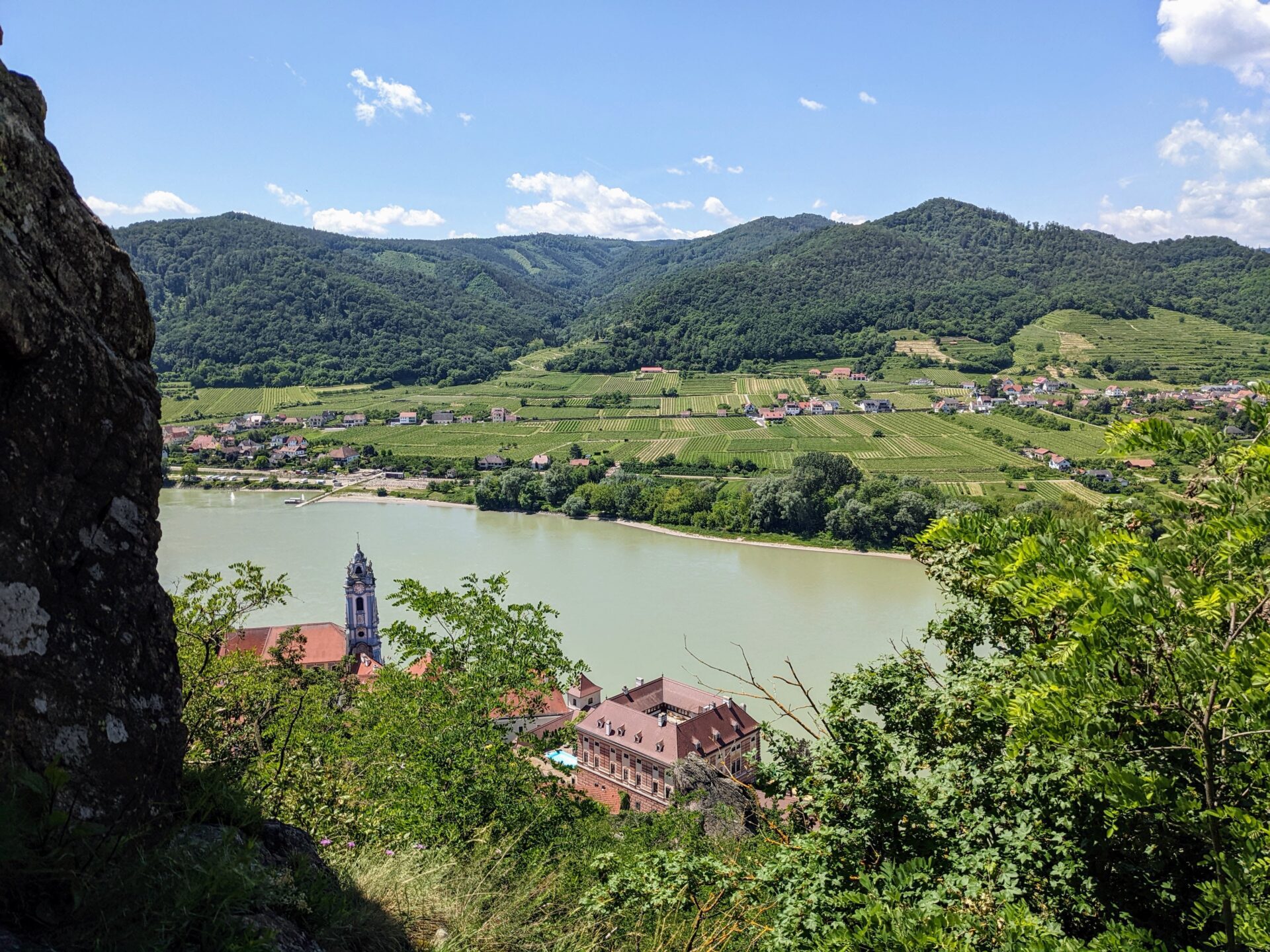
The Wachau Valley is quite simply one of the world’s most beautiful locations. If you’ve been to Austria but never visited the Wachau, then what are you doing?! This part of the world is heaven for romantics, wine lovers, history buffs, hikers and bikers, and nature enthusiasts alike.
From the Wachau’s larger towns which bookmark the start and end of the valley – historic Melk and cosmopolitan Krems, to the nature lovers paradise of Spitz, the wine mecca of Weißenkirchen, and the tiny medieval hamlets which lie in between, like Dürnstein and St Michael – there are so many wonderful postcard perfect places to stay in the Wachau that will heal your tired soul.
I’ve had the pleasure of leading tours in the Wachau over the last decade, so I know each of the valley’s gorgeous towns and villages intimately. I thought it was therefore time to share with you my thoughts on the best places to stay in the valley and why. I’ll tell you why each town or village is likely to suit you, based on nearby things to do as well.
So pour yourself a glass of Riesling Federspiel, and let’s dive into my detailed Wachau travel guide – one of Austria’s most beautiful spots…
WACHAU VALLEY, AUSTRIA - INTRODUCTION
It is thanks to the Wachau’s unique geography that the region is such a majestic natural beauty, and such a pull for visitors from all over the world. This 33km stretch of the Danube, located around 70km west of Vienna, is sandwiched by the Dunkelsteiner forest to the south and the Bohemian uplands to the north. The combination of hard rock foundations, lush green forest, and the cooling effect of the Danube, all contribute to the valley’s unique micro-climate, as well as the undeniably dramatic vistas everywhere you turn.
The valley is bookmarked by its two largest towns, Melk at its western gateway, and Krems at its eastern end. Its wilder western half is mostly carpeted with forests and small riverside apricot plantations, with the odd imposing grand palace or castle punctuating the most dramatic bends in the Danube.
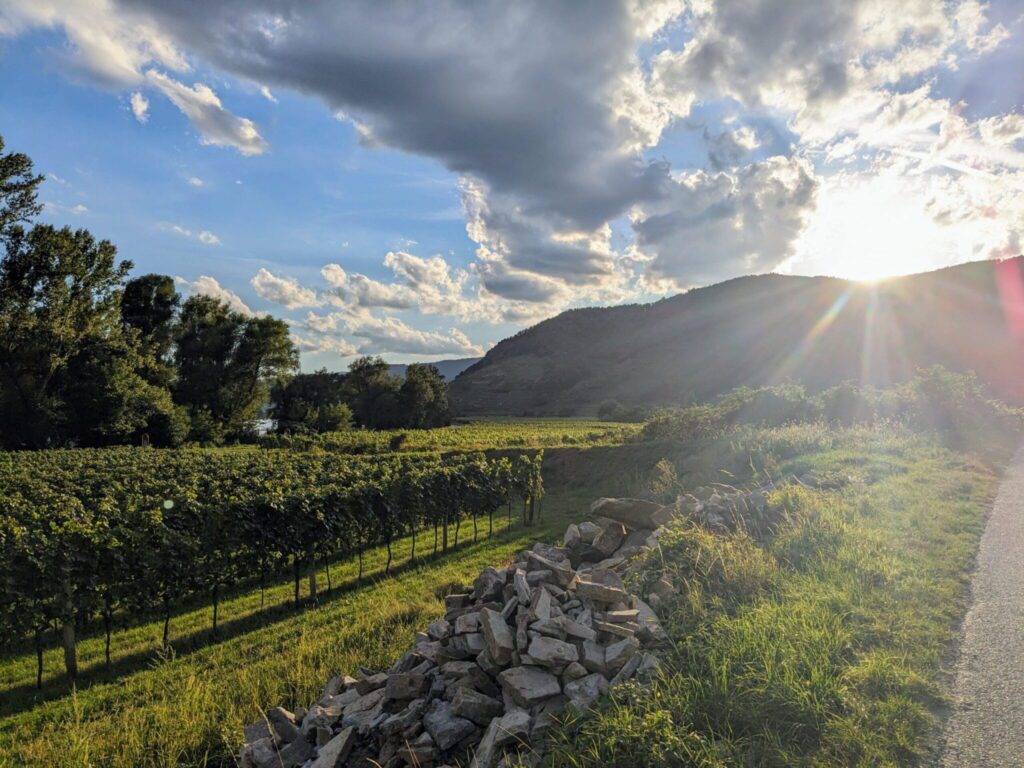
After Spitz, which is located roughly half-way through the Wachau, the landscape opens up a little more, especially along its more populace northern bank, with those forested banks giving way to thousands of kilometers of man-made dry-stone walls and terraces – which produce some of the world’s finest white wines.
The Vineyards and Terraces
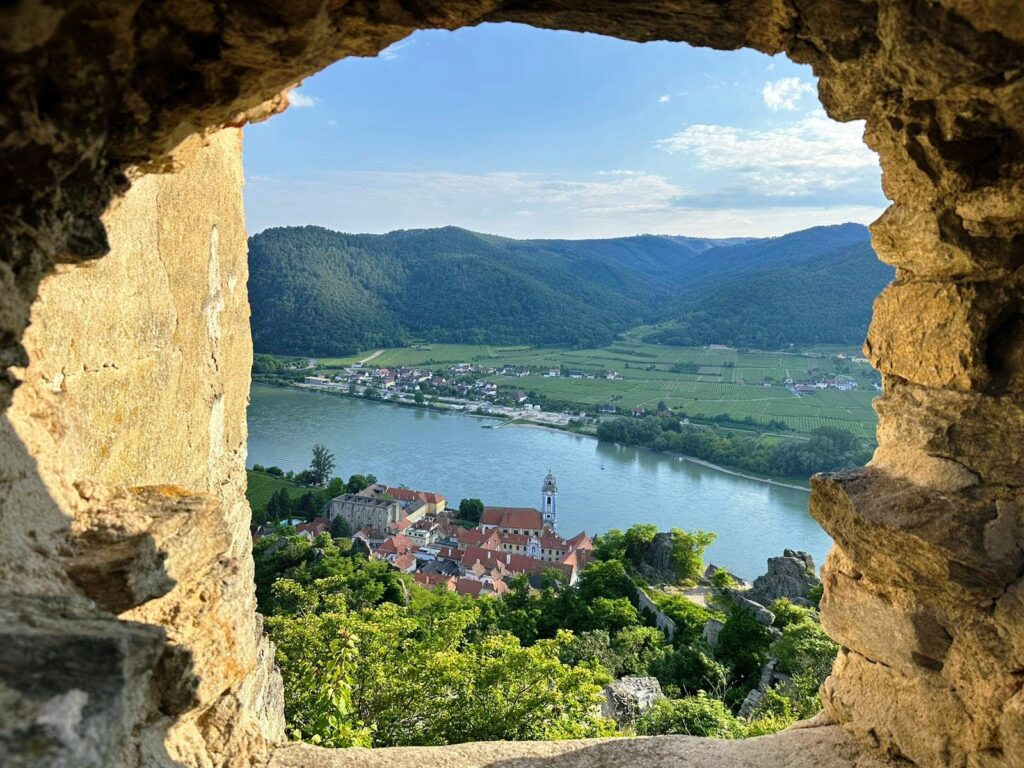
The Wachau is world famous for its white wines – so for all foodies and wine tourists, the valley is heaven, particularly its eastern half along the northern shore, stretching from Spitz to Unterloiben.
The beautiful vineyards which produce these wines were mostly developed in the Middle Ages by Benedictine monks from the nearby Melk and Göttweig Abbeys (well, what else are you gonna do for fun as a monk in the middle ages?!).
These monks constructed a massive network of remarkable dry-stone walls, which not only help to mediate the steep pitch of the vineyards and prevent soil erosion, but also provide important habitat to endemic species such as the ‘Smaragd’ lizard and the valley’s famous ‘Steinfeder’ grass.
I’ve always felt that these seemingly endless walls provide a rare example of human development actually enhancing what was already an amazingly picturesque natural landscape.
Agriculture in the Valley
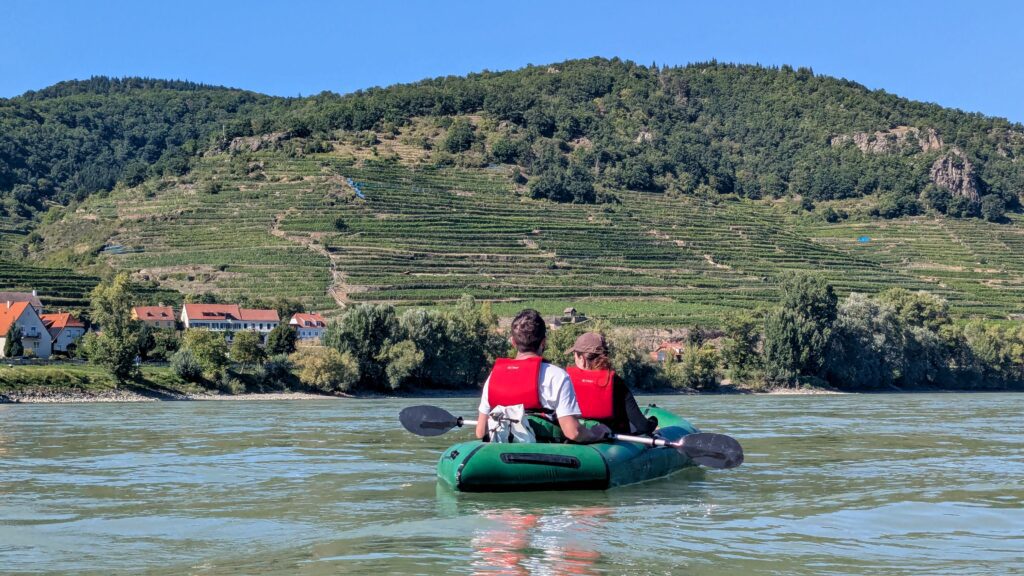
The Wachau’s most famous exports are its Grüner Veltliner and Riesling wines, which thrive in the valley’s flatter riverside vineyards, and its steeper, rockier locations respectively.
But aside from all that lovely, booze, the Wachautal, as it’s known in German, is also famous across Austria for producing an abundance of apricots, and anything apricot related. Be it liqueurs and schnapps, chocolate covered seeds, apricot-scented soaps, or kitchen sinks doused in apricot juice…you name it, and a farmer from the Wachau will happily apricotise it for you.
A (very) Brief History of the Wachau
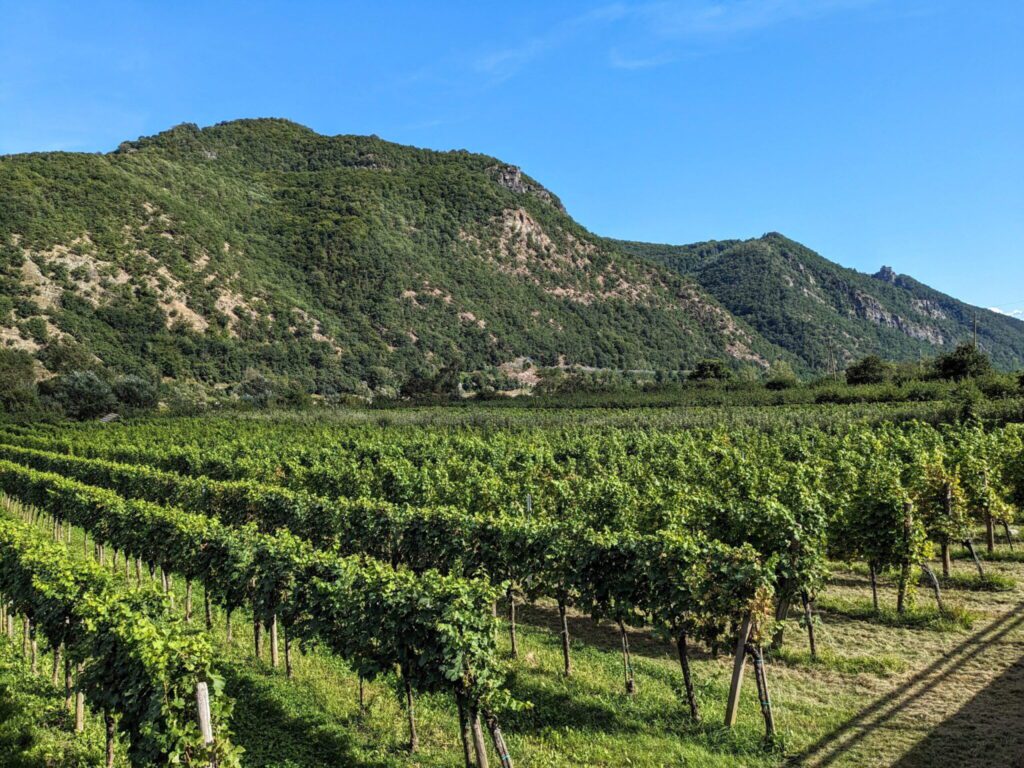
The valley has rich history, representing several different eras, which will fascinate any and all history buffs who come to visit. The stone-age Woman of Willendorf, discovered in the tiny hamlet of Willendorf in 1908, is a small limestone sculpture depicting an exaggerated figure of a woman, dating back to roughly 29,000–25,000 BCE!
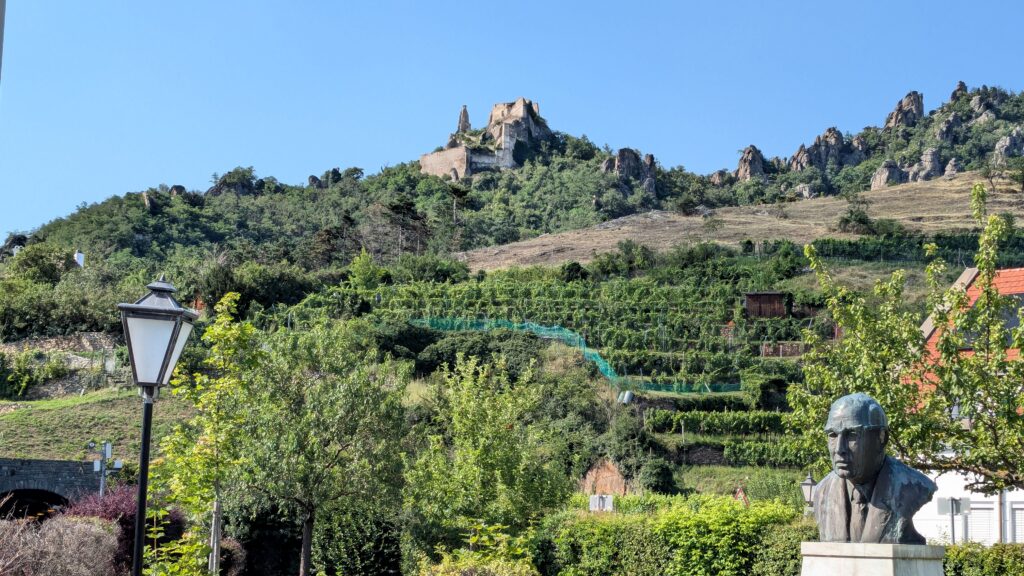
The 12th century castles of Aggstein and Spitz, built to protect trade routes along the Danube, are both wonderful sites, despite being eclipsed in their infamy by arguably the Wachau’s most famous structure – Dürnstein Castle.
This is where King Richard the Lionheart of England was famously imprisoned in 1192, after disputes with Austrian and German allies over the spoils of war, during the third crusade in the Byzantine. (Don’t worry we got him back, but only after paying a huge ransom which effectively bankrupted England!).
More recently Napoleon suffered a rare defeat at the battle of Dürnstein, in what was otherwise a stellar year for French expansion into central Europe in 1805.
All of the above (and more) helped to elevate the Wachau’s status to a UNESCO World Heritage Site in the year 2000.
WHAT TO DO & WHERE TO STAY IN THE WACHAU
When compiling this travel guide on what to do and where to stay in the Wachau, I thought it would be helpful for readers to understand what it is that makes each town or village special, so you can then decide if it’s for you.
I’ve therefore broken down the best places to stay as follows: 1) the big three wine villages (Dürnstein, Spitz and Weißenkirchen) in the heart of the valley; 2) my personal off-the-beaten-track favourites; 3) the two larger gateway towns at each end of the Wachau (Melk and Krems).
I’m giving you my recommendations on what to do and where to stay in each of those categories, so let’s get stuck in…
THE BIG THREE WINE VILLAGES
DÜRNSTEIN
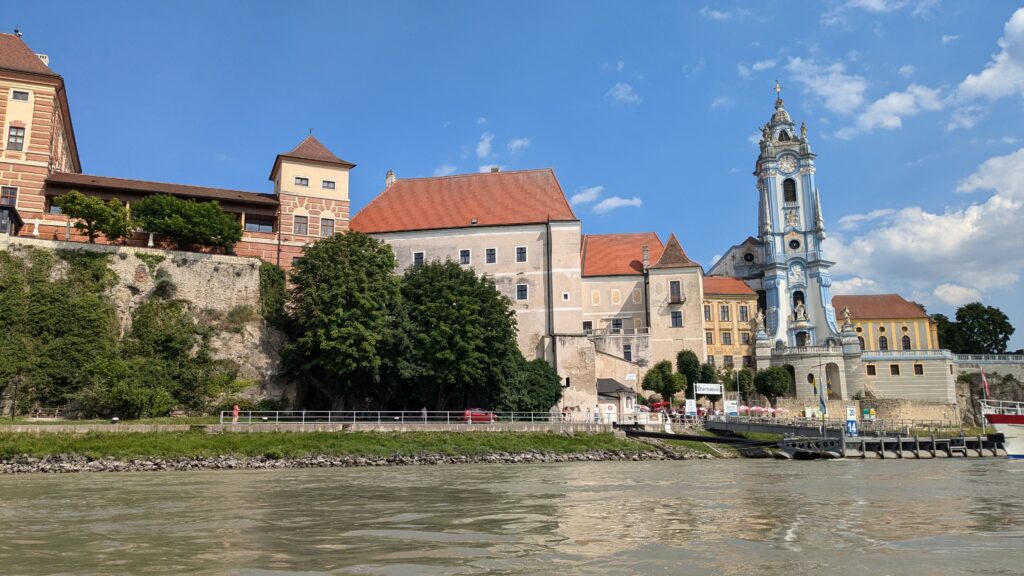
Dürnstein is really small. It’s basically a one street hamlet, and quite a narrow street that is too. It gets very busy in peak summer season, not least because large groups of river cruise ship passengers who make their way up to the village at several points during the day.
By around 4pm though, a big change starts to occur, with the day-trippers going home and the village returning to numbers that it can more healthily sustain. And this is when Dürnstein really shines, as it becomes much easier to appreciate its beauty and unique architectural charms in the evenings and early mornings, free from the crowds.
Speaking of architectural charms – an absolute must-do while in Dürnstein is climbing to the top of its castle, as the views from up there are truly spectacular, while the walk itself isn’t long at all (about 10-15 minutes).
Wine lovers or just curious boozers should visit Domäne Wachau – the largest wine producer in the valley, who act as cooperative to help small producers vinify their grapes and stay involved in the wine making tradition. They offers detailed tastings and provide some solid information about what makes the valley so special. I’ve visited here countless times with some of my own tour groups, and I think they do a good job of giving a solid introduction to the valley’s most important export.
If you really don’t like crowds at all though, Dürnstein may not be the best choice for you. In that case, I recommend staying in nearby Unterloiben, from which Dürnstein is easily walkable in just 15-20 minutes. Unterloiben and its sister village, Oberloiben, are both really pretty, and make for great places to get a sense of what local life in the Wachau is really like.
Personally, I generally find the locals working in the wine taverns and restaurants in Unterloiben to be a little more friendly too, especially when compared to the often harassed and somewhat frazzled Dürnsteiners!
Where to Stay in Dürnstein and Unterloiben
In the Wachau, you’ll find several accommodation options on active wineries. In Dürnstein check out the highly rated Bioweingut Schmidl for one such location. In nearby Unterloiben, consider Weingut Bäuerl, who offer apartments on the grounds of a local winery.
For a classic 5 star experience then Hotel Schloss Dürnstein will best suit your travel style, as it has a spa, wonderful terrace views over the Danube, oodles of rich history (it was built in 1630), a fitness center and two swimming pools. Alternatively, the 4* Hotel Richard Löwenherz is another great option.
WEIßENKIRCHEN
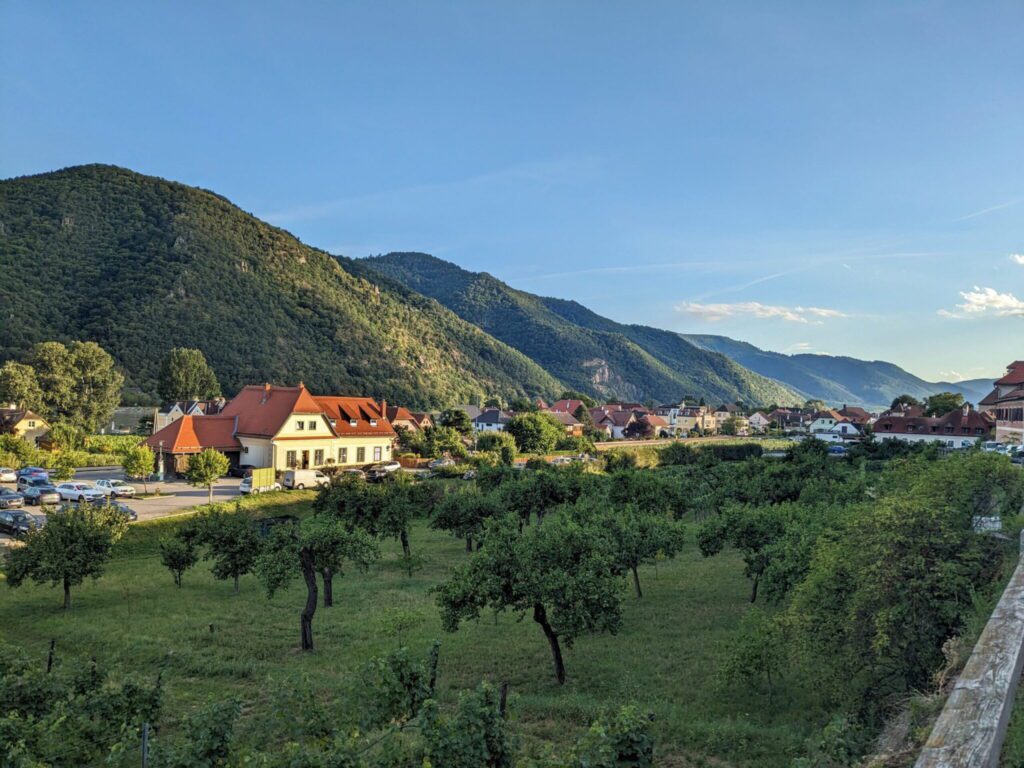
Weißenkirchen, so named because its church used to be painted white, is ground zero for Wachau wine production. Some of the valley’s most famous single vineyard sites are located immediately adjacent to the town, including arguably its most famous – Achleiten, responsible for producing some of Austria’s finest Grüner Veltliner.
For nature lovers, the Wachau World Heritage hiking trail provides one of its most picturesque stages here – a 3 hour, 10km hike from Weißenkirchen to Spitz – through some of the valley’s most famous vineyard terraces, as well as untouched oak forests and pretty meadows which overlook the valley.
Where to Stay in Weißenkirchen
Check out Hotel Donauwirt if you want a spot right next to the Danube, or either Kirchenwirt Hotel with its buffet breakfast featuring local products, or Ur-Wachau Boutique Hotel, which is housed in a grand historical building in the heart of Weißenkirchen, and which features ornate furnishings is all of its rooms and communal spaces.
SPITZ AN DER DONAU
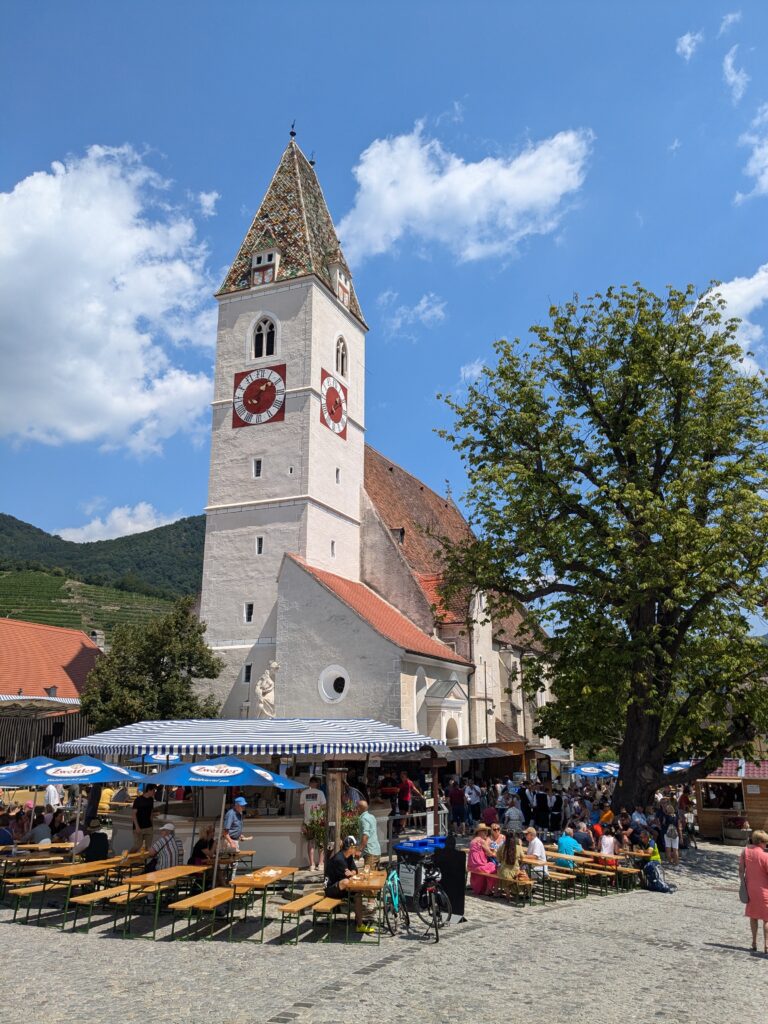
Located about half-way through the Wachau, as the vineyards begin to take over the riverside landscape, Spitz is probably the least visited compared with Dürnstein and Weißenkirchen, although not through any fault of its own!
It does have a popular docking station for the many Wachau ferries which chuff their way up and down the valley, and as such, is treated as more of a stopping off point rather than a destination in itself by the many international tourists who are in the valley on a day trip from Vienna. These day trip itineraries typically involve a wine tasting and lunch in Dürnstein or Weißenkirchen, followed by an afternoon cruise from Spitz through the quieter half of the valley, upstream to Melk.
Doing this actually makes sense, as most of the valley’s western villages are rather small, quiet and residential. The west still has dramatic landscapes and great hiking and biking trails though, but in terms of noteworthy villages to visit, it is somewhat lacking compared with the eastern half of the valley.
Spitz is a great choice if both hiking and wine are your things, as there are many fantastic hiking routes to choose in and around the surrounding countryside, especially in the Spitzer Graben and the Jauerling Nature Park, which is home to the highest peak (960m) along the entire length of the Danube.
Where to Stay in Spitz
Spitz has a good number of accommodation options which appeal to all budget types. Hotel Weinberghof & Weingut Lagler is a wonderful spot, located just behind one of Spitz’ most famous vineyards – the Tausendeimerberg (one thousand bucket hill!). This is a working winery, which produces some of the last examples of the classic Wachau variety – Neuberger. It’s a bit of a walk to get up here from the river (15 mins), but manageable for all but the most immobile/unfit.
Alternatively, check out the exceptionally classy 4 star Barock-Landhof Burkhardt, right in the heart of the village, for a taste of imperial luxury and traditional Austrian styling.
UNDER THE RADAR PLACES TO STAY IN THE WACHAU
ST MICHAEL
My favourite off-the-beaten-track hamlet in the Wachau is a place called St Michael. Positioned just after Spitz as you head downstream, St Michael has a wonderful 10th century church (the oldest place of worship in the entire Wachau), with a pretty graveyard that overlooks the Danube, and a creepy bone room (ossuary) that you can peek into. You can also climb to the top of the church’s defensive tower to admire some lovely raised views across the valley.
St Michael is surrounded by the most gorgeous green vineyards in the height of summer too, and you are free to wander through them. Unlike other steeper parts of valley, the vineyards extending eastwards from St Michael are also relatively flat, which makes their exploration much easier than in other parts of the valley.
Almost all of the hamlet’s inhabitants are involved in wine making too, so you’re guaranteed some great wine recommendations from your hosts! Check out Gästehaus Huber in St Michael itself, or for a more indulgent stay in the next village along in Wösendorf, try the luxurious Renaissancehof Wieser Wachau, with its heated outdoor pool.
STEIN AN DER DONAU
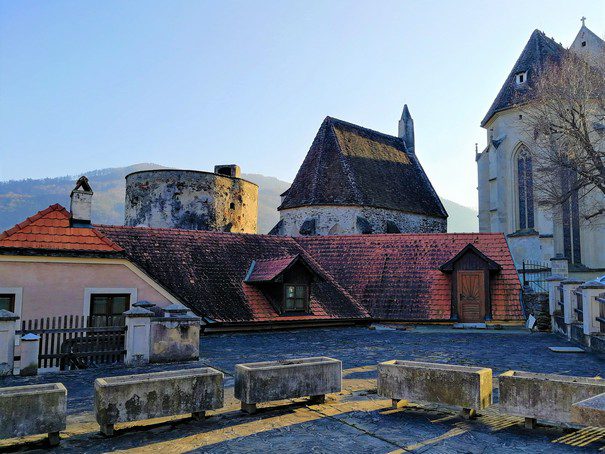
On the way to Krems, just after you’ve left the vineyards of Unterloiben behind, as well as the officially demarcated Vinea Wachau wine region, you’ll pass through one of my favourite villages in the entire valley – Stein an der Donau – an adorably pretty cobble-stoned village squeezed in between the Danube and the start of the Kremstal wine terraces, which rise up steeply along the village’s northern edge.
For a cosy B&B with wonderful service and local flair, check out the imaginatively titled Gästehaus auf der Kunstmeile (Guesthouse on the Art Mile), right in the middle of this wonderful riverside village.
EMMERSDORF
Located at the Western edge of the Wachau, opposite Melk on the northern bank of the Danube, Emmersdorf is great option for anyone who wants to experience life in the Wachau like a local, as it’s generally much quieter here compared with the other towns in the valley.
Additionally, far fewer tourists ever make it to Emmersdorf, although the village has a unique campsite where you can stay in wooden barrels perched right by the river. Local buses stop in the village too, which make it a great choice for anyone wanting to cycle through the valley in one direction, and then take a bus back in the other.
Check out the 4* Hotel Zum Schwarzen Bären, with its indoor pool, extensive wellness facilities, and wonderful in-house restaurant, which I’ve had the pleasure of eating at on many occasions. They serve really good quality local dishes, sourced from nearby farms wherever possible.
THE WACHAU'S TWO GATEWAY TOWNS
MELK
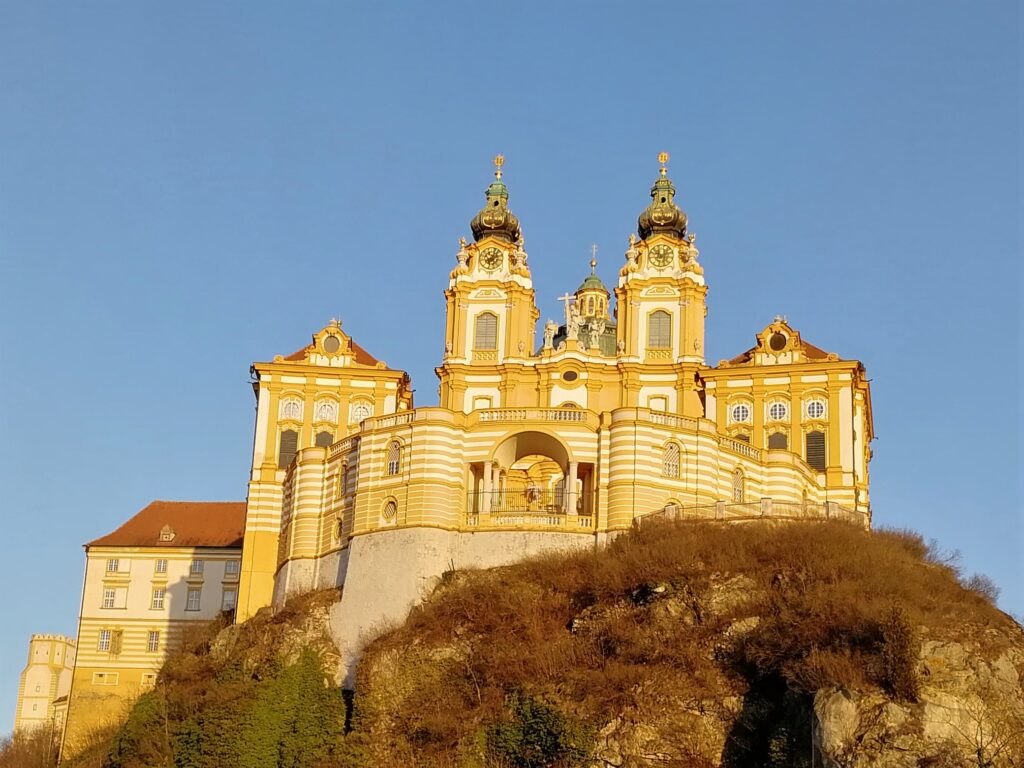
Probably the most well-known of all Wachau towns and villages, thanks to its imposing Benedictine Monastery, the village of Melk lies directly below the abbey at the western entrance to the Wachau Valley. The town first developed because of its strategic position on the Danube River trade route, and only grew in significance due to the abbey itself.
Founded in 1089 when the Babenbergs (the guys who preceded the Habsburgs) donated a castle to Benedictine monks, Melk Abbey was later rebuilt into its extravagant current form in the early 18th century. Housing one of the most impressive monastic libraries in the world, and containing typically ornate Baroque architecture, it naturally came to symbolise the power of the Catholic Church during the Habsburg era.
Nowadays, Melk is a small but busy tourist town, popular for Wachau river cruises, visitors to the abbey, and cyclists taking on the Danube cycle path from Melk to Mautern along the valley’s southern bank. Its small town centre is pretty and makes for decent people watching in summertime from one of its many cafes or wineries.
Where to Stay in Melk
Hotel Restaurant Zur Post is right in the center of town and offers free parking for guests, and direct views over to Melk Abbey from some rooms. Alternatively, the family-run Pension Marillenhof is a great choice for more budget conscious travellers, with large rooms and an outdoor sun terrace and central access to the town itself.
KREMS
Krems, located at the eastern end of the Wachau, is the largest town in the valley. Despite this, I reckon it’s still worth a visit due to its pretty streets, trendy wine bars, and generally relaxed vibe. Its train station offers direct trains to Vienna’s Franz Josef Bahnhof in just over one hour, and from Krems you can then jump on the Wachaubahn, which operates small trains all the way through the valley to Emmersdorf along the northern bank of the Danube.
Hotel options in Krems are by far the most plentiful of anywhere in the Wachau, but you will be a little outside the most picturesque parts of the valley, and will therefore need some form of transport to reach the vineyards and villages.
Aside from taking a train on the Wachaubahn line, this is easily done by hiring a bike from the town center for the day. I’ve led plenty of bike tours from Krems to Weißenkirchen and back, as part of a full-day wine tour, so I know its a great way to explore the valley if you do decide to stay in Krems.
Where to Stay in Krems
Check out Hotel Unter den Linden or Klinglhuber Suites for the two best mid-range accommodation options, or the luxury revLIVING Oldtown Apartment for something a little more private and plush.
Having said all that, I actually think the villages I’ve already talked about above provide the quintessential Wachau experience much more than Krems (or Melk) on the valley’s outskirts can.
WACHAU VALLEY TRAVEL GUIDE: OUTRO
So there you have it, the incredible Wachau Valley in Lower Austria. If you’re visiting Austria, and you don’t at least take a day to explore this wonderful natural region, then shame on you! Ideally, though, make it one of two nights to really get a feel of this special place, to drink its wines, eat its foods, and wander its landscapes. I promise you – you won’t regret it!
Anyway, I hope that I’ve given you some ideas of the best things to do in the Wachau, as well as a better understanding of where to stay and why. I have nothing but love for this gorgeous part of the world, and every time I’m there on one of my Wachau day trips from Vienna it just makes me happy.
A couple of final tips from me: 1) stay in the middle of the valley to really get the most from the local landscape and wine culture; 2) get outside in nature as much as you can, either on foot, on wheels, or on water to experience this remarkable location; 3) don’t sleep on the Wachau’s amazing castles either, as they’re a great way to understand more about the valley’s long and storied history.

Leave a reply