

Renting a car in the UK and driving around the more remote parts of England, Scotland, Wales, and Northern Ireland is by far the best way to see the most beautiful parts our damp and wet isles. Not least because our public transport system is crap, especially the further off-the-beaten-track you go.
Of course, with any new country you visit the driving norms and rules will differ from what you’re probably used to, but certainly don’t let this fact put you off hiring a car though. Yeah, I get it – the thought of all those roundabouts and driving a right-hand drive car on the left side of the road may seem daunting to the uninitiated but it’s really not that hard!
I’ve been driving in England for almost 30 years (at one time also professionally as a delivery driver!), and I’ve got loads of experience driving on the wrong right side in Europe too, so I’m the ideal person to share with you everything there is to know about driving in the UK, including tips and tricks, rules of the road, parking advice, car rental requirements, and some very cool UK road trip ideas to consider.
So, make sure your windscreen wipers are working, and put your seat belt on, because we’re going on a British road trip…
A Guide to Driving & Renting a Car in the UK
Car Rental Requirements in the UK
Driving Licence
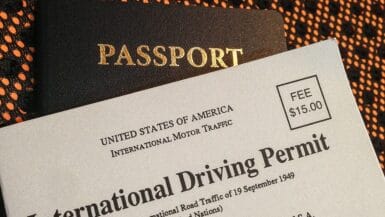
To rent a car in the UK, you must have a valid driving license. If your license is not in English, you’ll need an International Driving Permit (IDP), which serves as a translation of your national license into English. You can get one quickly through the International Drivers Association.
Minimum Age
The minimum age to drive in the UK is 17 for cars and motorcycles, 18 for medium-sized vehicles, and 21 for large vehicles. However, most UK car hire companies require drivers to be at least 21 years old to rent a car. Some companies may charge an extra young driver surcharge for anyone under 25, so be prepared for that additional cost.
Be sure to check the rental terms for any age-related restrictions before booking your UK car hire.

Where to Rent a Car in the UK
There are many reputable car rental companies in the UK, scattered at major airports, train stations, city centers, and other key locations across the country.
The process is relatively straightforward, regardless of which rental company you choose, but for the best value car hire in the UK, definitely check out Discover Cars. They compare prices from top rental companies to save you both time and money. I use them whenever I rent a car abroad, as they operate worldwide and consistently offer the best rates.
When picking up your car, make sure you have your booking confirmation, driving license, International Driving Permit (IDP) (if required), and credit card on hand to speed up the process. Also keep in mind that most rental car companies need a credit (not debit!) card for their safety deposits – I’ve been caught out with this a few times in the past!
Car inspection: Carefully inspect the car for any pre-existing damage before you drive away. Take photos and report any issues to the rental company to avoid being held responsible for them. Without this documentation, you might end up being charged for damage that wasn’t your fault.
Rental agreement: Read the rental agreement carefully to fully understand the insurance coverage, mileage limits, fuel policy, and any additional fees. This ensures there are no surprises when you return the car.
Returning the car: Return the car on time to avoid late fees, and always leave it with as much fuel as it had when you picked it up; otherwise, you’ll get stung with hefty fuel fees. Someone from the rental company will likely inspect the car with you to check for damage before giving you your receipt.
Insurance Options
Basic insurance is typically included in most UK car rentals, but it often comes with a high excess (deductible). If you decide to upgrade your coverage, you’ll typically be offered the following options:
- Collision Damage Waiver (CDW): Reduces the excess but may not cover all types of damage.
- Super CDW/Zero Excess: Eliminates the excess, offering the most comprehensive coverage for peace of mind.
Additional fees: Most rental car companies charge a young driver surcharge for drivers under 25, and may also charge an additional driver fee for adding extra drivers. If your car doesn’t come with built-in GPS, you may be offered one for an additional fee. Additionally, if you’re traveling with children under 12 (or 135cm in height), you’ll be required to pay for a child seat, as mandated by UK law.
Driving in Britain: Rules of the Road
Driving on the Left
In the UK, we drive on the left-hand side of the road, which may feel unusual if you’re used to driving on the right. The driver’s seat is located on the right side of the vehicle, and you’ll be changing gears with your left hand (if it’s a manual transmission vehicle). But don’t worry, you’ll get used to it quickly, and before you know it, driving in the UK will feel second nature.
Seat Belts and Mobile Phones
Seat belts are mandatory for all passengers, so make sure everyone in your rental car is properly strapped in. Using a handheld mobile phone while driving is illegal in the UK, and heavy fines are enforced if caught.
Alcohol Limits
The legal alcohol limit is 80 milligrams of alcohol per 100 milliliters of blood in England, Wales, and Northern Ireland, and 50 milligrams in Scotland. It’s nearly impossible to safely calculate how much this translates to in terms of drinks because factors like body weight, food intake, and personal tolerance come into play. To be safe, avoid alcohol altogether if you plan to drive in the UK.
Speed Limits
Speed limits can vary, so it’s important to pay attention to road signs. Generally:
- Motorways: 70 mph (112 km/h)
- Single carriageways: 60 mph (96 km/h)
- Built-up areas: 30-40 mph (48 km/h) Always check for local updates, especially in areas with roadworks or temporary regulations.
Road Signs
In the UK, road signs typically fall into three categories:
- Warning signs: Triangular with a red border, alerting drivers to potential hazards.
- Regulatory signs: Circular and indicate mandatory instructions or prohibitions (such as speed limits or no entry).
- Informational signs: Rectangular, providing directions or other important information.
Congestion Charges, ULEZ & Toll Roads
Here’s the bit that catches almost every visiting driver out at some point: several UK cities charge you just for driving in them, and it has nothing to do with parking…
The London Congestion Charge:
If you drive into central London on a weekday between 7am and 6pm (or midday – 6pm on weekends & bank holidays), you’ll be charged £18 a day, rising to £21 if you don’t pay by midnight three days later.
Cameras read your number plate automatically. There’s no barrier, no ticket, nothing to physically stop for, so it catches a lot of people out if you had no idea about it. With a rental car, the charge (plus an admin fee) will simply land on your credit card via the hire company a few weeks later.
Honestly, my advice is not to drive into central London at all. The tube is faster, cheaper, and a lot less stressful than fighting London traffic and its charges.
ULEZ (Ultra Low Emission Zone):
Speaking of London’s driving charges, and separate from the Congestion Charge, is ULEZ – which charges older, more polluting vehicles £12.50 a day. This now covers the whole of Greater London, 24/7. The good news for hire car drivers: rental fleets are new, so your car will almost certainly meet the emissions standard automatically. Still, it’s worth a quick check with your rental company if central London is unavoidable.
Clean Air Zones Elsewhere:
A handful of English cities run their own schemes, but only Birmingham and Bristol actually charge private cars (£8-£9 per day for non-compliant vehicles). The cities of Bath, Bradford, Sheffield, Portsmouth and Newcastle only charge commercial vehicles, so you can safely ignore those in your hire car.
Scotland:
Glasgow, Edinburgh, Aberdeen and Dundee have Low Emission Zones that don’t charge a fee. They simply ban non-compliant vehicles outright, with fines starting at £60 for entering one you shouldn’t. Again, a modern rental car will most probably meet the standard.
British Toll Roads:
The UK barely has any, since roads are funded through fuel duty rather than tolls. The two you’re most likely to meet though, are the M6 Toll near Birmingham (around £5.70, but there’s an optional alternative route), and the Dartford Crossing east of London (i.e the “Dart Charge”), where there are no barriers at all, just cameras that read your plate and you must pay online by midnight the next day, or it becomes a fine. So if your route takes you east around London on the M25, set a reminder to pay it.
Driving Tips
Roundabouts
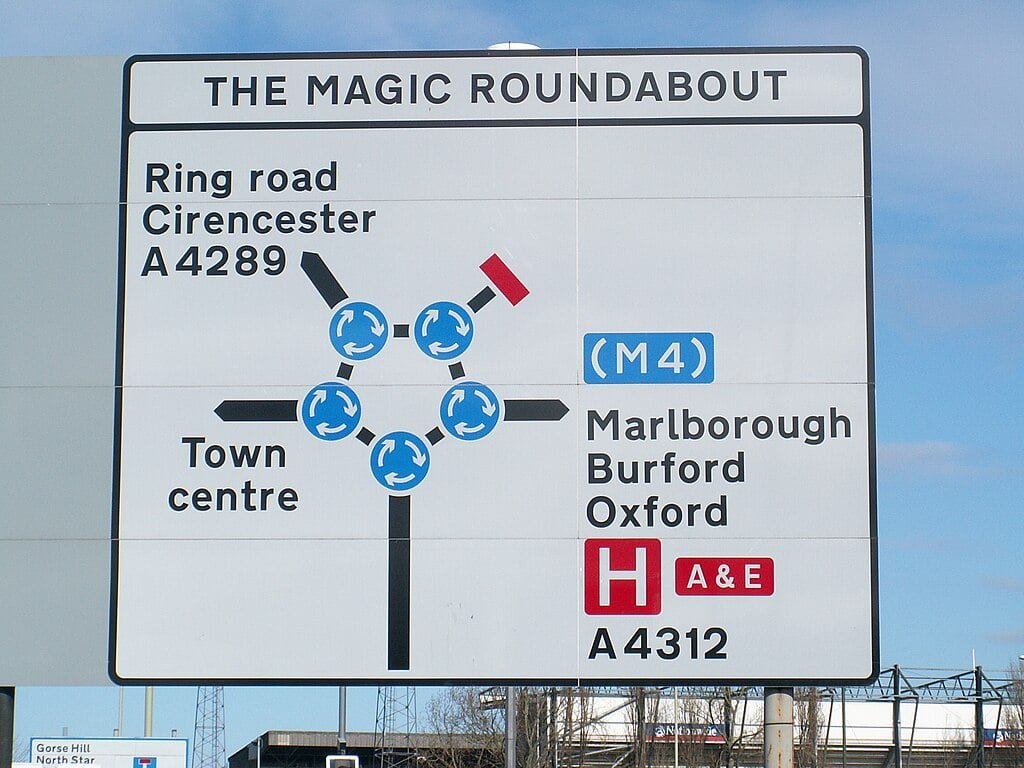
We love a good roundabout in the UK, and we’re all very used to them. They can however be a bit intimidating for first-time drivers. Yield to traffic coming from the right and always signal when leaving one.
Narrow Country Roads
Many of the UK’s country roads are narrow and winding, particularly in rural regions like the Cotswolds or the Scottish Highlands. If you’re driving in the countryside, be prepared for tight squeezes and oncoming vehicles. Wider bulges in the road are for allowing other vehicles to pass by, so use them!
Using Your Horn
Unlike some cultures, we Brits aren’t really big beepers, unless someone has done something ridiculously dangerous/stupid. If you get a little too horny, then be prepared for some extravagant hand gestures from your fellow road users!
Automatic or Manual?
Here’s a fact that might surprise visitors, especially Americans: most cars in the UK are manual (stick shift). There are even two separate categories of UK driving licence – automatic and manual – and you can’t legally drive a manual car on an automatic-only licence (though it works the other way round).
If your licence doesn’t specify automatic or manual (most non-UK licences don’t), the choice comes down to what you’re actually comfortable driving. A couple of things worth knowing before you book:
- Automatics cost more to hire because they’re the minority of the UK fleet.
- There are fewer automatics available full stop, so book yours well in advance if
you’re a crap driverthat’s what you need. Don’t assume one will be available on the day. - A UK road trip around its narrow country lanes is probably not the best place to learn manual for the first time, so if you’ve never driven stick, book an automatic!
Fuel Types: Don't Get This Wrong!
One fatal mistake can end your road trip in a flash: putting the wrong fuel in your rental car. The UK has two main fuel types (petrol and diesel) and they’re not interchangeable. If you’re unsure which your rental car takes, check the fuel cap (diesel cars usually say so clearly) or just ask the rental desk before you drive off.
If you do put the wrong fuel in, don’t start the engine or drive anywhere – call your rental company immediately, as it can cause serious (and expensive) engine damage.
Standard unleaded petrol in the UK is E10. There’s no decision to make at the pump for a normal hire car. Fuel is sold by the litre (even though your car’s fuel economy will be quoted in miles per gallon – yeah, we can be a bit confusing at times, us Brits).
Supermarket petrol stations (Tesco, Asda, Sainsbury’s) are consistently the cheapest, while motorway service stations are the most expensive, sometimes by 20-30p a litre! So definitely fill up in small towns before you hit the motorway if possible.
Parking in Britain
Finding parking in the UK, particularly in urban areas, can be tricky, so here are some things to be aware of:
Pay and display: Common in cities and popular areas, with pay and display parking you pay at a machine, and then display the ticket on your dashboard. This means you have to predict how long you’ll be leaving your car there. If you don’t have cash or contactless, instructions to pay via app (RingGo, PayByPhone etc.) are usually listed on the parking machine. Only use the app named on the car park notices.

Parking meters: Though less common these days, parking meters are still in use in some places. Simply pay for your allotted time at the meter, and make sure to display the ticket in your rental car.
Parking garages: Most cities and towns have multi-story car parks or parking garages. These are typically safer and more secure than street parking, and you’ll pay at a machine before exiting. You grab your parking ticket on entry, and when you’re ready to leave simply insert it at the exit barrier.
Parking in residential areas: In some residential neighborhoods, you’ll need a parking permit to park on the street. Always check for double yellow lines, which indicate no parking at any time, and watch for any signs that specify parking restrictions. Rental car companies will pass any fines back to you, so pay attention.
UK Road Trip Ideas
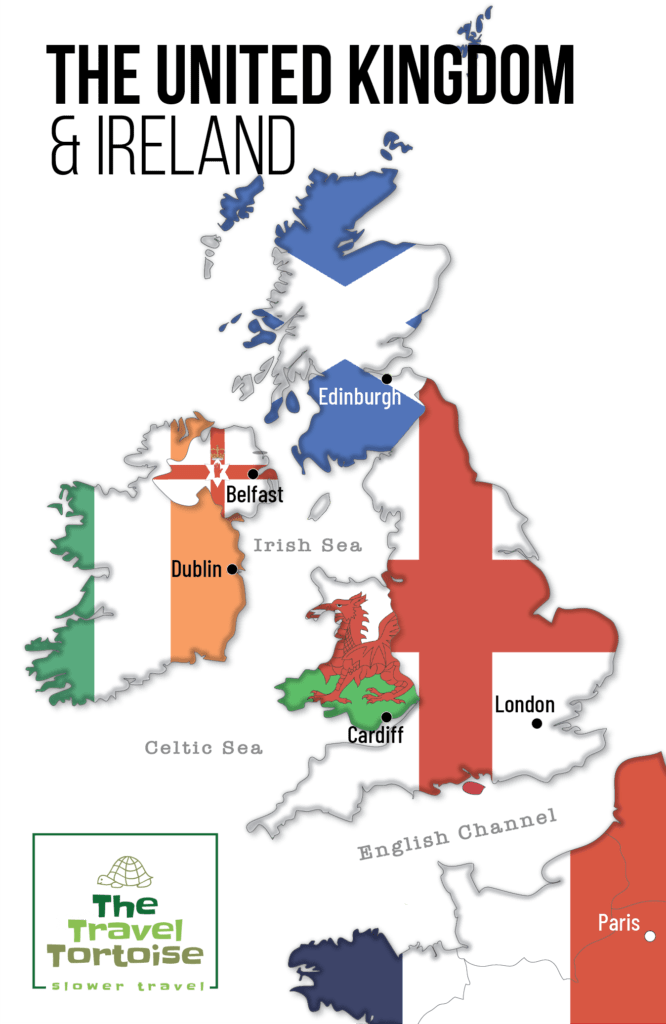
Good old blighty offers some of the most scenic and historic road trips in the world. That’s because Scotland, England, Wales, and Northern Ireland are all blessed with rugged coastlines, stupidly pretty villages and gorgeous green countryside. Here are a few road-trip ideas to consider:
Scotland: The North Coast 500
A 516-mile route starting and ending in Inverness, this iconic Scottish road trip showcases the stunning Scottish Highlands. The North Coast 500 is considered one of the best road trips in the UK, offering dramatic coastal views, beautiful beaches, and quiet villages along the way. Check out the link above to really the make the most of this route.
South-west England: The Atlantic Highway
A picturesque 70 mile drive along the north coast of Devon and Cornwall along the A39. Expect spectacular coastal views and some of the UK’s best surfing spots. The route stretches all the way from Barnstaple in the east down to party-town Newquay.
North-west England: The Lake District
If you love nature, the Lake District National Park should be at the top of your UK road trip list. There are no less than 16 different scenic drives for you here, including Lake Windermere and other stunning parts of England’s most northerly county, Cumbria. You’ll certainly want to consider this when visiting Scotland as the Lake District sits near the border between England and Scotland.
Central England: The Cotswolds
Any route through the rolling hills and quaint villages of the Cotswolds is perfect for those wanting a slower pace and a taste of rural English life. From Bath in the south up to Stratford-upon-Avon, home of Shakespeare in the north, the Cotwolds are a great place to get lost in as you’re likely to stumble onto a picture postcard village in no time. Tres romantique!
Northern Ireland: The Causeway Coastal Route
The Causeway Coastal Route is a 120-mile drive from Belfast to Derry, offering stunning views of the Antrim Coast. Along the way, you’ll see natural wonders like the Giant’s Causeway, making it one of the most scenic coastal drives in Northern Ireland.
Frequently Asked Questions About Renting a Car in the UK
Do I need an International Driving Permit to rent a car in the UK?
Only if your licence isn’t in English and isn’t from Ireland, the EU, or the EEA. A US, Canadian, Australian, or New Zealand licence is already in English, so no IDP is required. If in doubt, get one anyway – it’s cheap and removes any ambiguity at the rental desk.
Is it worth driving into central London?
Honestly, no. Between the Congestion Charge, ULEZ, painfully slow traffic, crappy air quality, and near-impossible parking, you’ll have a far better time picking up your hire car before or after the London leg of your trip, while using the tube when staying in the city instead.
Should I rent an automatic or manual car in the UK?
Most UK rental cars are manual, with automatics costing more and selling out faster. If you can drive stick, book manual and save a bit of cash. If you can’t, book an automatic well in advance.
Will my hire car get charged by ULEZ or Clean Air Zones?
Most probably not. Rental fleets are new enough to meet emissions standards automatically. Worth a quick confirmation with your rental company if you are planning to drive into London, Birmingham, or Bristol though.
What's the minimum age to rent a car in the UK?
Most companies require drivers to be at least 21, with a young driver surcharge common for anyone under 25. Some vehicle classes have higher minimums still, so always check your specific rental terms.
Are there toll roads in the UK?
Very few. The M6 Toll near Birmingham and the Dartford Crossing east of London are the two you’re most likely to encounter on a UK road trip.
Driving and Renting a Car in the UK: Outro
So there you have it! Now you’re armed with all the essential information to confidently rent a car in the UK and hit the road. Whether you’re exploring the historic cities of England, winding through the scenic countryside of Wales, or embarking on a thrilling road trip in Scotland, driving in the UK offers you the freedom to explore at your own pace.
If you plan to travel further during your UK car rental, why not check out my post on ferries to & from Ireland, as you could take your rental car with you and explore even more of the beautiful British Isles.
We’d love to hear about your experiences of renting a car in the UK! Drop a comment below or send me an email to share your road trip adventures or any extra tips you might have. Safe travels, and don’t forget to enjoy some fish and chips from the comfort of your rental car – rain or shine!


Super convenient and user-friendly! Very professional, well-organized, and smooth to browse. Impressive work. Everything I needed in one place! — highly recommend!